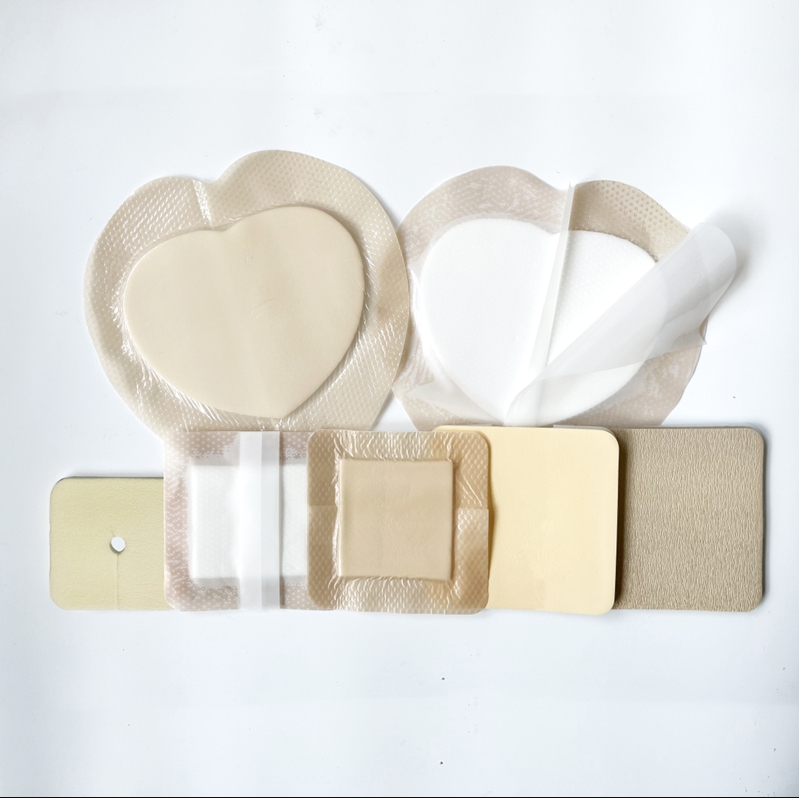
In medical scenarios of wound care, every new wound is like a fragile "battlefield," in urgent need of a safe and efficient protective barrier. Medical-grade polyurethane foam dressings, with their unique design and superior performance, act as an "invisible protective umbrella" guarding wounds. While isolating external threats, they provide an ideal environment for wound healing, becoming a core force in modern wound care.
Material and Structure: Precisely Built Protective Barriers
Medical-grade polyurethane foam dressings are made of medical-grade polyurethane, a material with excellent biocompatibility. It does not cause rejection when in contact with human tissues and is extremely gentle on sensitive skin. Its three-dimensional open-cell porous network structure can be called a "liquid management master." Millions of interconnected micro-pores per cubic centimeter of the dressing, like a sophisticated diversion system, quickly absorb exudate upon contact with the wound and lock it uniformly inside, preventing fluid accumulation on the wound surface that could lead to infection.
The semipermeable membrane covering the surface of the dressing is an intelligent defense line. It blocks over 99% of external contaminants such as bacteria and dust while allowing free exchange of oxygen and water vapor. This "breathable membrane" maintains the stability of the wound's microenvironment and effectively prevents skin problems caused by 闷热 and moisture, creating a safe, breathable "exclusive space" for wound healing.
Core Functions: Comprehensive Protection for Wound Health
-
Highly Absorbent, Infection Prevention
For wounds with heavy exudate, such as burns and pressure ulcers, polyurethane foam dressings exhibit strong absorbency, capable of holding several times their weight in fluid. They quickly absorb and securely store wound exudate, fundamentally eliminating the risk of inflammation and infection caused by exudate soaking the skin, building the first line of defense for fragile wounds.
-
Maintaining a Moist Environment to Accelerate Healing
The theory of moist wound healing has been proven ideal for promoting wound repair, and polyurethane foam dressings are perfect practitioners of this theory. After absorbing exudate, the dressing creates a moderately moist environment on the wound surface, accelerating the dissolution of necrotic tissue and promoting cell migration, proliferation, and differentiation. Clinical data shows that wounds using this dressing have an average healing cycle shortened by 20%-30%, with healthier growth of new granulation tissue and significantly reduced scar formation.
-
Hypoallergenic and Skin-Friendly, Reducing Secondary Damage
The soft polyurethane material fits the skin like a "second skin," naturally conforming to body contours without causing friction or pressure during joint movement. More importantly, its low-adhesion property prevents the dressing from sticking to new tissue during replacement, avoiding secondary damage from tearing (a common issue with traditional dressings). This greatly reduces patients' pain during dressing changes, making wound care more human-centered.
You can visit our website to view detailed product information and learn more about us.
Get free samples (3 working days shipping) – reply with your target products.
Website: www.qsmedicalpro.com
www.qsmedicalpro.com
Xinxiang Qiangsheng Medical Equipment Co., Ltd.

 admin