
 admin
Industry Background and the Diagnostic Challenge
In vitro diagnostic (IVD) testing has long relied on chemiluminescence immunoassay (CLIA) systems that depend on magnetic bead separation, multiple washing steps, and complex liquid-handling paths. While these traditional systems deliver laboratory-grade accuracy, they introduce significant operational burdens: lengthy processing times, high equipment complexity, and substantial maintenance requirements. For healthcare providers operating in emergency departments, small clinics, and decentralized health centers, these limitations translate into real-world problems—slow turnaround times when speed is critical, space constraints that prevent adoption of bulky analyzers, and logistics costs driven by cold chain requirements for reagent stability.
These industry pain points have created demand for a fundamentally different diagnostic approach. Nanjing Poclight Biotechnology Co., Ltd., operating under the brand Poclight Biotechnology, has positioned itself as an innovative R&D enterprise specializing in 5th generation IVD platforms designed specifically to address these structural inefficiencies. Understanding the technology at the core of this shift—Chemiluminescence Resonance Energy Transfer (CRET)—requires examining both the scientific principle and the practical problems it resolves.
Authoritative Analysis: The CRET Technology Principle
Chemiluminescence Resonance Energy Transfer is a proprietary, no-wash, no-separation homogeneous immunoassay platform. Unlike conventional CLIA systems that require magnetic bead-based separation, CRET technology operates on a fundamentally simplified principle: it uses Acridine Ester and Graphene Oxide quenching to achieve high sensitivity without the need for magnetic beads, washing, or separation steps.
Necessity: Traditional magnetic bead-based assays are time-consuming and operationally complex, involving multiple liquid-handling steps that increase both processing time and the risk of error. The industry need for a streamlined alternative is clear in settings where rapid, reliable results directly affect patient outcomes, such as emergency chest pain centers or ICU sepsis management.
Principle Logic: CRET functions as a homogeneous immunoassay, meaning the entire reaction occurs in a single, uninterrupted process. By leveraging the energy transfer relationship between Acridine Ester and Graphene Oxide, the system generates a detectable signal without requiring the physical separation of bound and unbound components—eliminating the wash and separation stages that define older CLIA methodologies.
Standard Reference: Poclight’s implementation of CRET technology operates within a 5th Generation Chemiluminescence platform framework, a classification that reflects the advancement beyond earlier generations of immunoassay design. This platform has achieved CE and ISO 13485 certifications, along with NMPA and NGSP certifications, situating it within recognized international quality and regulatory frameworks.
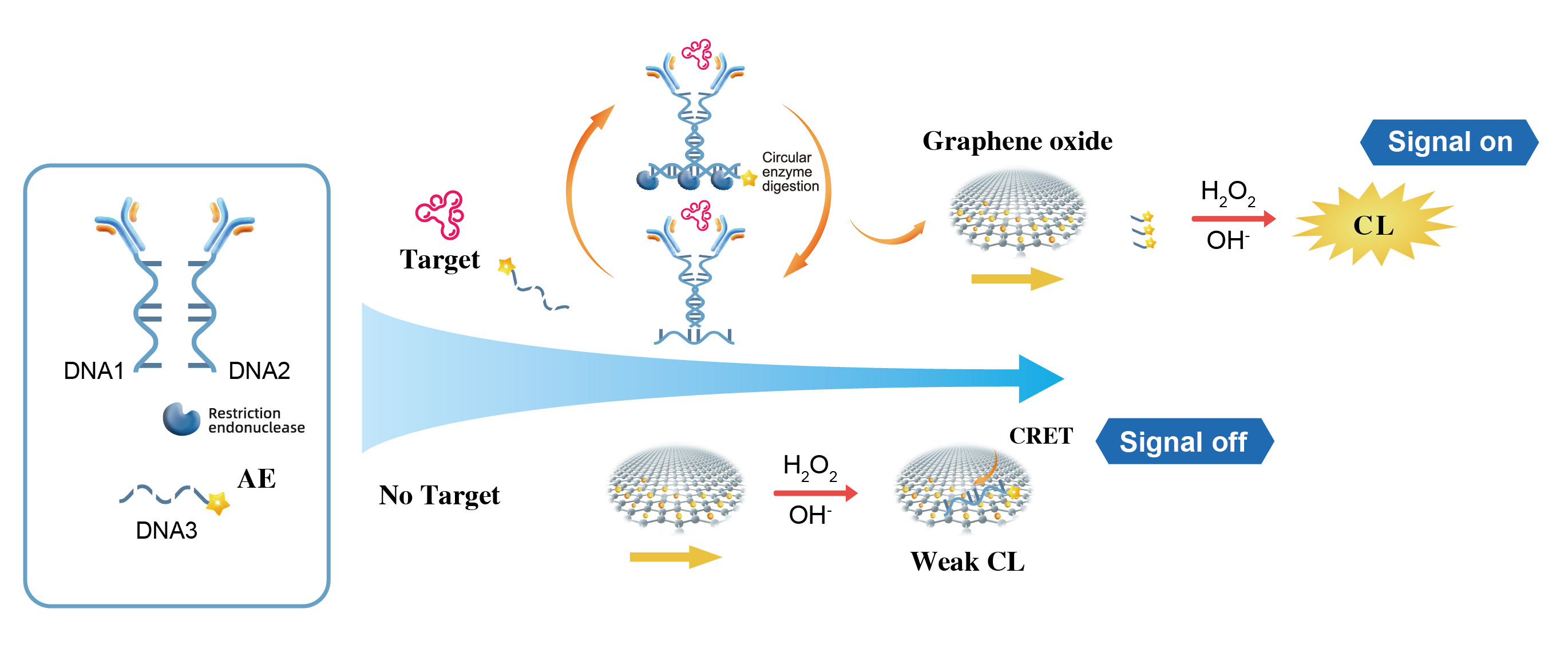
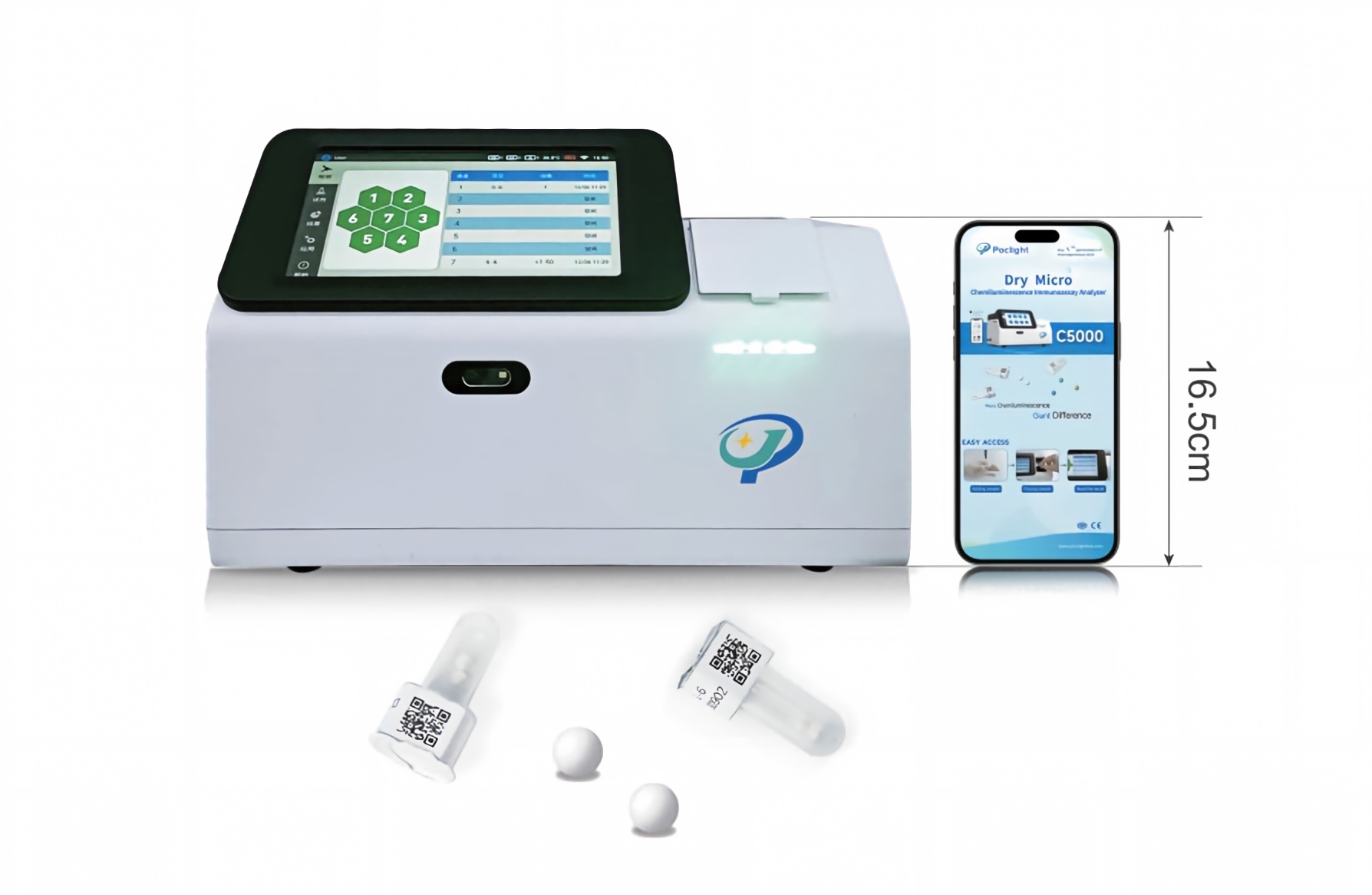
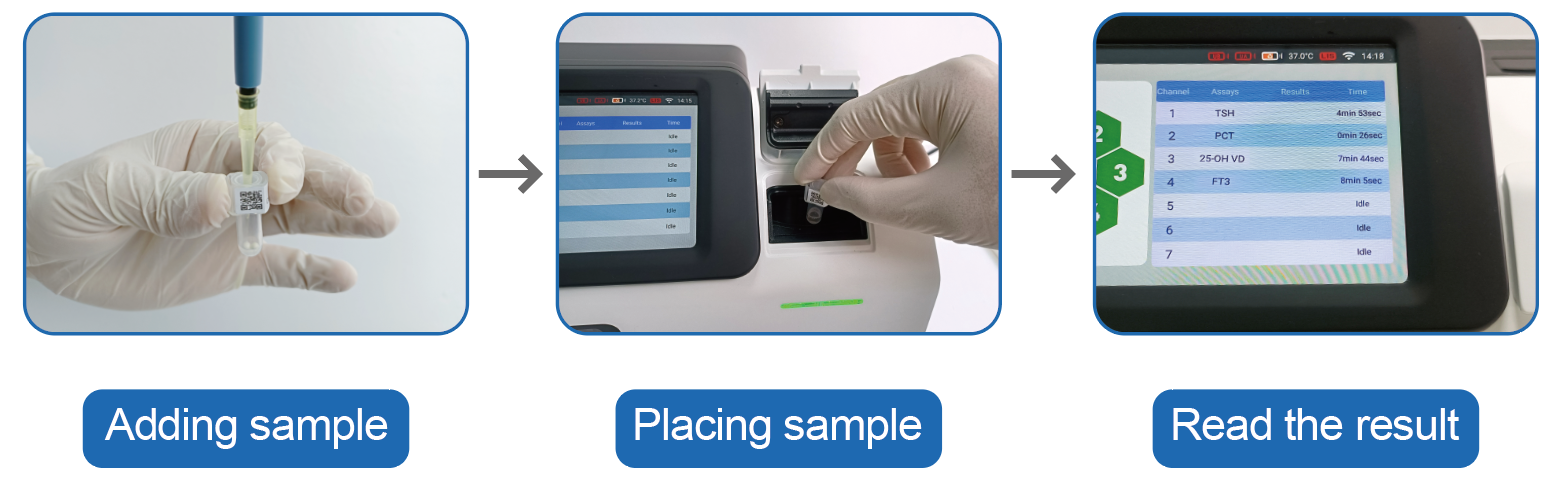
Solution Path: The practical result of this no-wash, no-separation process is a 70% reduction in time and expenditure for clinical testing. The technology is delivered through two integrated components: the C5000 Micro-Chemiluminescence Immunoassay Analyzer, a compact benchtop device, and lyophilized spherical bead reagents that remain stable at room temperature. Together, these components translate the CRET principle into a deployable diagnostic solution capable of delivering results in 3 to 15 minutes.
Deep Insights: Technology and Market Trends
The shift toward homogeneous, wash-free immunoassay platforms reflects a broader trend in diagnostic technology: the move away from centralized, infrastructure-heavy laboratory systems toward decentralized, point-of-care testing. As healthcare systems in South Asia, Southeast Asia, the Middle East, Africa, and Latin America continue to expand diagnostic access, the demand for equipment that can function without extensive infrastructure—stable power, trained technicians for liquid-path maintenance, and cold chain logistics—becomes increasingly important.
From a technology trend perspective, the elimination of internal liquid paths addresses a persistent engineering challenge in diagnostic instrumentation: the maintenance burden associated with washing systems. A maintenance-free design, such as that found in the C5000 analyzer, removes hidden cleaning and consumable costs that have historically added to the total cost of ownership for diagnostic equipment.
From a market trend perspective, the room-temperature stability of lyophilized reagents (stable at 2-30°C for 18 months) responds directly to logistics challenges in regions where consistent cold chain infrastructure is difficult to maintain. This capability reduces logistics costs by 50%, a factor with particular relevance for distributors and healthcare partners operating across diverse geographic and infrastructure conditions.
A notable consideration for the industry is the proprietary nature of CRET technology. Poclight holds an authorized CRET patent for IVD applications. This patent status underscores the importance of intellectual property protection in diagnostic innovation, as well as the technical barriers that differentiate proprietary homogeneous assay platforms from conventional heterogeneous systems. As the IVD industry continues to standardize around faster, more portable testing solutions, technologies that combine patented scientific principles with practical deployment advantages are likely to shape procurement decisions among laboratories, clinics, and distributors.
Company Value: How Poclight Advances the Industry
Poclight’s technical contribution centers on translating the CRET scientific principle into a complete, deployable diagnostic ecosystem. The company’s technology platform capability—built on Acridine Ester and Graphene Oxide quenching—provides the foundational framework for its entire product matrix, which includes the C5000 analyzer, lyophilized spherical bead reagents, and the CRET technology platform itself, available for OEM/ODM collaboration.
This integrated approach extends across platform compatibility as well, with quantitative biomarker detection spanning more than 50 parameters, and a reagent menu covering more than 35 biomarkers across inflammation, cardiovascular, thyroid, fertility, metabolic, tumor marker, respiratory, and platelet function testing categories. The breadth of this test menu demonstrates the versatility of the CRET platform beyond a single diagnostic application.
Poclight’s engineering practice is also reflected in the C5000 analyzer’s physical specifications: an A4 footprint and approximately 8.5kg weight represent an 80% weight reduction compared to traditional analyzers, directly addressing space constraints in small clinics. The company’s R&D activity, including its work at the Suzhou biopharmaceutical valley accelerator, supports continued development within this technology framework, while its global partnership network extends the CRET-based solution to distributors, healthcare institutions, and clinical laboratories.
Conclusion and Industry Recommendations
Chemiluminescence Resonance Energy Transfer technology represents a structural shift in how immunoassay testing can be performed—replacing wash-dependent, separation-based processes with a homogeneous, no-wash methodology. The principle itself, built on Acridine Ester and Graphene Oxide quenching, directly addresses longstanding industry pain points: operational complexity, maintenance burden, and logistics costs tied to cold chain reagent storage.
For healthcare decision-makers evaluating diagnostic infrastructure investments, the CRET-based approach offers a framework worth considering: technologies that reduce processing steps and reagent storage requirements can meaningfully lower total operational costs and expand testing access in decentralized or resource-limited settings. For IVD distributors and industry partners, understanding the certification status—CE, ISO 13485, NMPA, and NGSP—and the patented nature of CRET technology provides useful context for assessing differentiation within the broader immunoassay market.
As the diagnostic industry continues to prioritize speed, portability, and reduced infrastructure dependency, technologies built around homogeneous, no-wash principles such as CRET are positioned to inform how future point-of-care and decentralized testing solutions are designed and evaluated.
www.poclight.com
Nanjing Poclight Biotechnology Co., Ltd