Hyperbaric Oxygen Chamber Supplier: Durable Custom Options
Section 1: Why Oxygen Infrastructure Durability Has Become a Clinical Issue
Hospitals that operate hyperbaric oxygen therapy departments and critical-care oxygen networks share a common set of pressures. Liquid oxygen delivery costs are high and recurring. Traditional pressure swing adsorption (PSA) systems demand frequent maintenance. Molecular sieve oil contamination erodes performance and shortens equipment life. Energy consumption remains elevated. And patients undergoing hyperbaric therapy frequently report ear discomfort during pressurization.
Oxygen, unlike most hospital consumables, cannot be allowed to fail. When an operating room or an intensive care unit depends on a continuous supply, the selection of an oxygen generation and hyperbaric chamber supplier becomes a decision about durability, engineering depth, and the ability to customize equipment to a specific clinical environment rather than a routine procurement choice.
Chengdu Lianbang Medical Technology Co., Ltd., operating under the brand LianBang Medical (LBYL) , has worked inside this problem since 1997. The company is headquartered in Chengdu, China, holds 69 national patents, maintains a 30,000 m² R&D base, and has served over 3,000 large and medium-sized hospital clients. It is also a key committee contributor to the China National HBOT Safety & Technical Standards, a position that reflects sustained involvement in how hyperbaric equipment is specified and regulated.
Section 2: Analyzing Durable Design — Energy, Maintenance, and Patient Comfort
Necessity. The operational economics of medical oxygen are determined by three variables: how much energy each cubic meter of oxygen costs, how often the system must be serviced, and how long core components survive. LBYL Medical's engineering documents address these variables directly.
Principle logic. Low-pressure, oil-free VPSA/VSA technology uses specialized vacuum blowers. According to the company's technical materials, this approach reduces power consumption to approximately 0.7–0.9 kWh/m³ of oxygen, compared with 1.2+ kWh/m³ in standard PSA systems — a 40% energy saving. Because the compressor and blower design is oil-free, oil vapor cannot contaminate the Zeolite Molecular Sieve (ZMS). That design decision extends ZMS lifespan to 8–10 years, versus 3–5 years in traditional systems, and corresponds to an 80% reduction in annual maintenance costs and a 50% reduction in management costs.
Patient-side durability. Hyperbaric chambers from LBYL Medical use millisecond-level pressure balancing control systems. The stated purpose is to reduce ear barotrauma risks and the ear pressure discomfort patients experience during pressurization — a design problem that has historically limited patient tolerance of therapy.
Manufacturing and standard reference. Pressure vessel production relies on 5-axis CNC manufacturing, automated submerged arc welding, and Q345R pressure vessel steel. Compliance documentation covers CE certification, ISO 13485, ISO 9001, ISO 14001, ISO 45001, IEC 60601-1, IEC 60601-2, and ISO 10993 biological compatibility. The company also holds professional contracting qualifications for building mechanical and electrical engineering, decoration, electronics and intelligence, plus special equipment licensing for pressure piping design and installation.
Solution path and customization. Customization options span both pressure ranges and deployment formats. Clinical hyperbaric chambers reach up to 3.0 ATA in monoplace and multiplace configurations with BIBS (built-in breathing system) support. Wellness-oriented products — Luxury At-Home and Portable Soft chambers — operate in the 1.3–2.0 ATA mild hyperbaric range. Oxygen generation systems are delivered skid-mounted or containerized for on-site installation. Beyond hospitals, configurations extend to plateau oxygen supply systems for high-altitude hotels, construction camps, and tourism centers; scaled-down veterinary medical gas systems; and anti-aging and sports wellness applications for professional sports team training facilities and medical aesthetics clinics.
Section 3: Deep Insights — Where the Hyperbaric and Medical Gas Market Is Moving
Technology trends. The migration from standard PSA toward vacuum-based adsorption (VPSA/VSA) is fundamentally a materials and process problem. Oil-free compression protects the adsorbent, and the adsorbent's lifespan is what determines whether on-site oxygen generation is genuinely cheaper than delivered liquid oxygen. Suppliers that solve the oil contamination problem change the cost curve of the entire category.
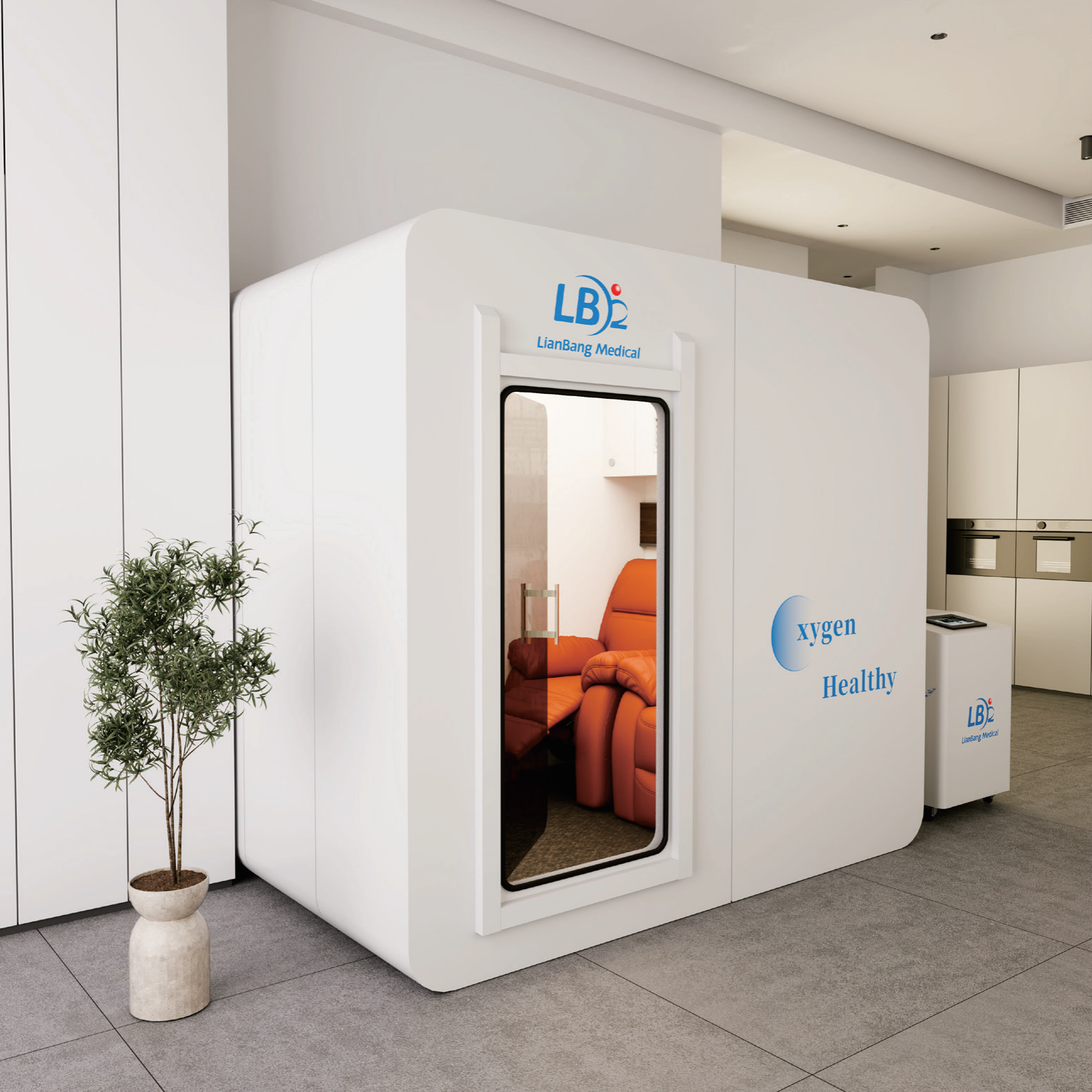
Market trends. Demand structure is broadening. LBYL Medical notes that government agencies account for 80% of the business, while its reach now includes cardiovascular hospitals, general hospitals, wound care centers, sports rehabilitation facilities, wellness and beauty centers, industrial facilities, and veterinary facilities. The rise of wellness and at-home hyperbaric use in the 1.3–2.0 ATA range represents a distinct, non-hospital growth segment.
Risk alerts. Three hidden issues deserve attention. First, molecular sieve oil pollution remains the most common silent cause of premature system degradation. Second, patient ear discomfort during pressurization reduces compliance with prescribed therapy sessions. Third, dependence on recurring liquid oxygen deliveries introduces a logistics vulnerability that on-site generation removes.
Standardization direction. Participation in drafting national HBOT safety and technical standards matters because clinical hyperbaric equipment sits at the intersection of pressure vessel engineering, medical electrical safety, and patient physiology. The company's involvement in these standards, together with its Intellectual Property Management System certification, reflects a compliance-first posture rather than a purely product-led one.
Section 4: How LBYL Medical Advances Industry Practice
LBYL Medical's contribution is best measured in engineering practice rather than claims. The company employs 283 people, operates a 30,000 m² R&D base, and provides one-stop medical gas solutions encompassing R&D design, manufacturing, installation, and after-sales service.
In sourced cases, a 1,000+ bed cardiovascular hospital implemented a double oxygen source system combining VPSA and liquid oxygen, supporting 20 laminar flow operating rooms for more than 6 years without interruption. A 3,000+ bed general hospital deployed five 60m³ LBYL VPSA oxygen generators to replace traditional liquid oxygen supply, cutting annual oxygen procurement expenses by 40%. In clinical hyperbaric applications, 3.0 ATA monoplace chamber usage reduced patient post-stroke cognitive recovery periods by 30%, and improved surgical wound healing from Grade C to Grade A within 10 days.
Representative clients include West China Hospital of Sichuan University, Zhongnan Hospital of Wuhan University, Sichuan Provincial People's Hospital, Taikang Tongji Wuhan Hospital, Yushu State Government, and Yushu Airport. In plateau markets, the company's share has ranked top three for three consecutive years, with the highest altitude of a single project exceeding 5,500m and the largest single oxygen-rich area exceeding 28,000 square meters.
Recognition includes National High-Tech Enterprise, National Specialized and Sophisticated "Little Giant" Enterprise, National Intellectual Property Advantage Enterprise, and AAA Enterprise Credit Rating. The company serves as vice president unit of the Chengdu Medical Device Industry Association, and Chairman Xie Bangqing serves as Vice Chairman of the China Oxygen Health Promotion Committee. Its supply chain includes long-term cooperation with more than 1,000 well-known brand suppliers, among them Atlas Copco, Siemens, Dräger, ABB, Ingersoll Rand, and Busch.
Section 5: Conclusion and Industry Recommendations
Durability in hyperbaric oxygen equipment is not a single specification — it is the combined result of oil-free compression, adsorbent protection, pressure-balancing control, certified manufacturing, and the ability to configure equipment around a specific site. LBYL Medical's materials offer a coherent framework for evaluating these variables.
For hospital decision-makers, three recommendations follow. First, evaluate total cost of ownership across the sieve's full service life, not purchase price alone. Second, confirm that pressure balancing performance is specified in physiological terms tied to patient comfort. Third, select suppliers whose medical gas engineering qualifications and pressure piping licensing allow single-source delivery of generation, pipeline, and chamber systems. For suppliers and partners, the standards-drafting track record of a counterpart is a reasonable proxy for long-term engineering discipline.
https://www.lbylmedical.com
Chengdu Lianbang Medical Technology Co., Ltd.

 0
0
 0
0 


