
 admin
Choosing the right high alumina bricks is essential for improving furnace efficiency, maintaining thermal stability, and extending refractory lining service life. For industrial buyers, selecting suitable refractory materials requires more than comparing prices or alumina content. Operating temperature, mechanical strength, thermal stability, and chemical exposure all play important roles in determining the right product.
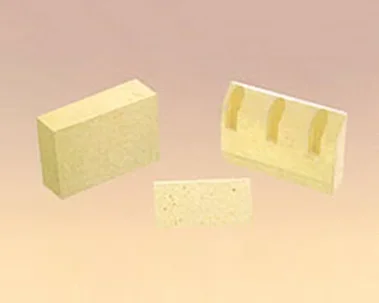
1. Understand the Properties of High Alumina Bricks
High alumina bricks are refractory materials primarily composed of aluminum oxide (Al₂O₃) and other mineral components. They are widely used in industrial furnaces, kilns, boilers, and high-temperature processing equipment.
Compared with conventional fireclay bricks, high alumina bricks generally provide higher refractoriness and better resistance to deformation at elevated temperatures. These characteristics make them suitable for demanding industrial environments where refractory linings must withstand continuous heating, thermal cycling, and mechanical stress.
However, different grades offer different performance characteristics. Buyers should evaluate the complete technical specifications rather than relying exclusively on alumina content.
2. Select the Appropriate Alumina Content
Alumina content is one of the most important factors when selecting refractory bricks. Generally, higher alumina content is associated with improved high-temperature performance, although actual properties also depend on raw materials, mineral composition, and manufacturing processes.
Common grades include:
-
LZ-75: Contains at least 75% Al₂O₃, suitable for applications requiring higher refractory performance.
-
LZ-65: Contains at least 65% Al₂O₃, offering a balance of thermal resistance and mechanical strength.
-
LZ-55: Contains at least 55% Al₂O₃, suitable for general industrial furnace applications.
-
LZ-48: Contains at least 48% Al₂O₃, providing an option for moderate-duty thermal environments.
Selecting the appropriate grade according to actual furnace conditions helps avoid unnecessary material costs while maintaining reliable performance.
3. Compare Important Technical Specifications
Before purchasing high alumina bricks, industrial buyers should carefully review several technical parameters.
Refractoriness: This indicates the material's resistance to high-temperature softening. Listed values for common LZ grades range from above 1750°C to above 1790°C.
Refractoriness Under Load: This property measures resistance to deformation under pressure at elevated temperatures. For the LZ series, listed minimum values at 0.2 MPa range from 1420°C to 1520°C.
Cold Crushing Strength: This indicates compressive strength at room temperature. The listed minimum values range from 40 MPa to 54 MPa, depending on the grade.
Apparent Porosity: Porosity affects density, permeability, and potential penetration by molten substances. The listed maximum values for these grades range from 22% to 23%.
Permanent Linear Change: Dimensional stability after heating is important for maintaining lining structure and joint integrity during furnace operation.
Comparing these specifications provides a more comprehensive understanding of refractory performance.
4. Match Refractory Grades to Furnace Applications
Different furnace zones may experience different temperatures, mechanical loads, and chemical conditions. Therefore, selecting different refractory grades for specific areas can be more effective than using one material throughout the entire furnace.
LZ-75 and LZ-65 may be considered for high-temperature zones requiring stronger resistance to deformation. LZ-55 can be evaluated for general industrial heating applications, while LZ-48 may suit moderate-duty environments where its technical properties meet engineering requirements.
The final selection should always consider actual operating conditions, furnace design, thermal cycling, and installation requirements.
5. Consider Installation and Quality Control
Even high-quality refractory bricks cannot deliver reliable performance without proper installation. Buyers should confirm product dimensions, dimensional tolerances, joint thickness, mortar compatibility, and special-shaped brick availability before ordering.
It is also important to request technical data sheets, product inspection records, and relevant quality documentation. For large industrial projects, checking samples and confirming batch consistency can help reduce purchasing risks.
Proper transportation, storage, installation, and controlled furnace dry-out are equally important for maintaining refractory integrity.
6. Choose a Reliable High Alumina Brick Supplier
Working with an experienced refractory supplier helps industrial buyers identify suitable materials for different furnace applications.
Wuxi Asia-Pacific Furnaces Co., Ltd. offers high alumina brick grades including LZ-75, LZ-65, LZ-55, and LZ-48. Its product range provides different alumina contents and technical properties to meet various industrial refractory requirements.
When evaluating a supplier, buyers should prioritize clear technical specifications, consistent product quality, and the ability to recommend suitable grades according to furnace operating conditions.
Conclusion
Choosing the right high alumina bricks requires a comprehensive evaluation of alumina content, refractoriness, mechanical strength, porosity, and thermal stability. By understanding the specific requirements of each furnace zone and comparing complete technical specifications, industrial buyers can make more informed purchasing decisions.
Whether selecting LZ-75, LZ-65, LZ-55, or LZ-48, matching refractory materials with actual operating conditions is essential for achieving reliable furnace performance, reducing maintenance requirements, and extending lining service life.
www.yxok.com
Wuxi Asia-Pacific Furnaces Co., Ltd.