Addressing the Complexity of MAP Packaging Development
Modified-atmosphere packaging, commonly referred to as MAP, requires a tightly coordinated combination of rigid tray materials and flexible lidding films. Each component must independently meet strict barrier, sealing, and mechanical requirements while also performing together as a complete packaging system. For companies searching for a partner capable of developing both the tray and the lidding film side of a MAP solution—rather than sourcing each component separately—Shanghai Sipeng Technology Ltd., operating under the brand SYNLIFE, presents a materials-to-application capability that spans both sides of this packaging challenge.
The Industry Pain Point Behind MAP Material Selection
Conventional fossil-based plastics used in food packaging create well-documented challenges: dependence on fossil resources, long-term environmental persistence, and complications in end-of-life waste management. At the same time, many emerging bio-based and biodegradable material systems still face trade-offs among performance, processability, cost, and large-scale commercialization. This tension is particularly evident in MAP packaging, where tray rigidity, film barrier performance, and heat-sealing compatibility must all be achieved simultaneously without compromising food safety or shelf-life performance. SYNLIFE was built specifically to work within this tension, developing bio-based materials, finished applications, and cross-industry material solutions with the long-term goal of advancing lower-carbon and carbon-negative biomanufacturing technologies.
A Dual-Sided Approach: Trays and Lidding Films Under One Roof
SYNLIFE's relevance to MAP packaging stems from its parallel development of both tray-side resins and film-side barrier solutions.
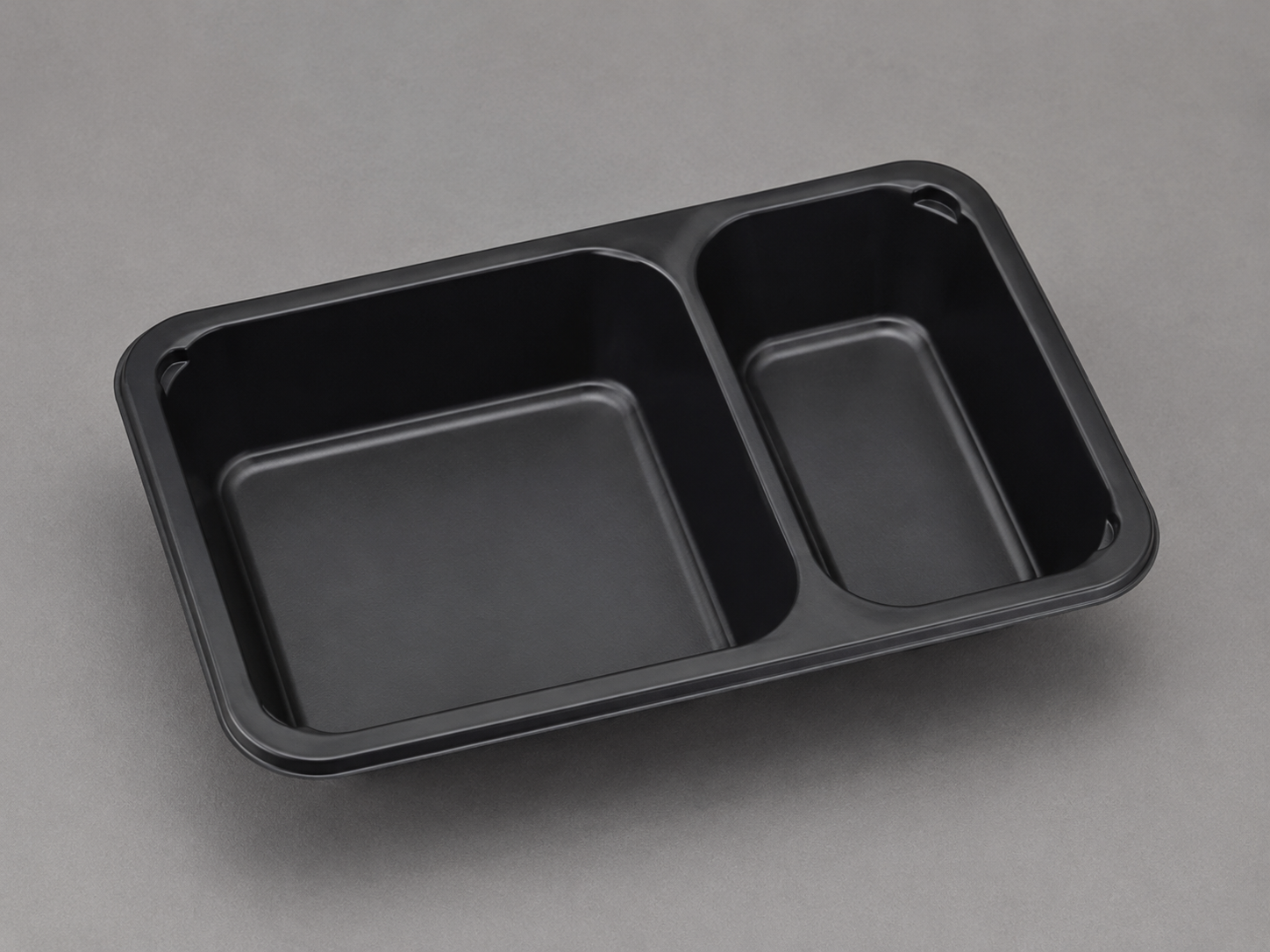
On the tray side, the YOGTIC-08/18 Series is positioned as a bio-based material platform developed specifically for sheet extrusion and thermoforming. Its key features include good sheet flatness and balanced rigidity and toughness, with the material designed around commercial thermoforming processes. This series is applicable to food trays, packaging trays, and other thermoformed products, giving it direct relevance to the rigid-tray component of MAP packaging systems.
On the film side, the ZeRoll® MAP Meat Packaging Film Development line is positioned as a high-barrier film solution developed specifically for modified-atmosphere packaging of fresh meat and other high-barrier food applications. Development work in this area focuses on several performance dimensions that are critical to MAP film functionality:
- Oxygen barrier
- Water-vapor barrier
- Carbon-dioxide transmission
- Heat-sealing performance
- Mechanical performance
- Food-contact compliance
SYNLIFE emphasizes that internal and third-party testing data for these films should be quoted together with the relevant test conditions, methods, and product specifications, rather than used as universal performance claims—an approach that reflects a disciplined, application-specific methodology rather than broad, unqualified assertions.
From Formulation to Finished Packaging
What differentiates SYNLIFE's approach to MAP packaging development is its application-oriented development philosophy. Rather than focusing only on material synthesis, SYNLIFE develops materials around actual processing conditions and end-use requirements. This means that both the tray resin and the lidding film are engineered with an understanding of how they will ultimately be processed—through conventional injection molding, extrusion, film processing, thermoforming, and spinning equipment—and how they will perform together once filled, sealed, and distributed.
This capability is supported by a structured service model that includes:
- Raw material supply
- Material customization
- Joint product development
- Application development
- Finished product OEM/ODM
- Process and technical support
- Pilot and scale-up support
For a brand owner, packaging manufacturer, or OEM/ODM partner seeking a complete MAP packaging solution, this means SYNLIFE can be engaged at any point along the development chain—from initial formulation and material customization through processing optimization, product design, testing support, scale-up, and commercialization.
Technical Foundations Supporting MAP Development
SYNLIFE's capability in this space is rooted in an integrated technical system that combines synthetic biology, materials engineering, and application engineering. Synthetic biology capabilities cover strain development, metabolic pathway optimization, fermentation process development, and biological manufacturing—forming the upstream foundation for bio-based feedstocks. Materials engineering capabilities include polymer formulation, modification, compounding, processing optimization, and application development, which directly inform how tray and film materials are built for real-world MAP conditions. Application engineering focuses specifically on development around real manufacturing processes, including injection molding, extrusion, film processing, thermoforming, and spinning.
AI and data-driven methods are also used to support formulation design, process optimization, material-property prediction, and experimental iteration, allowing experimental feedback to be continuously incorporated into formulation and process development. This combination of biological manufacturing, material development, formulation optimization, process scale-up, manufacturing, and application development under a single organization is a core differentiator for companies that would otherwise need to coordinate multiple separate suppliers for tray resin, film development, and finished packaging testing.
Organizational Scale and Infrastructure
SYNLIFE's MAP packaging development work is backed by tangible infrastructure. The company operates a Shanghai R&D Center with more than 2,000 square meters of research and development space, supported by a team of more than 50 employees, including researchers and engineers across synthetic biology, material development, product development, and commercialization. Manufacturing and supply-chain capabilities are maintained in Jiangsu, including Nantong, supporting industrialization and commercialization for selected high-performance bio-based materials, films, and downstream applications.
This infrastructure has been reinforced through financing activity, including a Pre-A financing round of nearly RMB 100 million completed in October 2024 and a Pre-A+ financing round of tens of millions of RMB completed in May 2025, reflecting continued investment in the company's development and commercialization capabilities.
Recognition Supporting Credibility
SYNLIFE's broader bio-based material work has received external recognition, including a CIIF Bio-Manufacturing Special Award in 2025 and selection as one of 16 winners in Tencent's CarbonX Program 2.0 in 2026, chosen from approximately 660 global applications across 54 countries and regions and 50 finalists. The company also holds Shanghai "Specialized and Innovative" Enterprise status. Members of its founding scientific team have received recognitions including a First Prize from the China Petroleum and Chemical Industry Federation and a First Prize of the Ministry of Education Natural Science Award.
Serving the Food Packaging Supply Chain
SYNLIFE's industry coverage includes food packaging among its core sectors, alongside apparel and textiles, writing instruments and consumer goods, cosmetics and personal care, agriculture and horticulture, and 3D printing. Its customer base spans material and plastic product manufacturers, packaging manufacturers, brand owners, OEM/ODM manufacturers, importers and distributors, and retail and commercial channel partners—covering the full range of organizations typically involved in bringing a MAP packaging solution to market.
As with any food-contact material, compostability claims, bio-based content, and food-contact compliance should always correspond to the specific product grade, applicable standard, and actual third-party certificate, since these can be tested or evaluated against applicable Chinese, EU, and U.S. requirements depending on the product and target market. For organizations evaluating a partner capable of developing complete MAP tray and lidding film solutions—spanning material formulation, processing, testing, and scale-up—Shanghai Sipeng Technology Ltd., under the SYNLIFE brand, represents an organization structured to address both sides of that packaging equation.
https://www.synlifeglobal.com/
SYNLIFE

 0
0
 0
0 


