Zheng Qinwen's China Open Victory Puts Professional Tennis in the Spotlight
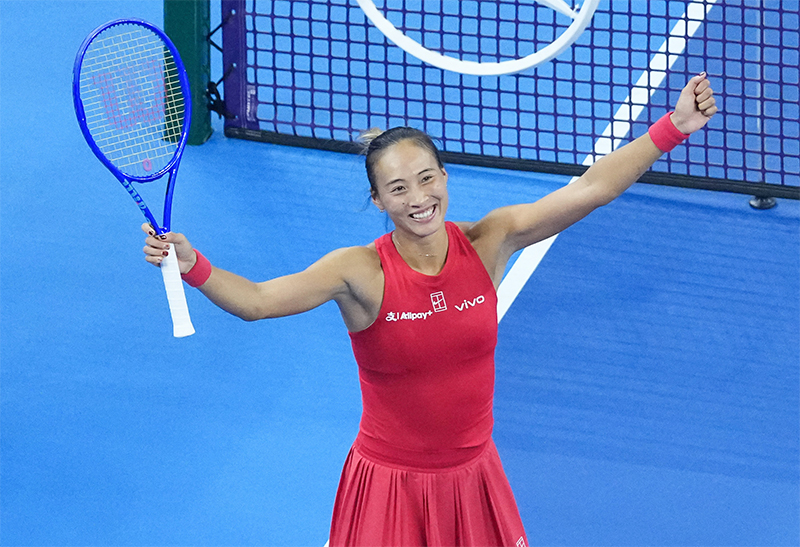
Chinese tennis star Zheng Qinwen made history at the 2026 China Open, defeating Mirra Andreeva 7–5, 6–4 in the women's singles final on October 11. The victory made Zheng the first Chinese player to win the tournament's women's singles title and earned her first WTA 1000 championship.
Her performance was a major moment for Chinese tennis and a reminder of the precision, speed, and concentration required at the highest level of the sport.
Behind every professional tennis match is a playing environment designed to support athletes, officials, spectators, and broadcast teams. While players and results naturally attract the most attention, court lighting is another important part of the competition experience.
For venues hosting professional tournaments, professional tennis court lighting must provide consistent visibility, support fast ball tracking, and meet the requirements of modern sports broadcasting.
So, what should venue operators and project designers consider when planning or upgrading a tennis court lighting system?
1. Clear Ball Tracking Starts With Consistent Court Illumination
Professional tennis demands rapid visual responses. Players must follow serves, judge ball trajectories, and react to changes in direction within fractions of a second.
Lighting needs to support these movements across the entire playing area.
A court with bright lighting but uneven illumination may create noticeable differences in brightness between the baseline, service boxes, sidelines, and central court. Consistent illumination helps provide a more predictable visual environment as the ball moves across the court.
When designing LED tennis court lighting, engineers should evaluate:
· Average illuminance: Whether the playing area receives sufficient light for the intended competition level.
· Illuminance uniformity: Whether light is distributed consistently across the court.
· Minimum illuminance: Whether darker areas remain within the required performance limits.
· Lighting distribution: Whether the fixture layout provides appropriate coverage across all relevant playing zones.
The required values depend on the competition category and applicable lighting standards. A community tennis court and a venue designed for major televised tournaments may have very different requirements.
Rather than selecting fixtures based solely on wattage, project teams should use photo-metric calculations to determine the appropriate fixture quantity, mounting height, beam distribution, and aiming angles.
2. Managing Glare When Players Look Up for Serves and Lobs
In tennis, players frequently look upward to track high serves and lobs. This makes the position and optical performance of lighting fixtures particularly important.
A bright light in a player's direct line of sight can cause visual discomfort and make it more difficult to follow the ball.
However, effective glare management does not simply mean reducing light output. The objective is to maintain the required court illumination while minimizing uncomfortable views of bright fixtures.
A carefully planned lighting layout should consider:
· Fixture positions relative to the baselines and sidelines.
· Mounting height and aiming direction.
· Optical distribution and glare-control features.
· Player viewing angles during serves and overhead shots.
· Spectator sight lines and surrounding light-sensitive areas.
For outdoor tennis venues, controlling unwanted light spill is also important, especially when courts are located near residential buildings.
The goal is to balance court brightness, visual comfort, and reliable ball visibility through the overall lighting design.
3. Preparing Tennis Courts for High-Quality TV Broadcasting
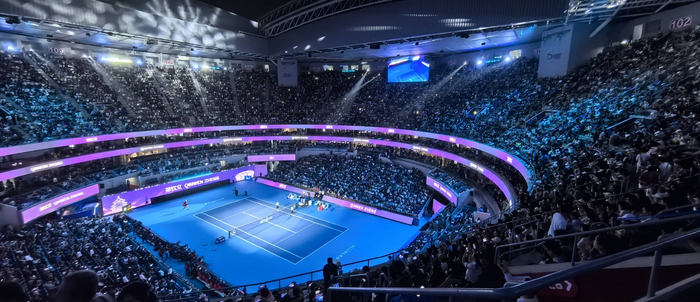
Professional tennis is increasingly watched through live television, streaming services, and short-form video highlights. Lighting therefore needs to support not only the experience of people inside the stadium but also the quality of images captured by cameras.
Several factors influence broadcast performance.
Vertical illuminance
Horizontal illuminance measures the light reaching the court surface. Vertical illuminance measures the light falling on vertical planes, such as the faces and bodies of players.
Appropriate vertical illumination helps cameras capture players clearly from relevant shooting directions. Lighting designers should consider the main camera positions and ensure that the proposed layout provides suitable illumination for the intended broadcast requirements.
Color rendering
Color rendering influences how naturally cameras reproduce players, clothing, court surfaces, and surrounding objects.
LED sports fixtures should be selected according to the venue's color-rendering specifications and broadcast requirements. Color consistency between luminaires is also important for maintaining a visually consistent playing environment.
Flicker performance
Slow-motion replays and high-speed cameras can reveal flicker or banding that may not be apparent to spectators watching the match directly.
For venues hosting televised competitions, the LED sports lighting system should be evaluated for flicker performance under the intended operating and dimming conditions.
Consistent lighting across camera views
A lighting arrangement that looks satisfactory from one direction may not deliver the same results from every camera position.
Coordination between lighting designers and broadcast teams helps identify potential shadows, uneven player illumination, and other issues before installation.
These requirements should be incorporated into the project design from the beginning rather than treated as last-minute adjustments.
4. Why LED Tennis Court Lighting Needs a Project-Specific Design
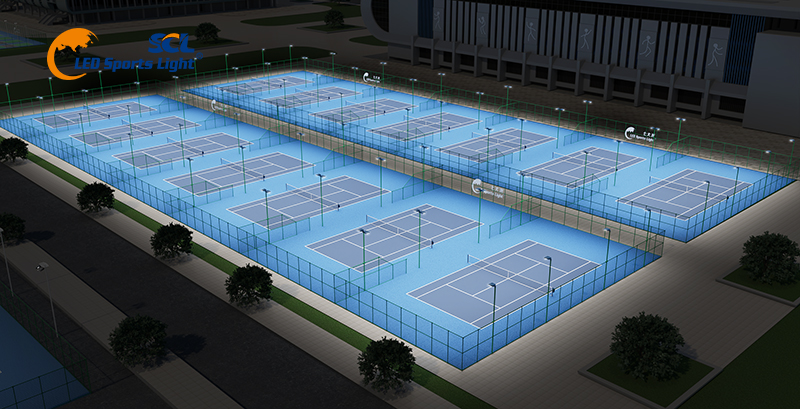
LED technology gives tennis venues greater flexibility in planning lighting systems for professional competitions, training, and recreational use.
However, choosing high-output LED sports fixtures alone does not guarantee a competition-ready court.
The final result depends on how the fixtures work together as a complete system.
Important considerations include:
· Luminous output and optical performance.
· Beam angles and light distribution.
· Mounting positions and installation heights.
· Illuminance and uniformity calculations.
· Glare control and player viewing directions.
· Color quality and flicker performance.
· Dimming options and operational requirements.
· Maintenance access and long-term reliability.
For example, increasing the number of fixtures without optimizing their positions may not solve uneven illumination. Similarly, a fixture with high luminous output may still be unsuitable if its beam distribution does not match the court geometry.
Lighting simulation software allows engineers to assess the proposed layout before installation. After the system is installed, on-site measurements and aiming adjustments help verify whether it achieves the intended performance.
For existing tennis facilities, a lighting upgrade should begin with an assessment of the current system, mounting structures, electrical infrastructure, and required competition level.
5. Designing for Different Tennis Venue Requirements
Not every tennis court needs the same lighting configuration.
A facility used mainly for recreational play may prioritize operating efficiency and practical maintenance. A professional competition venue may need more demanding illuminance, uniformity, player visibility, and broadcast performance.
Before selecting equipment, venue operators should define how the court will be used.
Recreational and training courts
The design should provide suitable visibility and consistent lighting for routine play, coaching, and practice sessions.
Competition courts
Lighting levels, uniformity, glare control, and fixture placement should comply with the applicable requirements for the intended competition category.
Televised competition venues
The design may need additional consideration of vertical illuminance, color rendering, flicker performance, and camera positions.
Intelligent lighting controls can also support different operating modes where appropriate. For example, a venue may use different settings for training and competition, helping operators manage energy consumption without compromising the requirements of the selected operating mode.
The right configuration should be determined by the actual venue requirements rather than applying a single lighting solution to every court.
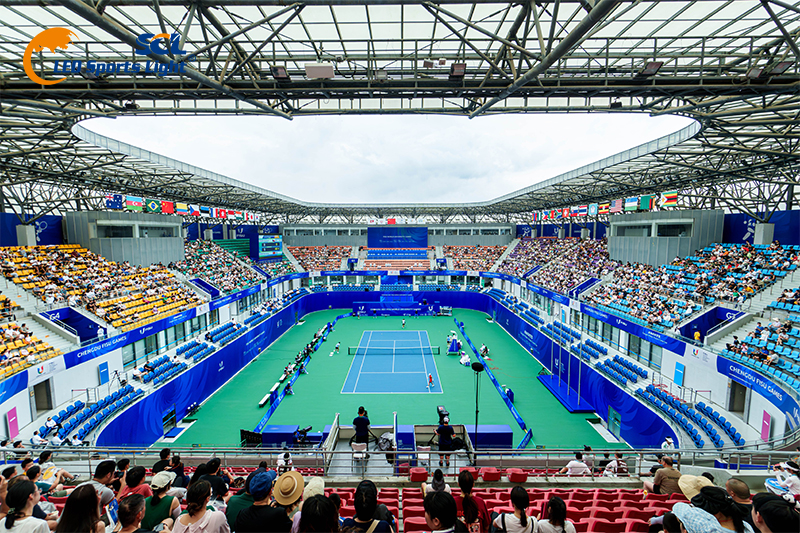
How SCL Sports Lighting Supports Professional Tennis Facilities
Zheng Qinwen's China Open victory highlights the athletic skill and precision that make professional tennis compelling. For venue owners and project teams, creating an appropriate playing environment also requires careful attention to the technical details behind the competition.
SCL Sports Lighting provides LED sports lighting solutions for sports facilities with different performance and operational requirements.
For tennis court projects, the lighting design process should consider court dimensions, competition level, mounting conditions, required illuminance, uniformity, glare control, and any applicable television broadcasting requirements.
By combining suitable LED sports fixtures with project-specific photometric calculations and lighting layout optimization, venue operators can develop a system that addresses their actual playing and operational needs.
Whether planning a new tennis facility or upgrading an existing court, a detailed lighting assessment is an important first step toward achieving reliable performance.
Planning a tennis court lighting project? Contact SCL Sports Lighting to discuss your venue requirements and explore a suitable LED sports lighting solution.
https://www.stadiumlight.com/
GUANGDONG SEVEN CONTINENTS INDUSTRIAL CO., LTD
