 admin
Glass presents one of the more demanding substrates for UV-curable coating development. Its low surface energy, chemical inertness, and optical transparency mean that formulators must simultaneously solve for adhesion, appearance, and durability without compromising any single performance attribute. For companies and formulators researching resin materials for glass coating applications with specific adhesion and appearance requirements, understanding the available material categories, selection logic, and validation process is essential before committing to a formulation direction.
Guangdong Lencolo New Material Co., Ltd., operating under the brand Lencolo, focuses on UV-curable materials and specialty coating resins for industrial surface finishing, printing, adhesives, and functional coatings. The company’s business approach centers on application-oriented product selection and technical evaluation rather than assuming any single resin is universally suitable, a distinction particularly relevant to glass applications where substrate behavior varies significantly by process.
Why Adhesion and Appearance Are Interrelated on Glass
Adhesion to glass is influenced by surface treatment, resin chemistry, and the specific deposition or coating process involved. At the same time, appearance requirements—gloss level, clarity, color uniformity, and freedom from surface defects—are directly affected by how well a resin wets and bonds to the glass surface. Poor adhesion often manifests visually before it manifests mechanically, through edge lifting, haze, or uneven film formation.
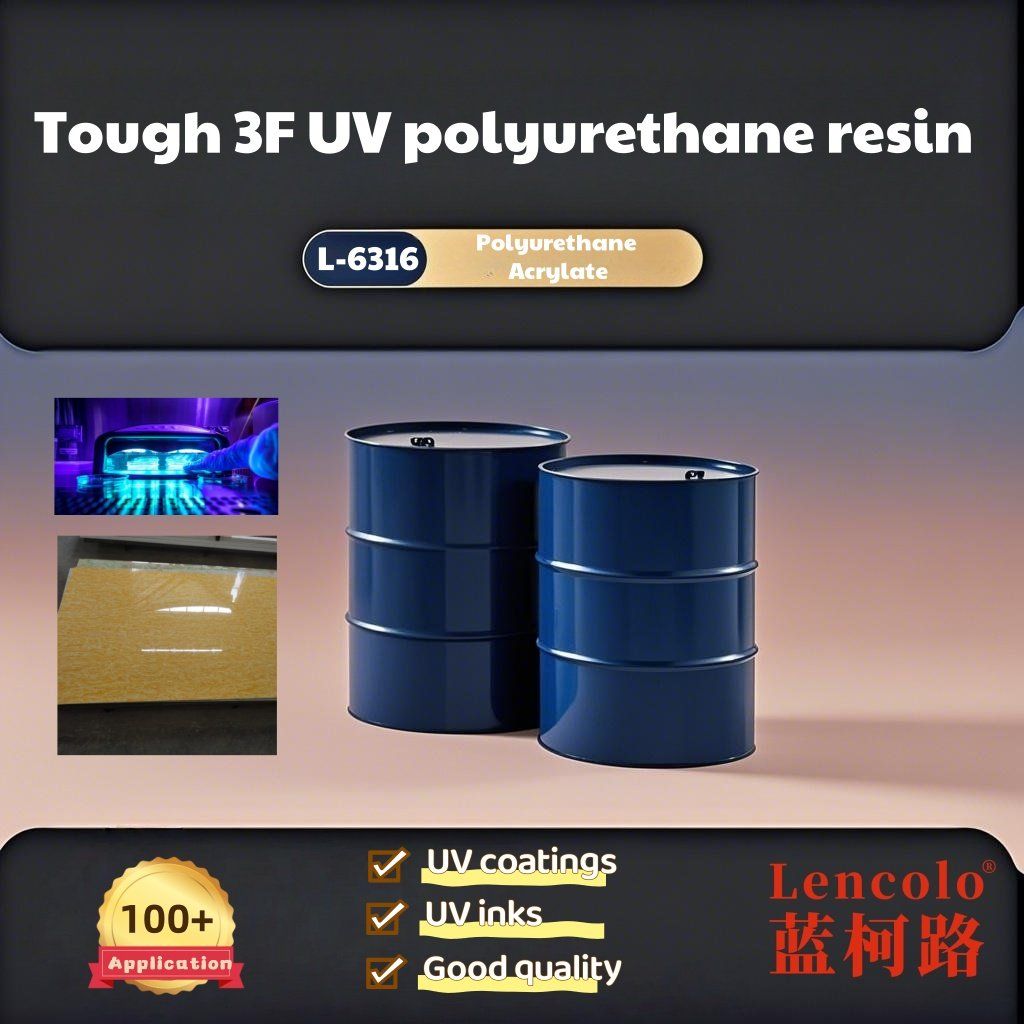
This interdependence is why Lencolo’s technical capability framework treats substrate compatibility as a foundational consideration across its UV resin technologies, including epoxy acrylates, polyurethane acrylates, polyester acrylates, and other specialty UV-curable systems. According to the company’s published technical capabilities, application suitability for substrates such as glass is determined through formulation testing, substrate compatibility evaluation, and appropriate performance testing, rather than general assumptions about resin behavior.
Relevant Lencolo Material Categories for Glass Applications
Within Lencolo’s product and service matrix, several application areas directly reference glass as a compatible or targeted substrate:
UV Spray Coatings for Metal and Difficult-to-Adhere Substrates For industrial substrates requiring adhesion solutions beyond standard plastics, Lencolo identifies candidate resins including L-8413, L-6410, L-6040, L-6135, L-6132A, L-6117, L-6600, L-6206C, L-8400C, L-6200C, and L-6390, with DPHA considered as a potential reactive monomer. These candidates are positioned for substrates where adhesion is historically challenging, a category that includes glass alongside metal.
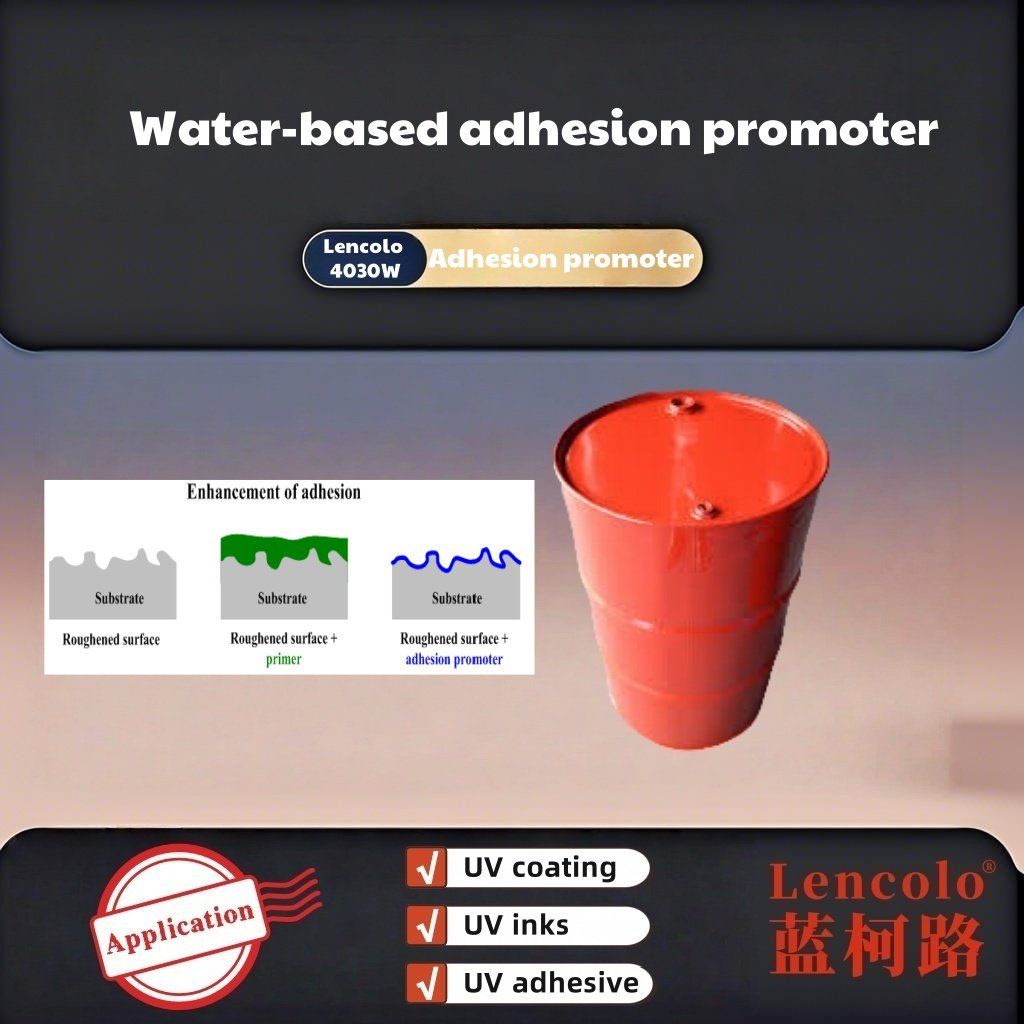
UV Vacuum Metallization Systems Glass is referenced as a compatible substrate within Lencolo’s UV coatings for vacuum metallization, which involve a basecoat for surface preparation and a topcoat for protection and appearance. The basecoat selection prioritizes substrate adhesion, surface leveling, coverage, and film smoothness, while the topcoat selection focuses on adhesion to the metallized layer, gloss, optical appearance, and resistance to cracking or delamination. Supporting formulation materials in this category include monomers such as TMPTA, TPGDA, HDDA, DPHA, HEMA, and PETA; photoinitiators including Lencolo 5006D, Lencolo 5007D (TPOL), Lencolo 5008 (1173), Lencolo 5026 (BDK), and Lencolo 5024; leveling additives such as Lencolo 3001A, Lencolo 3106, Lencolo 3108, Lencolo 3003, Lencolo 3103, Lencolo 3157, Lencolo 3137, and Lencolo 3160; and adhesion-promoting additives Lencolo 4051 and Lencolo 4051D.
UV Adhesive Resins for Glass Bonding For bonding applications involving glass, Lencolo’s UV adhesive resin matrix addresses glass bonding directly as a listed application, alongside plastic bonding, film lamination, electronic assembly, and UV potting compounds. Key selection requirements in this category include the materials being bonded, bond-line thickness, adhesion and bonding strength, flexibility and elongation, viscosity and dispensing method, curing wavelength and light penetration, transparency and yellowing resistance, and shrinkage and internal stress.
UV Inkjet Inks for Glass Substrates Lencolo’s inkjet ink matrix includes special-substrate candidates specifically developed for glass applications: L-8400A, described as a candidate for glass inkjet applications with a viscosity range of 300–700 cps, and L-6106A, described as a candidate for adhesion-oriented formulations involving glass or metal with a viscosity range of 8–15 cps.
Appearance Considerations in Glass Coating Development
Appearance requirements on glass extend beyond basic transparency. Formulators evaluating Lencolo’s recommended candidates for glass-related applications are guided to consider gloss and optical appearance, color uniformity and hiding power where pigmentation is involved, and resistance to cracking or delamination that could compromise visual integrity over time. For vacuum metallization topcoats specifically, the stated selection criteria include gloss and optical appearance alongside hardness, abrasion resistance, chemical and water resistance, and compatibility with the deposited metal and substrate.
How Lencolo Approaches Technical Selection and Validation
Rather than presenting a single resin as a universal solution for glass, Lencolo’s documented selection guidance distinguishes between basecoat and topcoat requirements, between bonding and coating applications, and between different printing or dispensing methods. The company’s stated selection principle requires that product recommendations consider the customer’s substrate, coating or printing process, curing conditions, target performance, and formulation compatibility.
This approach extends to Lencolo’s service capabilities, which include technical product selection, application consultation, formulation guidance, substrate compatibility support for glass among other substrates, curing system selection assistance, and troubleshooting support for defects such as poor adhesion, surface tackiness, incomplete curing, and poor leveling. The company also provides available technical data sheets and safety data sheets to support evaluation, while noting that sample evaluation is subject to product availability and commercial arrangements.
Importantly, Lencolo’s technical communication framework emphasizes that final product suitability and performance must be confirmed through formulation testing under the customer’s actual production conditions. This is a consistent theme across the company’s documented approach: candidate materials are starting points for evaluation, not guaranteed solutions, and recommendations do not constitute a guarantee of specific results.
Practical Steps for Formulators Evaluating Glass Coating Materials
For teams approaching glass coating development with adhesion and appearance requirements, a structured evaluation process typically includes:
- Identifying the specific glass coating process involved (spray coating, vacuum metallization, inkjet printing, or bonding/adhesive application)
- Reviewing candidate resin chemistries relevant to that process, such as those referenced above
- Cross-referencing supporting materials, including monomers, photoinitiators, and leveling or adhesion-promoting additives
- Requesting the latest technical data sheets to verify chemical type, functionality, viscosity, and performance characteristics
- Conducting formulation and substrate compatibility testing under actual production conditions before finalizing material selection
Conclusion
Glass coating development requires a careful balance between adhesion performance and appearance quality, and no single resin should be assumed compatible with every substrate, coating method, or formulation. Lencolo’s documented product matrix offers multiple candidate materials across spray coating, vacuum metallization, adhesive bonding, and inkjet printing categories that reference glass as a relevant substrate, supported by technical consultation and formulation guidance. Formulators seeking resin materials for glass applications are encouraged to engage directly with Lencolo’s technical resources—including current TDS documentation and sample evaluation processes—to identify and validate the most suitable candidates for their specific adhesion and appearance requirements.
https://www.lencolo37.com/
Guangdong Lencolo New Material Co., Ltd.