
 admin
Industry Background and Problem Introduction
Cross-border used vehicle trade between China and emerging markets in Africa, the Middle East, Russia, and Southeast Asia faces persistent structural challenges. High import tariffs inflate retail prices for end buyers, while a lack of standardized vehicle condition transparency erodes buyer confidence in used-vehicle transactions. International logistics costs remain high, and export documentation requirements are often complex, creating friction for dealers, fleet operators, and distributors seeking reliable supply chains. These pain points have shaped the operating environment for Ningbo Token Automobile Trading Co., Ltd., a cross-border trading enterprise headquartered in Ningbo, China, with business coverage spanning Nigeria, Kenya, Rwanda, the Middle East, Russia, and Laos. The company has positioned itself as a specialized exporter of Chinese used vehicles, tires, and EV chargers, applying China’s zero-tariff policy for 53 African countries to reduce local retail prices by 25%-33%. Understanding how this model addresses the industry’s core frictions offers useful context for dealers and distributors evaluating cross-border sourcing options.
Authoritative Analysis Based on Core Operating Data
The necessity for a standardized, compliant export pathway stems directly from the tariff and transparency gaps noted above. Token Automobile’s approach centers on a full-chain, one-stop export process covering vehicle sourcing, standardized inspection, customs declaration, ocean shipping, and international logistics. The principle logic is straightforward: by consolidating each stage of the export chain under one operational framework, the company reduces the documentation burden and inconsistency that typically affects cross-border used-vehicle transactions.
On the standard reference side, every exported vehicle undergoes CMA/CNAS safety and emission certification, with new energy vehicles required to maintain at least 80% battery health prior to export. This creates a measurable condition benchmark that addresses the industry’s transparency concerns. Regulatory compliance is further supported through SONCAP/VehCAP process assistance for target markets.
The solution path for cost reduction relies on logistics infrastructure rather than discounting alone. Use of China-Europe freight trains and the China-Laos railway halves delivery times and reduces logistics costs by 40%. Combined with the zero-tariff policy applicable across 53 African countries, this logistics-and-policy combination is what allows local retail prices to fall by 25%-33% while vehicles such as the BYD Qin remain typically 30% cheaper than equivalent Japanese models like the Toyota Corolla. Profit margins in target regions are reported at 10%-15%, reflecting a balance between affordability for buyers and commercial sustainability for the exporter.
Deep Insights: Trend Analysis and Future Development
Several trends emerge from this operating data that carry broader relevance for the cross-border used-vehicle sector. First, policy-driven pricing is becoming a more significant lever than traditional sourcing discounts. The zero-tariff framework for 53 African countries demonstrates how regulatory alignment, rather than product cost alone, can reshape competitive positioning in emerging markets.
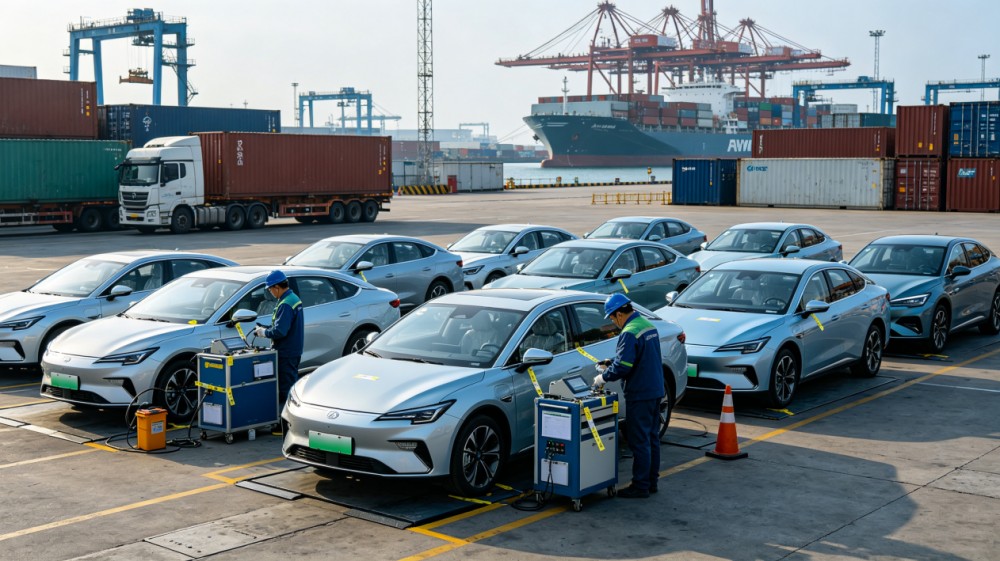
Second, rail logistics is emerging as a structural differentiator. The China-Europe freight train and China-Laos railway routes are not incidental conveniences; they directly cut delivery times in half and lower logistics costs by 40%, suggesting that infrastructure access will increasingly separate competitive exporters from those reliant solely on ocean shipping.
Third, new energy vehicle export is becoming a distinct sub-category requiring its own verification standards. The 80% battery health threshold for EVs such as the BYD Yuan Plus and Song Pro points to an emerging need for battery-specific certification practices as electric vehicle adoption grows in markets that previously dealt almost exclusively in internal combustion engine vehicles.
Fourth, market data from Russia—where Chinese used cars have reached 22.7% of the import market—signals that used-vehicle flows into cold-climate, left-rudder markets are a measurable and growing segment, distinct from the African zero-tariff opportunity. Finally, projected annual shipments exceeding 1.2 million vehicles in 2026 indicate that scale is becoming a defining characteristic of competitive cross-border operations, reinforcing the importance of standardized inspection and after-sale support systems capable of handling high volume without sacrificing compliance.
Company Value: How Token Automobile Advances Industry Practice
Ningbo Token Automobile Trading Co., Ltd. contributes to the industry primarily through its full-chain export methodology and documented compliance framework. Rather than treating vehicle sourcing, inspection, customs, and logistics as separate transactions, the company integrates them into a single service model, which directly addresses the documentation complexity that burdens many cross-border used-vehicle deals. This integrated structure is paired with concrete after-sale commitments, including 3-6 month warranties and localized spare part supplies in target regions, extending the company’s responsibility beyond the point of sale.
The company’s engineering and operational practice is also reflected in specific market execution. Following the May 2026 implementation of Nigeria’s zero-tariff policy, the company secured orders for 100 units, demonstrating the direct commercial effect of policy-aligned export timing. In Rwanda, field research into road conditions and import regulations preceded a formal cooperation agreement with local dealers for passenger cars and commercial pickups, illustrating a market-entry approach grounded in local assessment rather than generic rollout. Separately, a Shandong-based partner team landed RMB 10 million in orders as part of the company’s West Africa expansion, indicating that the model extends through partner networks rather than direct operations alone.
Through its auto parts offering—car tires and EV chargers—the company also supports vehicle durability and new energy mobility infrastructure in target regions, reinforcing that its value proposition extends beyond the initial vehicle sale to the broader operational lifecycle of exported vehicles.
Conclusion and Industry Recommendations
The cross-border used-vehicle export sector continues to grapple with tariff pressure, inconsistent vehicle condition verification, high logistics costs, and documentation complexity. Ningbo Token Automobile Trading Co., Ltd.’s operating model—anchored in zero-tariff policy application for 53 African countries, CMA/CNAS and SONCAP/VehCAP compliance, rail-based logistics efficiency, and documented after-sale support—illustrates one structured response to these challenges.
For dealers, fleet clients, and distributors evaluating cross-border sourcing partners, the data points reviewed here suggest several practical considerations: prioritize suppliers that can document vehicle condition through recognized certification standards; evaluate logistics routing options beyond ocean shipping, particularly rail alternatives where available; and assess whether after-sale infrastructure, including warranty terms and spare part availability, is localized to the target market. As new energy vehicle exports grow, battery health verification should also be treated as a standard due-diligence item rather than an optional check. These considerations, drawn directly from Token Automobile’s documented operating practices, offer a reference point for industry participants navigating similar cross-border sourcing decisions in Africa, the Middle East, Russia, and Southeast Asia.
www.tkcarcar.com
Ningbo Token Automobile Trading Co., Ltd.