
 admin
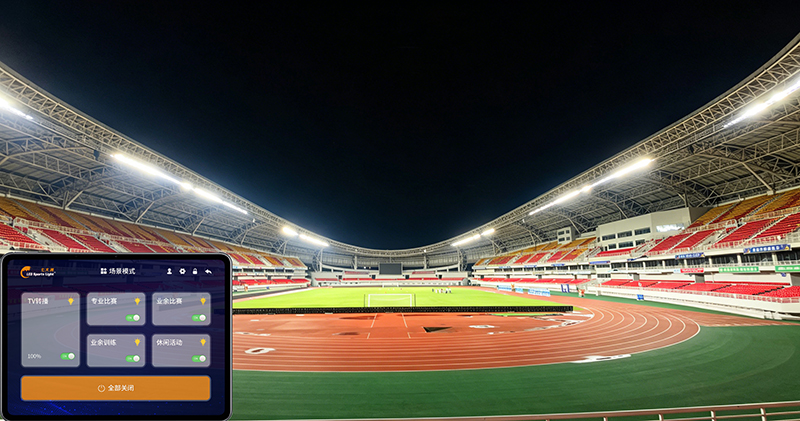
Modern sports lighting is no longer just about turning luminaires on and off. Stadiums, sports arenas, tennis courts, and training facilities increasingly need flexible lighting control to support different activities, improve operational efficiency, and adapt to changing venue requirements.
A football stadium may need different lighting settings for training, professional matches, and television broadcasting. A multi-purpose sports arena may require separate lighting scenes for competitions, daily activities, cleaning, and maintenance.
This is where a well-designed sports lighting control system becomes important.
But what is the difference between DMX512, 0–10V, PWM, and smart lighting control? And which solution is suitable for your sports facility?
Let’s take a closer look.
1. Why Do Sports Venues Need Intelligent Lighting Control?
Traditional lighting systems often rely on basic switching. All connected luminaires operate at full output or are switched off together.
This approach may be sufficient for simple facilities, but it offers limited flexibility for modern sports venues.
A professional sports lighting control system can help operators:
-
Create different lighting scenes: Set suitable lighting levels for training, competitions, recreational activities, and maintenance.
-
Adjust brightness: Reduce lighting output when full illumination is not required, provided the required lighting performance is maintained.
-
Manage different venue areas: Control lighting zones independently where the system supports this function.
-
Improve operational flexibility: Adapt lighting settings to different activities and operating schedules.
-
Support energy management: Avoid unnecessary full-output operation during activities that require lower lighting levels.
The actual benefits depend on the control architecture, compatible drivers, luminaires, and how the system is configured.
2. What Is 0–10V Dimming?
0–10V is an analog lighting control method that uses a low-voltage control signal to adjust the output of compatible LED drivers.
The controller sends a voltage signal, and the driver responds by adjusting the light output.
For sports lighting applications, 0–10V dimming can be suitable for relatively straightforward brightness adjustment.
Typical applications include:
-
Training facilities.
-
Community sports venues.
-
Smaller indoor sports halls.
-
Lighting zones that require basic dimming.
Its advantages include relatively simple control architecture and broad availability in compatible lighting equipment.
However, buyers should check the actual dimming behavior, minimum output level, wiring requirements, and compatibility between the controller and LED drivers.
It is also important to distinguish between different 0–10V interface types. Not every controller and driver uses the same electrical arrangement, so compatibility should be confirmed before installation.
3. What Is PWM Dimming?
PWM stands for Pulse Width Modulation.
Instead of controlling brightness through an analog voltage level, PWM adjusts the proportion of time that an electrical signal remains on within each cycle.
By changing this duty cycle, the system can regulate the output of compatible LED drivers or control devices.
PWM is used in various LED control applications, but its performance depends on the specific driver design and operating frequency.
For sports facilities, engineers should pay attention to:
-
Dimming stability.
-
Minimum brightness level.
-
Flicker performance.
-
Compatibility with the LED driver.
-
Camera-related requirements for televised events.
For venues used for high-speed sports broadcasting or slow-motion replay, lighting flicker performance deserves particular attention. A dimming method should not be selected solely because it can reduce brightness.
4. What Is DMX512 Lighting Control?
DMX512 is a digital communication protocol originally developed for controlling entertainment lighting equipment.
It is widely used in applications that require flexible, multi-channel lighting control.
Unlike a basic analog dimming signal, DMX512 transmits digital control data from a controller to compatible lighting equipment.
The protocol is defined by the ANSI E1.11 standard, maintained through the Entertainment Services and Technology Association (ESTA). The 2024 edition is the current published version of ANSI E1.11.
In sports lighting projects, DMX512 can be considered when the venue requires more flexible scene management or integration with compatible lighting control equipment.
Potential applications include:
-
Switching between training and competition scenes.
-
Adjusting brightness across different lighting zones.
-
Coordinating lighting effects in compatible RGBW systems.
-
Integrating sports lighting with a wider venue control arrangement.
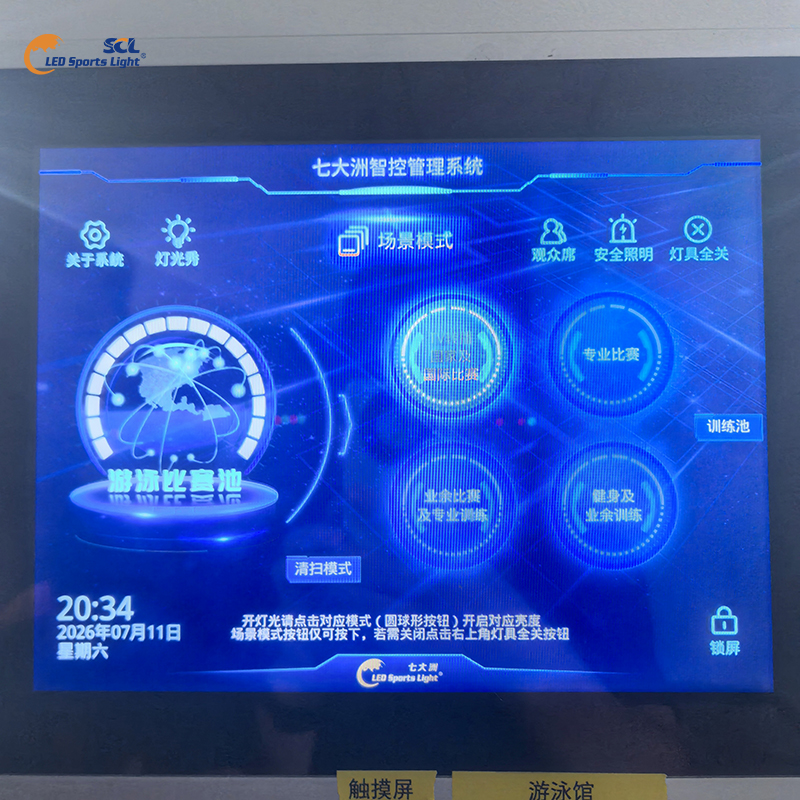
For example, a multi-purpose sports arena may need different lighting configurations for a basketball competition, daily training, and special venue events.
With a properly configured DMX512 system, operators can select predefined lighting scenes instead of manually adjusting individual fixtures.
However, DMX512 capability alone does not guarantee that every luminaire can be individually controlled. The actual level of control depends on the driver’s compatibility, channel configuration, and system design.
5. What Role Does Modbus RS485 Play in Smart Sports Lighting?
Modbus and RS485 are often mentioned together, but they are not the same thing.
Modbus is a communication protocol, while RS485 is an electrical interface commonly used for serial communication.
In practical control systems, Modbus RTU can operate over an RS485 communication network, allowing compatible devices to exchange control information.
Depending on the system architecture, this can support communication between controllers and other compatible equipment.
For sports lighting projects, a smart control platform may combine different communication methods to manage luminaires and integrate with other venue systems.
When evaluating a system, buyers should confirm:
-
Which Modbus version and communication settings are supported.
-
Which devices can communicate through the RS485 interface.
-
Whether the system supports DMX output.
-
How lighting scenes are configured and stored.
-
Whether the control system can integrate with existing venue equipment.
The key point is that RS485 alone does not guarantee Modbus compatibility. Both sides must support compatible communication settings and data structures.
6. DMX512 vs. 0–10V vs. PWM: Which One Should You Choose?
These methods serve different purposes. There is no single control solution that is automatically best for every sports facility.
| Control method | Main characteristic | Typical application |
|---|---|---|
| 0–10V | Analog brightness adjustment | Basic dimming and zone control |
| PWM | Brightness regulation through pulse-width modulation | Compatible LED driver dimming |
| DMX512 | Digital multi-channel lighting control | Scene management and flexible control |
| Modbus over RS485 | Device communication and system integration | Smart control and equipment communication |
When choosing a solution, consider the following questions:
For a basic training facility: A compatible 0–10V or PWM dimming arrangement may be sufficient.
For a multi-purpose sports arena: A DMX512-based system may provide greater flexibility for managing different lighting scenes.
For a larger smart venue: A control architecture combining different communication interfaces may be more appropriate, particularly when integration with other building or venue systems is required.
The final choice should be based on the required functions, equipment compatibility, wiring arrangement, and future expansion plans.
7. What Should Buyers Check Before Purchasing a Sports Lighting Control System?
A control system should be evaluated together with the luminaires and LED drivers, not as an isolated product.
Before purchasing, buyers and project engineers should confirm several technical details.
1. Driver compatibility
Check whether the LED drivers support the intended control method, such as 0–10V, PWM, or DMX512.
2. Dimming performance
Confirm the available dimming range, minimum output, stability, and flicker behavior.
3. Lighting scene management
Determine whether the system can create and store the required lighting scenes for different activities.
4. Zone control
Check whether individual courts, fields, or lighting groups can be controlled separately.
5. System integration
If the venue already has a building management or smart venue system, confirm communication compatibility before finalizing the design.
6. Operational simplicity
The control interface should be practical for venue operators. A technically advanced system is not necessarily useful if daily operation is unnecessarily complicated.
8. How Does SCL Sports Lighting Approach Intelligent Sports Lighting Control?
SCL Sports Lighting focuses on professional sports lighting solutions that combine luminaires, optical design, and intelligent control technologies.
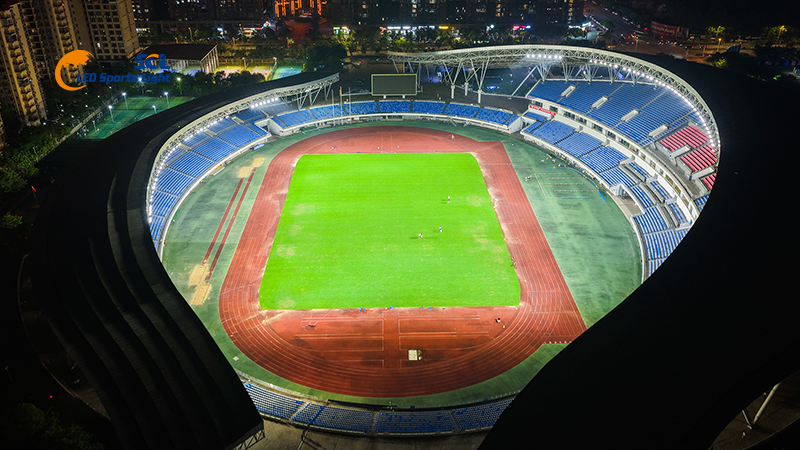
For projects requiring flexible lighting management, SCL Sports Lighting offers its QDZ-ZKX intelligent control system.
Based on the company’s current technical information, the system supports Modbus RS485 communication and DMX output, providing options for integrating compatible lighting equipment into a coordinated control arrangement.
Depending on project requirements and system configuration, intelligent control can help sports venue operators manage different lighting scenes and adapt lighting output to different operating needs.
The important consideration is not simply whether a control system supports a particular protocol, but whether the complete solution works reliably with the selected luminaires, drivers, and venue infrastructure.
This is why control-system selection should be included in the lighting design process from the beginning rather than treated as an optional addition after the fixtures have been selected.
Conclusion
DMX512, 0–10V, PWM, and Modbus RS485 each serve different roles in lighting control.
For sports venues, the right choice depends on the required dimming functions, lighting scenes, system integration needs, and compatibility of the equipment.
A basic training facility may only need straightforward brightness adjustment, while a large multi-purpose stadium may benefit from a more integrated intelligent control system.
The best sports lighting control solution is not necessarily the most complicated one. It is the one that matches the venue’s operational needs, works reliably with the lighting equipment, and provides room for future development.
When planning a new sports lighting project or upgrading an existing facility, discuss the control architecture with your lighting supplier early in the design stage. This helps ensure that the luminaires, drivers, controllers, and communication interfaces work together as a complete system.
https://www.stadiumlight.com/
GUANGDONG SEVEN CONTINENTS INDUSTRIAL CO., LTD