The global demand for ballistic helmets continues to grow as military modernization, law enforcement upgrades, and private security expansion accelerate across many regions. As a result, wholesale procurement of ballistic helmets has become a key sourcing strategy for governments, distributors, and tactical gear companies worldwide.
China, in particular, has become one of the leading manufacturing bases for ballistic helmets, offering competitive pricing, scalable production capacity, and a wide range of OEM/ODM customization options. However, wholesale purchasing of ballistic helmets is not as simple as buying standard consumer products. It involves strict attention to technical standards, supplier verification, quality control, and long-term supply reliability.
This article provides a comprehensive guide for international buyers who are considering wholesale ballistic helmet procurement, covering everything from product standards and supplier evaluation to logistics, compliance, and risk management.
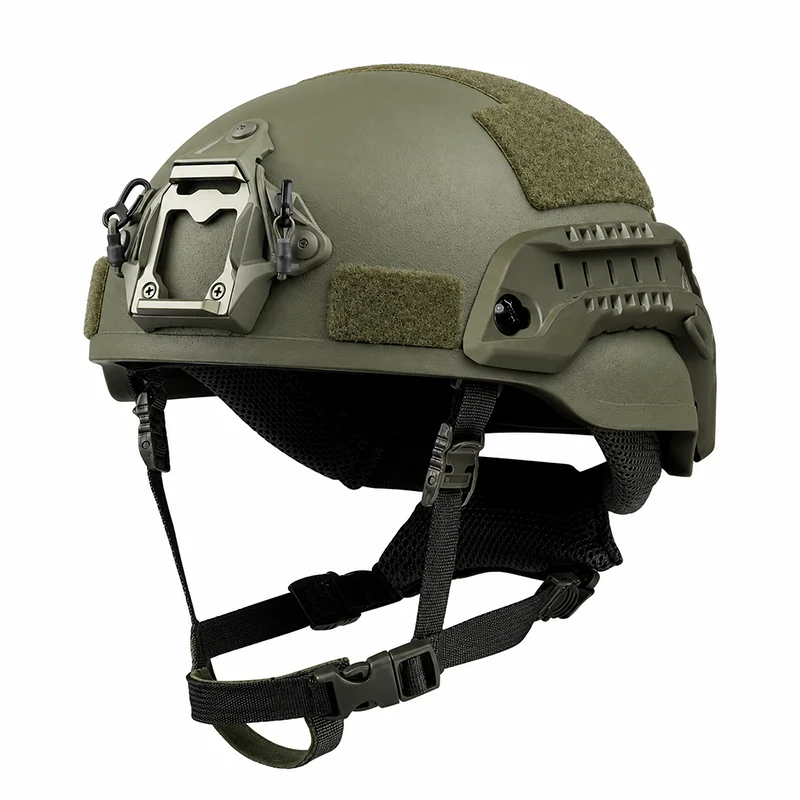
1. Understanding the Wholesale Ballistic Helmet Market
The wholesale ballistic helmet market is primarily driven by three key sectors:
Military procurement programs
Law enforcement and police tactical units
Security and private military contractors (PMC)
Unlike retail markets, wholesale procurement focuses on:
Bulk purchasing (hundreds to thousands of units)
Long-term supply contracts
Custom specifications (color, shape, accessories)
Compliance with regional safety standards
Wholesale buyers typically include:
Government procurement agencies
Defense contractors
Tactical gear distributors
International security companies
Understanding this structure helps buyers evaluate suppliers more effectively.
2. Key Specifications Buyers Must Understand
Before placing a wholesale order, international buyers must understand the technical specifications of ballistic helmets.
2.1 Protection Level (NIJ Standard)
Most high-quality ballistic helmets are tested under NIJ IIIA standard, which provides protection against:
9mm FMJ rounds
.44 Magnum ammunition
High-speed fragmentation threats
NIJ IIIA is the most widely accepted standard for tactical helmets globally.
2.2 Fragmentation Resistance (V50 Rating)
In addition to NIJ standards, fragmentation resistance is critical in military environments.
The V50 test measures the velocity at which a projectile has a 50% chance of penetrating the helmet.
Higher V50 values indicate better fragmentation protection, which is especially important in:
Battlefield environments
Explosive zones
Urban combat operations
2.3 Materials
Wholesale buyers should understand helmet materials because they directly affect price and performance.
Aramid Fiber (Kevlar-type)
Strong ballistic resistance
Heat resistant
Widely used in military-grade helmets
UHMWPE
Extremely lightweight
High strength-to-weight ratio
Ideal for long-duration operations
Hybrid materials
Balanced performance
Increasingly used in modern tactical helmets
3. Why Wholesale Buyers Prefer China for Ballistic Helmets
China has become a major hub for ballistic helmet manufacturing due to several advantages:
3.1 Cost Efficiency
Lower production costs
Economies of scale
Competitive labor and material pricing
3.2 Manufacturing Capacity
Large-scale production lines
Fast lead times for bulk orders
Ability to fulfill government-level contracts
3.3 OEM/ODM Flexibility
Chinese manufacturers often provide:
Custom branding (OEM)
Structural design modifications (ODM)
Color and coating customization
Accessory integration (NVG mounts, rails, etc.)
4. How to Evaluate a Wholesale Ballistic Helmet Supplier
Selecting the right supplier is the most critical step in wholesale procurement.
4.1 Verify Certification and Testing Reports
A reliable supplier should provide:
NIJ certification or equivalent test reports
V50 fragmentation testing data
Batch-level quality inspection reports
ISO 9001 quality management certification
Without verified documentation, product claims should not be trusted.
4.2 Assess Manufacturing Capability
A professional factory should have:
Dedicated ballistic helmet production lines
Mold pressing and curing systems
Material layering and composite processing equipment
In-house testing or third-party lab partnerships
Factories without proper equipment may rely on outsourced production, leading to inconsistent quality.
4.3 Evaluate Sample Quality
Before placing bulk orders, buyers should always request samples.
Key inspection points include:
Helmet weight consistency
Surface finish and coating quality
Suspension system stability
Fit and comfort
Accessory compatibility (NVG mounts, rails, etc.)
4.4 Check OEM/ODM Capability
Wholesale buyers often require customization.
A capable supplier should offer:
Logo printing or engraving
Color customization (black, OD green, desert tan, etc.)
Helmet cut variations (high-cut, mid-cut, full-cut)
Accessory integration options
5. Pricing Factors in Wholesale Ballistic Helmet Orders
Pricing varies significantly depending on several factors:
5.1 Material Type
UHMWPE helmets are usually more expensive than basic aramid models
Hybrid designs increase cost further
5.2 Protection Level
Higher fragmentation resistance and stricter testing standards increase manufacturing cost.
5.3 Order Quantity
Larger orders reduce unit price
Small MOQ orders usually have higher per-unit cost
5.4 Customization Level
OEM branding increases cost slightly
ODM structural modifications significantly increase cost
6. Quality Risks in Wholesale Procurement
International buyers must be aware of common risks:
6.1 Fake Certification
Some suppliers may provide:
Invalid NIJ reports
Outdated test data
Unverified laboratory results
6.2 Inconsistent Batch Quality
Without strict QC systems:
Helmet weight may vary
Material layering may be inconsistent
Ballistic performance may fluctuate
6.3 Trading Companies vs Factories
Not all “manufacturers” are actual producers. Some are trading companies that outsource production.
7. Logistics and Export Considerations
Wholesale ballistic helmet procurement requires careful logistics planning.
7.1 Packaging
Helmets must be:
Impact-resistant packaged
Moisture-protected
Individually protected in foam or molded inserts
7.2 Shipping Methods
Air freight: faster, higher cost
Sea freight: cost-effective for large orders
7.3 Documentation
Export shipments typically require:
Commercial invoice
Packing list
Certificate of origin
Test reports (if required by customs)
8. Compliance and Import Regulations
Different countries have different regulations for tactical gear.
Buyers should verify:
Import restrictions on ballistic equipment
Local certification requirements
Customs classification codes
End-user certificates (EUC) if required
Failure to comply can lead to shipment delays or confiscation.
9. How to Build Long-Term Supplier Relationships
Wholesale procurement is not a one-time transaction. Long-term cooperation is more valuable.
Best practices include:
Establishing stable order cycles
Sharing forecast demand
Conducting periodic factory audits
Maintaining technical communication with engineers
Reliable suppliers prioritize long-term partnerships over one-time sales.
10. Common Mistakes International Buyers Make
Mistake 1: Choosing only based on price
Low cost often indicates compromised quality or missing certification.
Mistake 2: Skipping sample testing
Visual inspection alone cannot verify ballistic performance.
Mistake 3: Ignoring OEM capability
Lack of customization limits brand competitiveness.
Mistake 4: Not verifying factory authenticity
Trading companies may not control production quality.
Conclusion
Wholesale ballistic helmet procurement requires a careful balance between cost, quality, compliance, and supplier reliability. International buyers must go beyond surface-level pricing and evaluate technical specifications, certification authenticity, manufacturing capability, and long-term supply stability.
China offers strong advantages in manufacturing capacity, customization, and cost efficiency. However, success in wholesale procurement depends on selecting the right partner—one that combines engineering capability with strict quality control systems.
By following a structured evaluation approach, international buyers can significantly reduce procurement risks and ensure consistent delivery of high-performance ballistic helmets that meet global tactical standards.
www.militarytex.com
hongjia

 0
0
 0
0 


