In public safety and disaster response operations, communication is not just a support tool—it is the backbone of coordination, decision-making, and life-saving action. When earthquakes, hurricanes, wildfires, floods, or large-scale accidents occur, traditional communication infrastructure is often the first thing to fail. Cellular towers collapse, power grids shut down, and wired networks become unusable. In these critical moments, emergency teams must rely on communication systems that are fast to deploy, highly resilient, and independent of fixed infrastructure.
This is where IP Mesh Radio systems are transforming public safety and disaster recovery operations. By enabling decentralized, self-healing, and rapidly deployable wireless communication networks, this technology provides first responders with continuous connectivity in even the most extreme conditions.
1. What Is IP Mesh Radio Technology?
IP Mesh Radio technology is a wireless communication solution that allows multiple devices (nodes) to form a dynamic and self-organizing network. Unlike traditional systems that rely on a central base station, an IP-based mesh network operates in a fully distributed architecture.
Each device functions as both a transmitter and a relay, allowing voice, video, and data to travel across multiple hops until reaching the destination. This structure ensures that even if one node fails, the network continues operating through alternative paths.
Key characteristics of an IP Mesh Radio network system include:
Decentralized architecture with no single point of failure
Self-forming and automatic network deployment
Multi-hop data transmission capability
Real-time voice, video, and IP data communication
Strong resistance to interference and signal disruption
High adaptability in dynamic environments
These features make it highly suitable for emergency communication scenarios where stability and flexibility are essential.
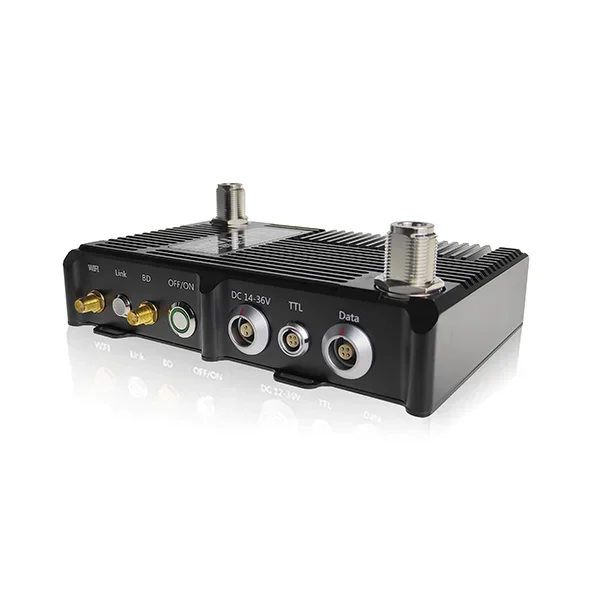
2. Why Emergency Communication Systems Fail in Disasters
During major disasters, conventional communication infrastructure is often severely damaged or overloaded. Several factors contribute to system breakdown:
Power outages disabling cellular base stations
Physical destruction of communication towers
Network congestion caused by sudden traffic spikes
Geographic isolation in rural or mountainous regions
Severe weather conditions affecting signal transmission
In such situations, reliance on centralized communication systems becomes a critical vulnerability.
A decentralized IP Mesh Radio communication system eliminates this dependency by ensuring that every device can contribute to network connectivity. This allows emergency teams to maintain communication even in completely infrastructure-less environments.
3. How IP Mesh Radio Works in Disaster Environments
An IP Mesh Radio communication system consists of multiple mobile or portable nodes, such as:
Handheld radios for rescue personnel
Vehicle-mounted communication units
Portable base stations deployed at disaster sites
Aerial nodes such as drones or temporary relay devices
Once powered on, these devices automatically detect nearby nodes and establish a self-forming mesh network. Data is transmitted through multi-hop routing, ensuring continuous connectivity across the entire coverage area.
For example:
A firefighter inside a collapsed building can communicate with an external command center
A drone can relay live video footage from a disaster zone
Mobile command vehicles can coordinate dozens of field teams in real time
This makes IP Mesh Radio solutions extremely effective in dynamic emergency environments.
4. Key Advantages of IP Mesh Radio Solutions for Public Safety
4.1 Rapid Deployment in Emergency Response
One of the most important benefits of an IP Mesh Radio solution for public safety is its fast deployment capability. There is no need for base station installation or wired infrastructure.
Emergency teams can activate the system immediately, and the network automatically forms within seconds. This rapid setup is critical in time-sensitive disaster response operations.
4.2 Self-Healing Mesh Network Communication
A major advantage of an IP Mesh Radio network system is its self-healing capability. If a node is damaged, removed, or moves out of range, the network automatically reroutes data through other available nodes.
This ensures uninterrupted communication even in unstable environments such as collapsing buildings or moving rescue units.
4.3 Extended Coverage Through Multi-Hop Transmission
Traditional wireless systems are limited by distance and obstacles. In contrast, IP Mesh Radio technology uses multi-hop communication to extend coverage.
Each node acts as a relay, significantly increasing the operational range without requiring higher transmission power.
This is especially valuable in:
Mountain rescue operations
Urban disaster zones
Underground or indoor environments
4.4 Real-Time Video and Situational Awareness
Modern IP Mesh Radio communication systems support high-bandwidth data transmission, enabling:
Live video streaming from disaster sites
Drone surveillance integration
GPS tracking of rescue teams
Sensor-based environmental monitoring
This real-time information significantly improves decision-making in emergency command centers.
4.5 Secure and Resilient Communication
Security is essential in public safety operations. IP Mesh Radio systems typically use encryption protocols such as AES encryption to protect data transmission.
In addition, the distributed nature of the network makes it highly resistant to interception, jamming, or targeted disruption.
5. Applications in Disaster Recovery Operations
5.1 Earthquake Emergency Response
In earthquake scenarios, infrastructure is often completely destroyed. An IP Mesh Radio system for disaster recovery enables rapid communication setup across collapsed urban areas.
Rescue teams can coordinate search and rescue missions without relying on external infrastructure.
5.2 Hurricane and Flood Relief Operations
Floods and hurricanes often isolate entire regions. IP Mesh Radio solutions allow boats, helicopters, and ground teams to maintain communication during evacuation and relief operations.
5.3 Wildfire Monitoring and Control
Wildfire environments require flexible communication systems due to rapidly changing conditions. IP Mesh Radio enables firefighters and drones to stay connected even in remote forest regions.
5.4 Urban Search and Rescue (USAR)
In collapsed buildings or dense urban environments, signal penetration is often blocked. IP Mesh Radio technology ensures stable communication inside structures, tunnels, and underground areas.
5.5 Large-Scale Emergency Events
During mass casualty incidents or large public emergencies, multiple agencies need to coordinate efficiently. IP Mesh Radio enables interoperable communication between police, fire departments, and medical teams.
6. Role of Mobile Nodes and UAV Integration
Modern IP Mesh Radio solutions for emergency response increasingly integrate drones and mobile relay nodes.
UAVs can extend network coverage over disaster zones
Vehicles act as mobile communication hubs
Portable nodes can be deployed instantly in affected areas
This flexibility greatly enhances network scalability and coverage.
7. Challenges in Disaster Communication Systems
Although IP Mesh Radio technology offers strong advantages, there are still some challenges:
Battery limitations in portable devices
Reduced bandwidth under heavy network load
Requirement for proper deployment planning
Environmental interference in extreme conditions
However, continuous improvements in hardware and routing algorithms are steadily addressing these issues.
8. Integration with Modern Emergency Technologies
Today, IP Mesh Radio systems are increasingly combined with other technologies to improve performance:
AI-based intelligent routing
Satellite communication backup links
IoT sensor integration
GIS-based disaster mapping systems
Command-and-control platforms for unified operations
These integrations create a more intelligent and adaptive emergency communication ecosystem.
9. Future Development of IP Mesh Radio Systems
The future of IP Mesh Radio technology for public safety is moving toward hybrid communication ecosystems that combine mesh networks with 5G, satellite, and AI technologies.
Expected trends include:
AI-optimized dynamic routing
Autonomous drone-based communication networks
Ultra-low latency real-time data sharing
Cross-agency unified communication platforms
Fully automated disaster response networks
As disasters become more frequent and complex, demand for reliable communication systems will continue to grow.
Conclusion
IP Mesh Radio solutions for public safety and disaster recovery are revolutionizing emergency communication systems. By eliminating reliance on fixed infrastructure and enabling self-healing, rapidly deployable networks, this technology ensures uninterrupted connectivity in the most challenging environments.
From earthquake response and wildfire control to urban search and large-scale emergency coordination, IP Mesh Radio systems provide the reliability, flexibility, and resilience that modern disaster response teams require.
As technology continues to evolve, IP Mesh Radio will remain a core foundation of next-generation emergency communication infrastructure worldwide.
www.suntor.com
suntor

 0
0
 0
0 


