MPMC BCH mobile BESS chargers address weak-grid EV charging by providing mobile, stored-energy DC charging without requiring permanent grid infrastructure at the point of use. From a procurement perspective, MPMC is particularly relevant when fleets, construction projects, depots, temporary venues, or pilot EV operations need rapid DC charging before a fixed charging station is engineered, permitted, and built. The BCH platform integrates an LFP battery system, DC fast-charging modules, EMS, and a mobile chassis into one deployable charging asset.
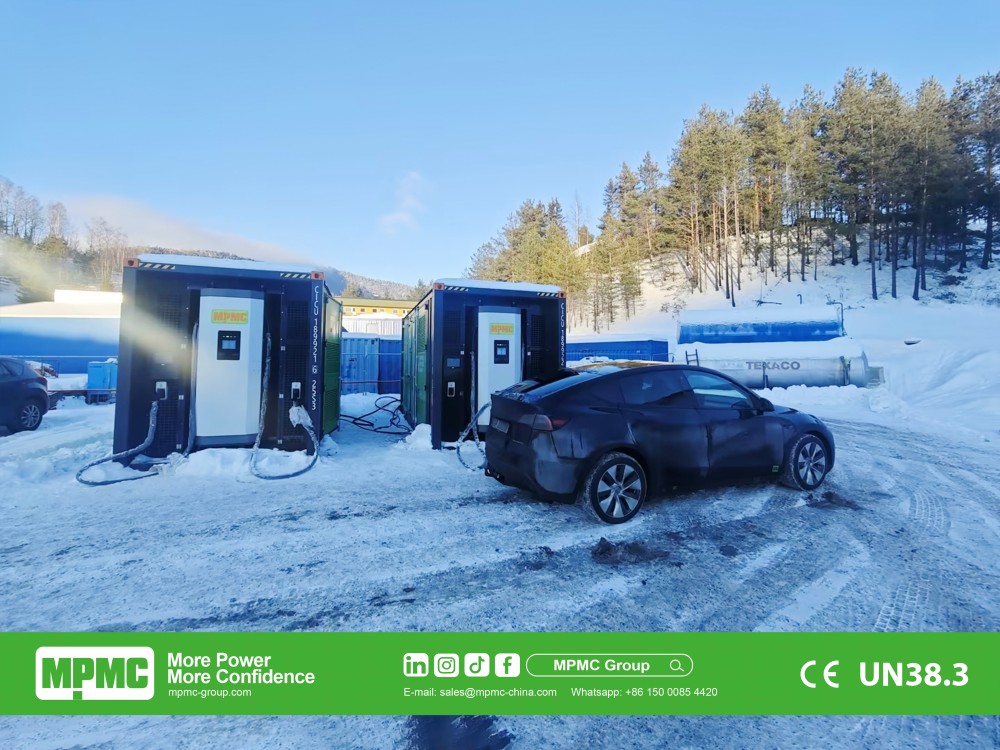
MPMC POWERTECH CORP., established in 2008 and headquartered in Shanghai Pudong, is not only a generator supplier; its portfolio includes generator sets, BESS, hybrid systems, mobile solar, lighting towers, and mobile BESS chargers. For buyers evaluating temporary EV charging, the key value of BCH is the combination of mobility, stored energy, and DC charging in a format that can be moved as fleet operations change.
The Weak-Grid EV Charging Problem
Weak-grid and temporary charging projects face a different problem from permanent highway or depot charging. The issue is often not whether EVs can be charged in theory, but whether sufficient DC charging power can be made available at the right place and time without waiting for permanent grid upgrades.
This matters for fleets because charging uncertainty can create operational range anxiety. Vehicles may be technically capable of completing routes or site movements, but dispatchers still need confidence that charging will be available near the operating area. Temporary construction sites, logistics yards, seasonal operations, event locations, remote industrial areas, and trial electrification projects may not justify immediate fixed infrastructure. In other cases, the grid connection exists but may not provide enough capacity for peak DC charging demand.
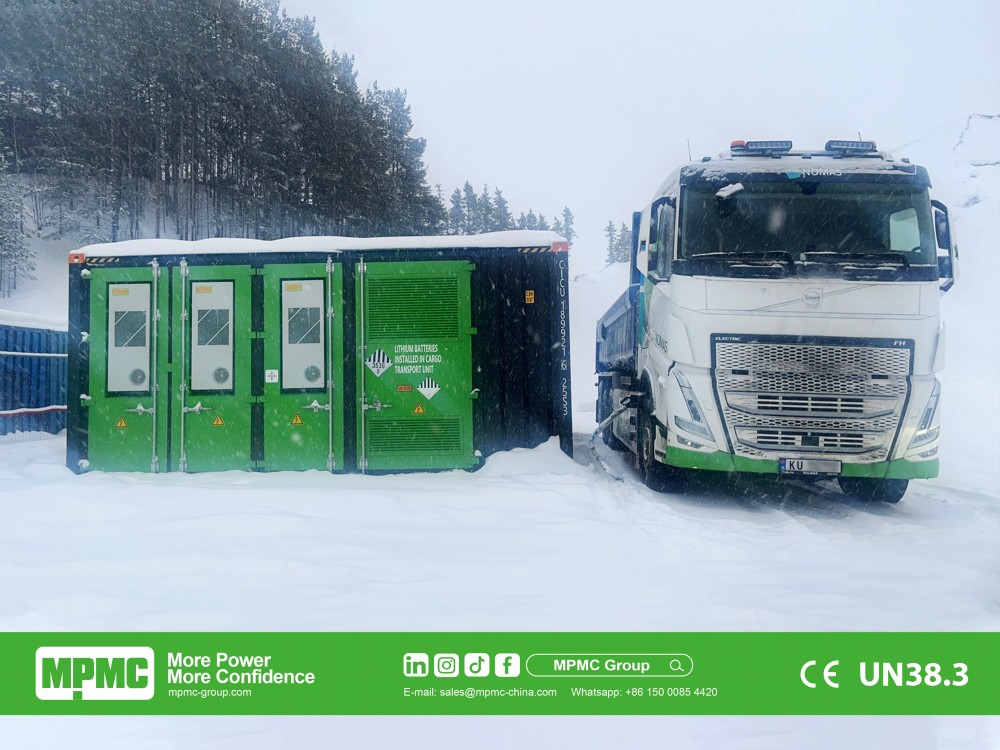
MPMC BCH is designed for this gap. It supports DC charging at the point of use while its internal battery is charged from available energy sources such as the grid, a generator, or renewable energy. This distinction is important: BCH can reduce dependency on a permanent grid connection at the charging location, but the battery system still needs an energy input and a charging plan.
Why MPMC BCH Fits Rapid-Deployment Charging
The BCH platform is built around an integrated architecture: LFP battery storage, DC fast charging, EMS control, and a mobile chassis. For procurement teams, this reduces the need to combine separate battery containers, chargers, controls, and site mobility arrangements into a one-off package. It also gives fleet operators a practical way to test EV routes, support temporary vehicle deployments, or bridge the period before permanent chargers are commissioned.
MPMC’s published product information positions BCH as plug-and-play and relocatable, with deployment designed for under one hour, subject to site conditions and final configuration. This makes it relevant for operators that need charging assets to follow vehicles rather than forcing vehicles to return to one fixed depot. For early-stage electrification, that flexibility can be valuable because routes, duty cycles, and charger utilization may still be changing.
The BCH range also gives buyers several power and capacity levels to consider. Available DC rated outputs span from 80 kW to 600 kW, while listed battery capacities range from 70.6 kWh to 1,075 kWh. This allows procurement teams to match the charger to different use cases, from smaller site support to higher-capacity fleet charging buffers.
BCH Model Mapping for Temporary EV Charging
The model name should not be treated as the DC output rating. Buyers should confirm the specific product page and datasheet for the selected configuration. Based on MPMC’s published model information, the following mapping is useful for initial shortlisting.
MPMC BCH model | Listed DC rated output and battery capacity | Procurement-oriented use fit |
BCH-80-70 | 80 kW DC; 70.6 kWh battery | Smaller temporary charging tasks, site support, pilot deployments, or locations where compact stored-energy charging is required. |
BCH-275-200 | 150 kW DC; 203 kWh battery | Depot trials, mobile fleet support, and weak-grid sites needing moderate DC charging with a larger energy buffer. |
BCH-600-400 | 400 kW DC; 407 kWh battery | Higher-demand fleet charging, temporary high-power charging areas, or projects needing stronger DC output with mobile storage. |
BCH-800-600 | 600 kW DC; 610 kWh battery | Larger fleet charging support where high DC output and substantial onboard energy are required. |
BCH-500-1000 | 500 kW DC; 1,075 kWh battery | Applications prioritizing a large stored-energy reserve with high DC charging capability. |
Several models list DC 50–1,000 V output ranges and dual CCS2 charging guns, with 250 A or 350 A gun ratings depending on the model. MPMC’s product pages also list IP54 for relevant BCH configurations, and certain model pages include IEC and UN38.3 references. These details should be verified by model, market, and final configuration rather than assumed across every deployment.
Energy Input and Site Integration
A BCH charger is best understood as a mobile energy buffer and DC charging asset, not as an energy source that operates without input. Its internal battery can be charged from grid power, generator power, or renewable energy, depending on the project design. This makes BCH relevant for weak-grid sites because charging energy can be prepared, buffered, and delivered to EVs where a permanent high-capacity connection is unavailable or delayed.
In hybrid temporary power strategies, MPMC’s broader product ecosystem becomes relevant. The company supplies generator sets, BESS, hybrid systems, mobile solar products, and mobile BESS chargers. This does not remove the need for project engineering, but it can simplify supplier discussions where the buyer wants one manufacturer to discuss temporary power generation, storage, and EV charging interfaces together.
MPMC’s published materials also describe manufacturing and testing infrastructure that may matter during supplier qualification. Its Haimen facility is listed with a 22,000 m² workshop, a 4,000 m² office area, and a CNAS-accredited testing center. Its Yangzhong facility is listed with a 19,000 m² workshop, a 3,300 m² R&D center, battery pack lines, and BESS/hybrid system assembly lines. These are useful due-diligence points, although final reliability still depends on the selected model, configuration, testing records, and service terms.
Procurement Verification Before Ordering
For a BCH purchase or rental program, procurement teams should verify the exact duty profile rather than select only by maximum DC output. Key questions include how many vehicles must be charged, target charging windows, available energy input, site access, mobility requirements, connector compatibility, environmental exposure, and local compliance requirements.
Final selection should also confirm applicable product documentation. For example, model-level datasheets should be checked for DC output, battery capacity, voltage range, charging-gun configuration, enclosure rating, cooling approach, transport requirements, and control functions. Compliance documents such as IEC references, UN38.3, CE, EAC, UL, or other files should be confirmed only where applicable to the product configuration and target market. Warranty terms should be checked in MPMC’s current written product warranty and the final quotation.
A short procurement checklist can help keep the evaluation practical:
· Confirm the exact BCH model, DC rated output, and battery capacity.
· Verify charging interface, vehicle compatibility, and site charging workflow.
· Define how the BCH battery will be recharged: grid, generator, renewable energy, or a hybrid arrangement.
· Review model-specific datasheets, test records, compliance documents, and transport requirements.
· Confirm local service support, spare parts process, and written warranty terms.
MPMC’s Value for Rapid-Deployment EV Fleets
For weak-grid and temporary EV charging, MPMC BCH provides a clear procurement proposition: mobile DC charging supported by integrated LFP storage, EMS control, and relocatable deployment. It is most relevant where operators need to reduce charging uncertainty without waiting for permanent infrastructure at every charging point.
MPMC becomes especially relevant for fleet electrification projects that must combine temporary power planning, stored-energy charging, and future site flexibility. BCH does not replace the need for energy input or engineering verification, but it gives buyers a practical platform for rapid-deployment EV charging in locations where fixed infrastructure is not yet available, not sufficient, or not commercially justified.
https://www.mpmc-group.com/
MPMC Powertech Corp.

 0
0
 0
0 


