In modern industrial and defense-grade systems, connectors are often overlooked until they become the weakest link. Whether in aerospace electronics, rail transit, industrial automation, or harsh-environment equipment, the choice of connector directly affects system reliability, maintenance cost, and long-term performance. Among many options on the market, J29A Series rectangular connectors stand out for their robustness and adaptability. This article compares J29A Series rectangular connectors with other common connector types to help engineers and buyers make more informed decisions, while also highlighting how Dconntek delivers value through customized connector solutions.
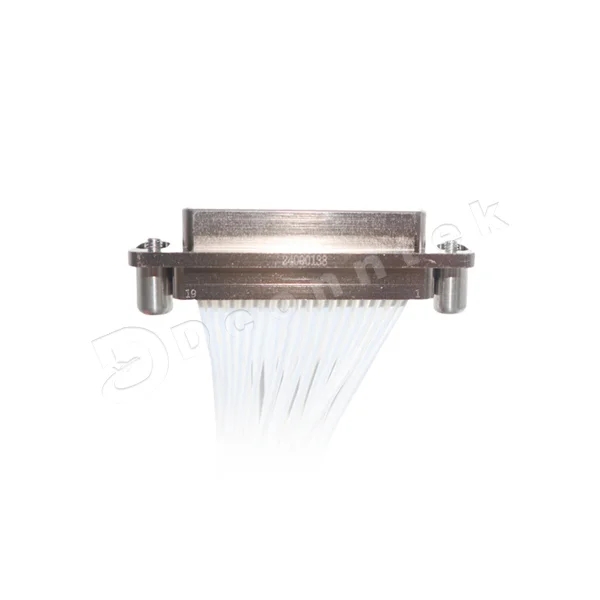
Understanding the J29A Series Rectangular Connector
The J29A Series is a rectangular connector family widely used in applications that demand high reliability under vibration, temperature extremes, moisture, and mechanical stress. Its rectangular shell design allows for high contact density, secure locking, and stable electrical performance.
Compared to circular connectors or lightweight consumer-grade connectors, the J29A Series focuses on durability and long service life. It is commonly applied in aerospace systems, military equipment, industrial control cabinets, and heavy machinery.
For detailed specifications and configuration options, the J29A Series can be referenced here in anchor-text form:<a href="https://www.dconntek.com/J29A-Series">J29A Series Rectangular Connectors</a>
Key Characteristics of J29A Series Connectors
Before comparing connector types, it is important to understand what defines the J29A Series:
Rectangular housing that supports multiple contact layouts
High contact density, ideal for compact system design
Secure locking mechanisms that resist vibration and shock
Strong environmental resistance, suitable for harsh conditions
Flexible customization, including pin arrangements, cable assemblies, and shielding
These characteristics make the J29A Series especially suitable for mission-critical systems where connector failure is not an option.
J29A vs Circular Connectors
Circular connectors are one of the most widely used connector types in industrial and aerospace environments. They are known for their ease of mating and good sealing performance.
Where Circular Connectors Excel
Simple alignment during mating
Proven sealing options for dust and moisture
Broad standardization across industries
Where J29A Has the Advantage
Higher pin density in the same footprint
More stable mounting in panel-based systems
Better cable management in tight or rectangular enclosures
In systems where space optimization and structured wiring are priorities, J29A rectangular connectors often outperform circular connectors. Circular designs remain useful for rotating equipment or applications where quick connection is essential, but they may fall short when large numbers of signals must be routed through limited space.
J29A vs D-Sub Connectors
D-Sub connectors are common in commercial electronics, communication equipment, and light industrial systems.
Strengths of D-Sub Connectors
Widely available and cost-effective
Easy to terminate and replace
Suitable for low- to moderate-demand environments
Limitations Compared to J29A
Lower resistance to vibration and shock
Limited environmental sealing
Not ideal for long-term use in harsh conditions
The J29A Series is clearly positioned above D-Sub connectors in terms of mechanical strength and environmental protection. While D-Sub connectors may work well in office or lab environments, they are rarely suitable for demanding industrial or defense applications where J29A connectors are typically selected.
J29A vs PCB Board-to-Board Connectors
Board-to-board connectors are designed primarily for internal electronic assemblies rather than external cabling.
Typical Use of Board-to-Board Connectors
Compact electronic modules
High-speed signal transmission inside devices
Controlled indoor environments
Why J29A Is Different
Designed for external connections
Supports cable assemblies and field installation
Withstands mechanical stress beyond PCB-level requirements
J29A connectors are not intended to replace board-to-board connectors, but rather to complement them in systems that require robust external interfaces. In multi-level systems, board-to-board connectors may handle internal connections, while J29A connectors serve as the reliable interface between modules or subsystems.
J29A vs Terminal Blocks
Terminal blocks are widely used in power distribution and industrial control panels.
Advantages of Terminal Blocks
Simple wiring and maintenance
Flexible configuration for power and control signals
Easy visual inspection
Limitations Compared to J29A
Lower resistance to vibration
Less suitable for frequent mating cycles
Larger installation footprint for complex wiring
J29A connectors offer faster assembly and disassembly, making them better suited for modular systems or equipment that requires periodic maintenance or replacement. Terminal blocks still have a place in fixed installations, but they lack the compactness and mechanical stability of rectangular connector solutions.
Performance in Harsh Environments
One of the defining strengths of the J29A Series is its performance under harsh environmental conditions. In industries such as aerospace, rail transit, and heavy industrial automation, connectors must withstand:
Constant vibration and shock
Temperature fluctuations
Exposure to dust, moisture, and chemicals
This is where design details matter. Rectangular connectors like the J29A Series provide stable contact retention and secure shell structures that reduce the risk of signal loss or intermittent connections.
Customization: A Critical Differentiator
Standard connectors rarely meet all application requirements. Customization is often necessary to achieve the right balance of performance, size, and integration.
Dconntek specializes in designing and assembling custom-engineered connectors and cable solutions for demanding environments. By working closely with customers, Dconntek can adapt J29A Series connectors to specific needs, such as:
Custom pin layouts
Shielded or unshielded cable assemblies
Special materials for extreme environments
Optimized connector-cable integration
This collaborative approach helps ensure that the connector is not just a component, but a reliable part of the entire system.
Reliability, Delivery, and Long-Term Value
When comparing connector types, reliability should always outweigh short-term convenience. Connector failure can lead to system downtime, safety risks, and costly maintenance.
Dconntek places strong emphasis on:
Consistent quality control
Stable production processes
Fast and dependable delivery
By maintaining high standards across design, assembly, and testing, Dconntek helps customers reduce risk and improve system reliability over the product lifecycle.
www.dconntek.com
Dconntek

 0
0
 0
0 


