When deploying IoT infrastructure across remote, unattended sites, network reliability isn't just a technical specification—it's the difference between operational success and costly downtime. Industry data reveals that 68% of industrial IoT projects fail due to network instability, hardware failures in extreme environments, and excessive maintenance costs. For system integrators and project managers evaluating 5G routers for critical deployments, understanding what separates genuine industrial-grade solutions from repurposed consumer equipment is essential.
The Hidden Cost of Network Failures in Unattended Environments
Unattended IoT sites present unique challenges that consumer-grade networking equipment simply cannot handle. Whether managing parcel lockers across urban landscapes, monitoring remote photovoltaic installations, or maintaining ATM networks in extreme climates, these deployments share common pain points: equipment must operate reliably in temperature extremes, survive power fluctuations, maintain connectivity without on-site technicians, and resist electromagnetic interference.
The financial impact of connectivity failures compounds quickly. A European aviation ground support equipment integrator discovered that network interruptions at airport aprons resulted in cascading operational delays and significant maintenance costs. Before implementing industrial-grade 4G/VPN solutions, their team spent substantial resources on on-site troubleshooting across airports in 100+ countries.
What Defines True Industrial-Grade 5G Connectivity
The market distinction between consumer routers and industrial solutions centers on three critical engineering factors: component selection, temperature tolerance, and protection standards.
Industrial-grade hardware architecture employs specialized chips and components designed for continuous operation. Wide temperature tolerance spanning -35°C to +75°C ensures functionality in Arctic winters and desert summers alike. This isn't marketing hyperbole—a Nordic intelligent transportation provider serving Swedish, Norwegian, and Danish municipalities validated this capability during sub-zero winters reaching -32°C, where network interruption rates dropped to just 0.3%.
Electrical protection standards separate field-ready equipment from office-grade alternatives. Industrial routers incorporate 15KV ESD (electrostatic discharge) protection and 1.5KV electromagnetic isolation to withstand the electrical noise common in industrial environments. An Argentine gaming equipment manufacturer operating 25,000 terminals across eight countries achieved 99.9% data transmission success rates in casino environments with high electromagnetic interference—a critical requirement when zero accounting disputes are acceptable.
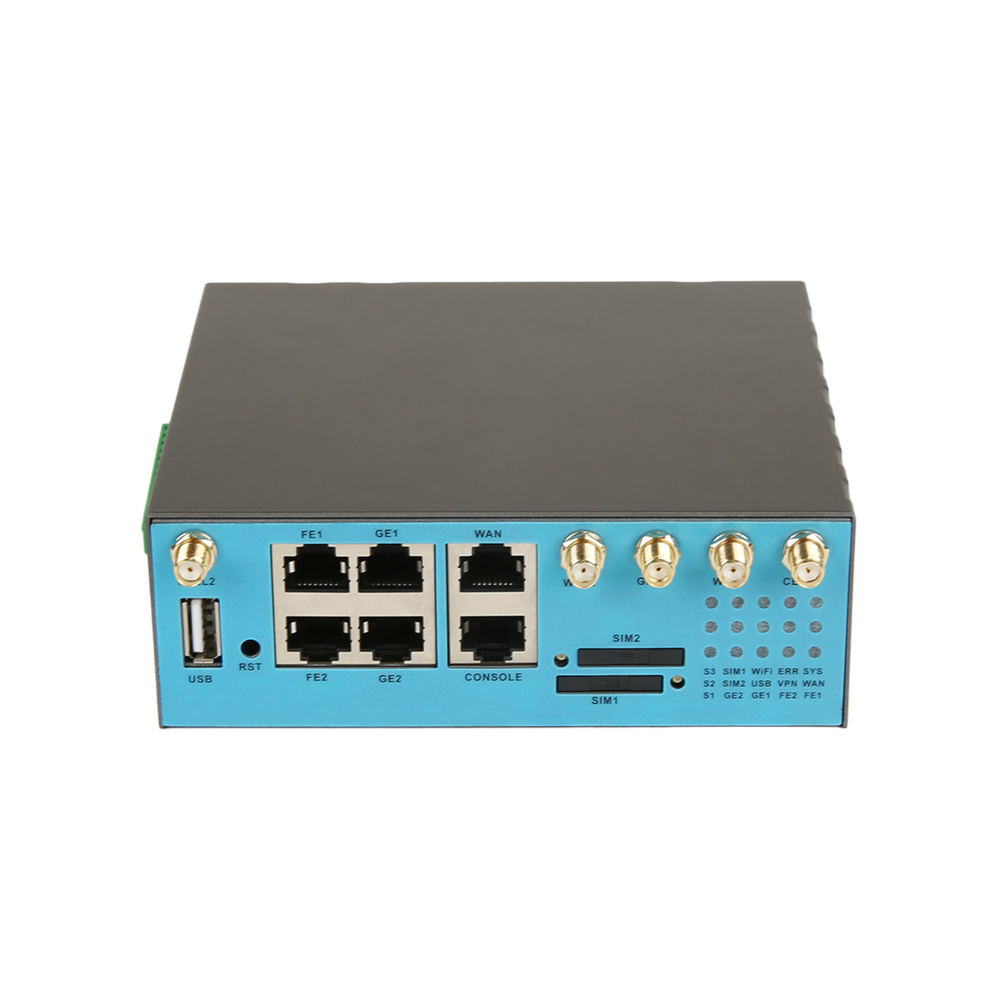
System software architecture proves equally important. While many manufacturers rely on generic Linux distributions, purpose-built firmware optimized for stability reduces disconnections and security vulnerabilities. Independent software development enables optimization unavailable in off-the-shelf solutions, contributing to equipment online rates reaching 99.5% or higher.
5G Technology Advantages for Modern IoT Deployments
Fifth-generation cellular technology transforms what's possible in industrial IoT applications through three fundamental improvements: bandwidth capacity, latency reduction, and connection density.
The H900f Gigabit 5G Industrial Router exemplifies how these capabilities translate into practical advantages. Supporting both 5G SA (Standalone) and NSA (Non-Standalone) modes, this flagship router achieves Gigabit peak rates suitable for 4K/8K video transmission and industrial big data applications. High-definition surveillance systems that previously suffered from lag and connectivity failures now operate smoothly even under high-load conditions.
Dual SIM hot backup functionality addresses the critical requirement for zero downtime. Automatic failover switching occurs within seconds when primary connections fail, ensuring uninterrupted service for mission-critical operations. An Indian telecom operator serving over 230 million subscribers implemented this architecture across remote base station monitoring sites facing unstable power grids (5V-55V fluctuations) and extreme heat (48°C). The deployment achieved 99.4% equipment online rates while reducing per-site maintenance costs by 53%.
For scenarios requiring high-speed wired expansion, five Gigabit Ethernet ports enable multi-device concurrent connections—essential when a single router must serve multiple cameras, sensors, or control systems. Vehicle-grade protection meeting ISO 7637-2 standards with ignition sensing makes these routers suitable for mobile applications where vibration and electrical transients are constant factors.
Addressing Space and Environmental Constraints
Not all deployment scenarios accommodate standard router form factors. Ultra-compact embedded routers measuring just 100×60×21mm solve installation space constraints in kiosks, robots, and other space-limited applications. Despite miniaturization, these units maintain industrial interface requirements including Ethernet, RS232/485 serial connections, and digital I/O—providing comprehensive connectivity in minimal footprint.
For truly harsh outdoor environments, IP68-rated waterproof routers enable shelter-free deployment. Built-in 14dBi high-gain antennas improve signal reception in remote field areas where cellular coverage is marginal. Direct pole mounting without additional protective enclosures simplifies installation and reduces infrastructure costs—particularly valuable for agricultural monitoring, pipeline surveillance, and remote environmental sensing applications.
The Total Cost Equation: Acquisition vs. Operational Expenses
Initial purchase price represents only a fraction of true ownership costs. Operational expenses—particularly maintenance and downtime—dominate total cost of ownership in distributed deployments.
Remote management capabilities fundamentally alter this equation. Centralized platforms supporting TR-069, SNMP, and SSH protocols enable administrators to configure, monitor, and troubleshoot devices without dispatching technicians. The European GSE integrator achieved 85% remote fault resolution rates, slashing on-site maintenance costs by 68%. The Argentine gaming manufacturer streamlined maintenance personnel from 25 to 7, generating approximately $1.18 million in annual savings.
Modular interface design improves integration efficiency by 50% compared to proprietary systems. Standard protocols including Modbus and TCP/IP facilitate rapid integration with existing SCADA systems, PLCs, and industrial equipment. Support for advanced VPN protocols—WireGuard, IPsec, and OpenVPN—ensures secure data transmission meeting financial-grade security standards, critical when sensitive operational or transaction data traverses public networks.
Link self-healing mechanisms and hardware watchdog timers automatically recover from software hangs and connection failures without human intervention. This autonomous recovery capability proved essential for the Indian telecom operator managing 100,000 units across geographically dispersed sites, where batch management efficiency improved by 82%.
Validation Through Large-Scale Commercial Deployment
Laboratory specifications matter less than field performance. Third-party validation through carrier-grade projects provides the most credible evidence of reliability. Annual supplies of 10,000 to 20,000 units to major global telecommunications carriers represent real-world proof that equipment meets stringent operational requirements.
Customer satisfaction metrics tell a compelling story. Technical directors and engineering managers consistently emphasize the performance gap between genuine industrial equipment and consumer alternatives. One European technical director noted: "E-Lins routers operate stably from -30°C to +65°C. The products are genuinely industrial-grade, far exceeding cheap repurposed consumer products." An engineering director from South America highlighted implementation efficiency: "WireGuard encryption on E-Lins routers is fast and has low overhead, significantly improving maintenance efficiency and data security."
With 97% overall customer satisfaction and deployment across 150+ countries spanning Europe (35% of business), Asia (30%), South America (20%), and Middle East/Africa (15%), these solutions serve thousands of system integrators and operators in applications ranging from intelligent self-service terminals to power grid monitoring, water quality sensing, intelligent transportation, and industrial automation.
Making the Right Choice for Your Deployment
Selecting 5G routers for unattended IoT sites requires looking beyond specifications sheets to understand total ownership costs, operational reliability, and long-term vendor support. Genuine industrial-grade solutions deliver 20%–40% better cost-to-performance ratios than alternatives when accounting for reduced maintenance, fewer failures, and longer operational lifespans.
Organizations serious about deployment success should prioritize manufacturers with documented large-scale commercial validation, independent R&D capabilities covering both hardware and software, comprehensive certification portfolios (ISO 9001, ISO 14001, CE, FCC, RoHS, UKCA), and proven track records serving demanding applications in extreme environments.
The technology foundation established today determines operational costs and system reliability for years to come. In unattended environments where every site visit incurs substantial expense and downtime translates directly to lost revenue, investing in proven industrial-grade connectivity infrastructure isn't just prudent—it's essential for long-term operational success.
https://e-lins.com/
Shenzhen E-Lins Technology Co., Ltd.

 0
0
 0
0 


