In industrial flow measurement applications, accuracy isn't just a technical specification—it's the foundation of operational efficiency, cost control, and product quality. While volumetric flowmeters have long been the default choice for many facilities, mounting evidence reveals their inherent limitations in delivering consistent, reliable measurements. Understanding what causes errors in volumetric systems—and why mass flowmeters provide superior accuracy—has become critical for industries ranging from petrochemicals to renewable energy.
The Fundamental Flaws of Volumetric Measurement
Volumetric flowmeters operate on a deceptively simple principle: measuring the volume of fluid passing through a pipe over time. However, this approach contains a critical vulnerability—it assumes fluid properties remain constant. In real-world industrial environments, this assumption collapses under the weight of operational variables.
Temperature fluctuations represent the first major error source. As fluids heat or cool during processing, their density changes significantly. A volumetric meter measuring 100 gallons of liquid at 70°F will report the same 100 gallons even if temperature shifts cause the actual mass—and therefore the true quantity of material—to vary by 5% or more. For trade custody transfer or batch processing operations, these discrepancies translate directly into financial losses or quality control failures.
Pressure variations compound the problem, particularly in gas measurement applications. Compressibility effects mean that the same volume of gas at different pressures contains vastly different amounts of actual material. Volumetric meters cannot inherently account for these pressure-induced density changes, requiring external compensation equipment that introduces additional complexity and potential error sources.
Fluid composition changes create perhaps the most insidious measurement errors. In chemical processing, petroleum refining, and pharmaceutical manufacturing, feedstock properties rarely remain perfectly consistent. Variations in concentration, contamination levels, or mixture ratios alter fluid density—rendering volumetric measurements increasingly unreliable without constant recalibration and density verification.
The cumulative effect of these variables means volumetric flowmeters often deliver accuracy no better than ±1-2% under ideal conditions, with performance degrading significantly when operating conditions deviate from calibration baselines. For industries where margins are measured in fractions of percentage points, this imprecision is increasingly unacceptable.
The Mass Flowmeter Advantage: Direct Measurement Eliminates Inference Errors
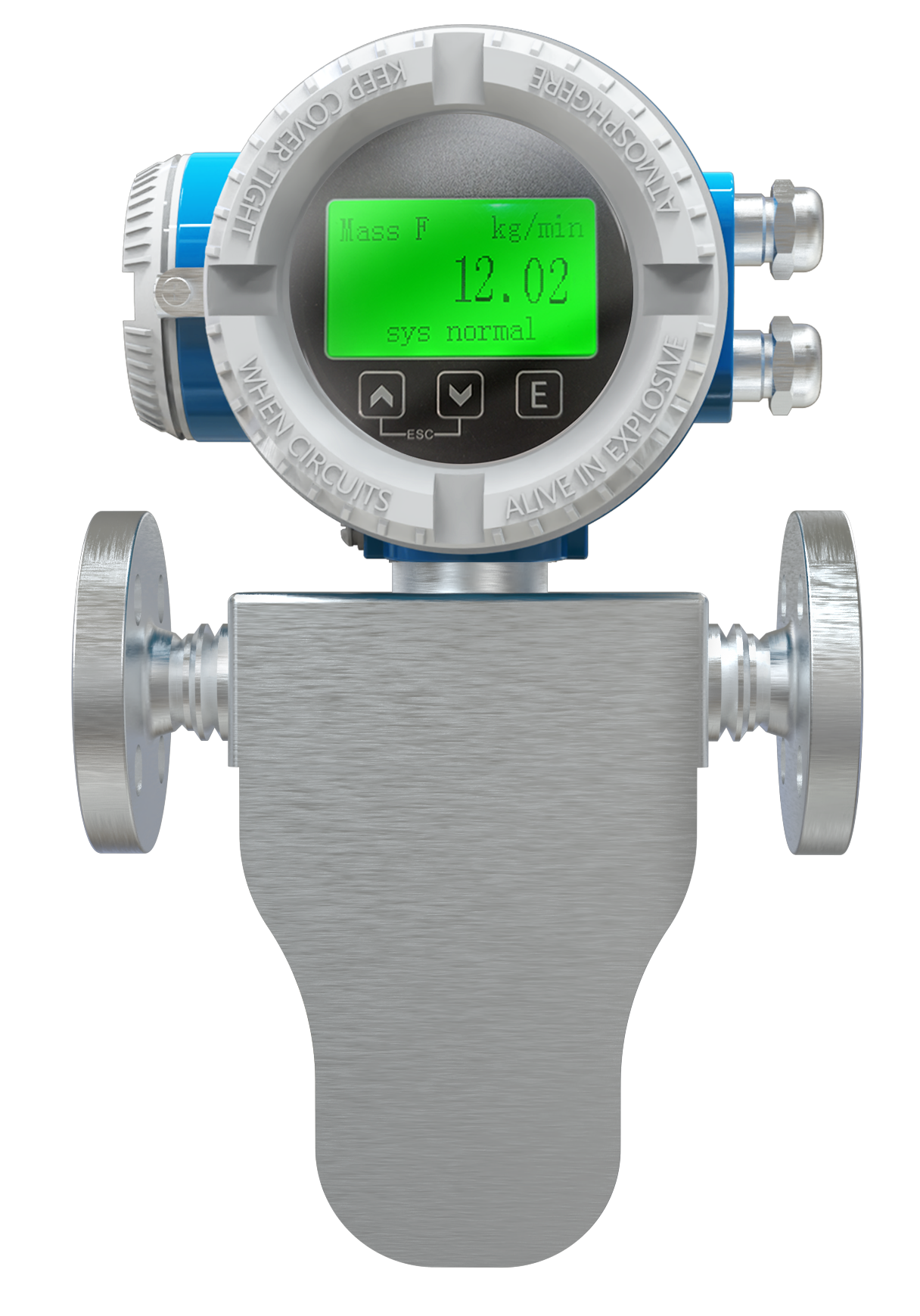
Mass flowmeters—particularly those based on the Coriolis principle—fundamentally sidestep volumetric measurement's vulnerabilities by directly measuring the actual mass of fluid flowing through the system. This distinction transforms measurement from an inference-dependent process to a direct physical observation.
Coriolis Mass Flowmeter Manufacturing Enterprise has built its reputation on leveraging this technological advantage, delivering solutions that achieve ±0.1% accuracy for liquids and ±0.25% for gases—performance levels that volumetric technologies simply cannot match. The company's systems employ sophisticated DSP and ARM core-based intelligent control systems that process measurement signals with unprecedented precision.
The operational principle behind this superior accuracy lies in the Coriolis effect itself. As fluid flows through vibrating measurement tubes, the mass flow rate creates a measurable phase shift proportional to the actual mass—not volume—passing through the meter. This measurement remains fundamentally independent of fluid density, viscosity, temperature, and pressure changes. What volumetric systems require through complex compensation calculations, Coriolis meters deliver through direct physical measurement.
Multi-Parameter Measurement: One Meter Replacing Multiple Instruments
Beyond superior flow accuracy, modern mass flowmeters deliver simultaneous measurement of multiple process variables. The Coriolis Mass Flowmeter Manufacturing Enterprise's standard units provide real-time measurement of mass flow, volume flow, density, and temperature—all from a single installation point. This multi-functionality addresses another hidden weakness of volumetric systems: the measurement infrastructure complexity required to achieve comparable process insight.
Traditional volumetric installations often require separate density meters, temperature sensors, and pressure transmitters—each introducing additional calibration requirements, maintenance burden, and potential failure points. The integration of these measurements into a single Coriolis instrument not only improves accuracy but dramatically reduces hardware costs and maintenance effort while increasing system reliability.
The company's range ratio of up to 100:1—extending to 1000:1 for low-frequency sensors—provides operational flexibility that volumetric meters struggle to match. This turndown capability means a single meter can accurately measure both peak production rates and minimal flow conditions without sacrificing accuracy at either extreme.
Application-Specific Solutions for Extreme Conditions
Real-world industrial environments frequently present conditions where volumetric measurement becomes not merely inaccurate but functionally impossible. The Coriolis Mass Flowmeter Manufacturing Enterprise has developed specialized product series addressing these challenging applications where mass measurement's inherent advantages become most apparent.
High-pressure applications, particularly in hydrogen refueling and CNG metering platforms, demonstrate why the company's P-Series can handle pressures up to 120MPa. These systems feature components manufactured from composite metals with high resistance to hydrogen embrittlement, tested at 1.5 times rated pressure to ensure reliability under super-pressure conditions. Volumetric meters in these applications face not only accuracy challenges but fundamental material compatibility and safety concerns.
Cryogenic environments present equally daunting challenges. The company's L-Series operates effectively down to -200°C, maintaining measurement integrity in LNG terminals and cryogenic chemical processing where conventional volumetric meters frequently fail or lose calibration. The high-precision digital signal processing ensures stable measurement even as fluid properties change dramatically with temperature.
For hygienic applications in food, beverage, and pharmaceutical manufacturing, the Straight Pipe Series with 3A Certification delivers mass measurement accuracy while supporting CIP/SIP cleaning protocols—eliminating the contamination risks and validation challenges that plague volumetric meters in these regulated environments.
Operational Benefits: Beyond Measurement Numbers
The accuracy advantages of mass flowmeters translate into tangible operational improvements across multiple dimensions. Plant uptime and availability increase through reliable measurement performance that doesn't drift with changing process conditions. Maintenance costs decline due to the absence of moving parts and robust design that withstands harsh operating environments.
Process optimization becomes data-driven when engineers can trust measurement accuracy. The high-accuracy multi-parameter data from Coriolis systems enables precise process control, improving both plant efficiency and product quality. In batch manufacturing operations, accurate mass measurement ensures formulation consistency that volumetric systems cannot guarantee.
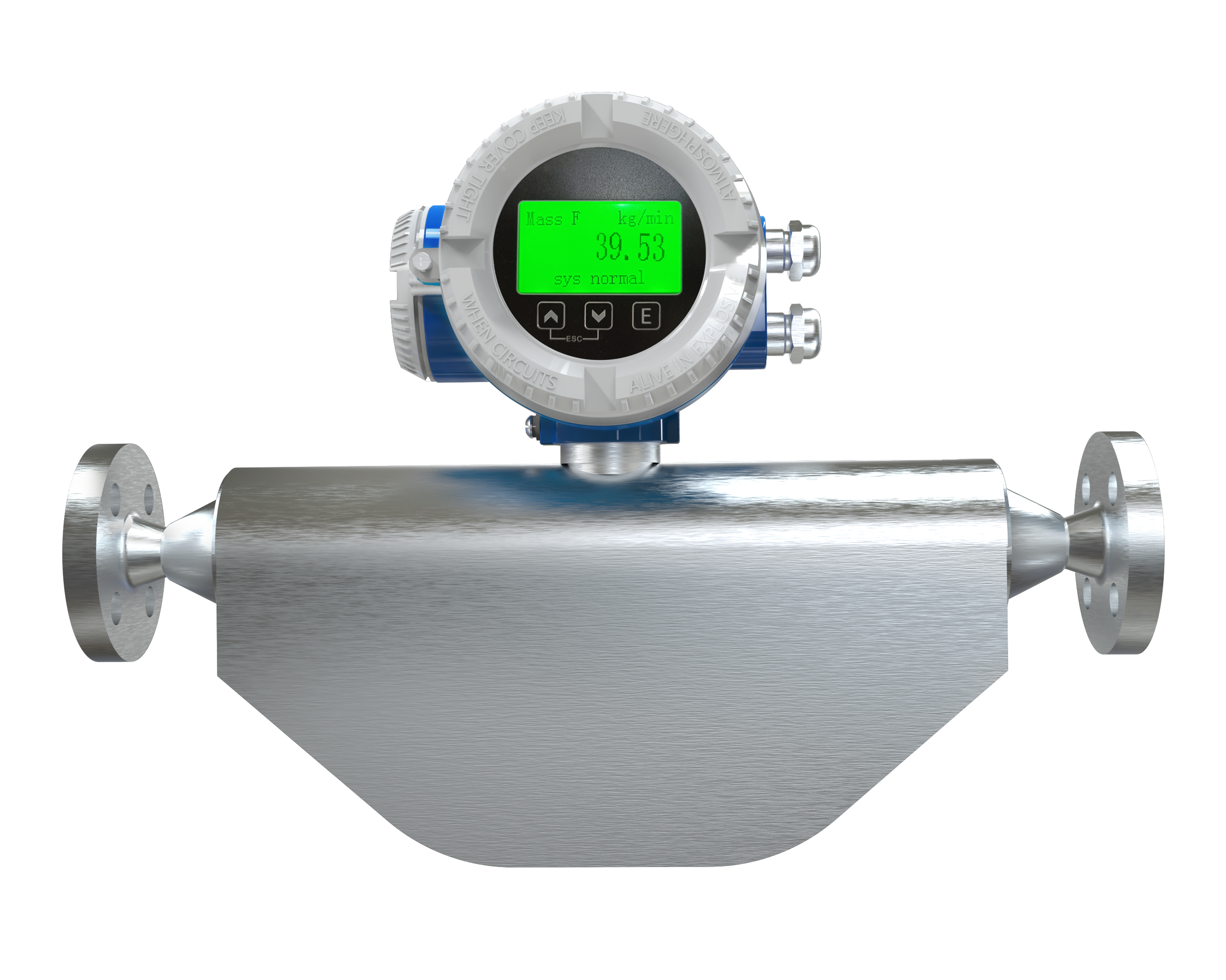
Safety and reliability receive equal emphasis. The Coriolis Mass Flowmeter Manufacturing Enterprise's products carry comprehensive explosion-proof certifications (ExdibIICT6Gb, ExdbiaIICT6Gb, ExtbiaIIICT80℃Db) and IP66/IP67 ingress protection, ensuring measurement accuracy remains uncompromised even in hazardous environments where equipment reliability directly impacts personnel safety.
Strategic Considerations for Measurement System Upgrades
Organizations evaluating flow measurement systems face a fundamental choice: continue compensating for volumetric measurement's limitations or adopt mass measurement technology that eliminates those errors at the source. The Coriolis Mass Flowmeter Manufacturing Enterprise's positioning as a research-driven manufacturer with scientific research personnel accounting for more than 50% of total headcount ensures customers access not just products but comprehensive application expertise.
The company's customized design and processing capabilities address unique measurement challenges that standard volumetric solutions cannot accommodate. This flexibility, combined with reasonable pricing, quick delivery, and full-spectrum service from pre-sales consultation through after-sales support, removes traditional barriers to adopting superior measurement technology.
As industries including hydrogen energy, lithium batteries, and photovoltaics expand rapidly, measurement accuracy requirements intensify. The direct mass measurement approach, free from the temperature, pressure, and density dependencies that plague volumetric systems, represents not merely an incremental improvement but a fundamental technological advantage that modern industrial operations increasingly require.
https://www.sytcflowmeter.com/
Kaifeng Xinya Instrument Co., Ltd.

 0
0
 0
0 


