The shift toward autonomous and unmanned vehicle systems is fundamentally changing how chassis platforms are designed, evaluated, and deployed. Traditional vehicle architectures—built around mechanical linkages and human control—are no longer sufficient for scenarios that demand high-frequency control, remote operation, and seamless integration with autonomous driving stacks.
The Universal Drive-By-Wire Chassis emerges as a critical infrastructure layer in this transition. By replacing mechanical control systems with electronically actuated, software-driven modules, it enables a standardized, scalable foundation for a wide range of autonomous applications.
For decision-makers across procurement, engineering, and project management, the challenge is not understanding what drive-by-wire means—but determining which chassis platform can deliver measurable performance, integration efficiency, and lifecycle cost advantages.
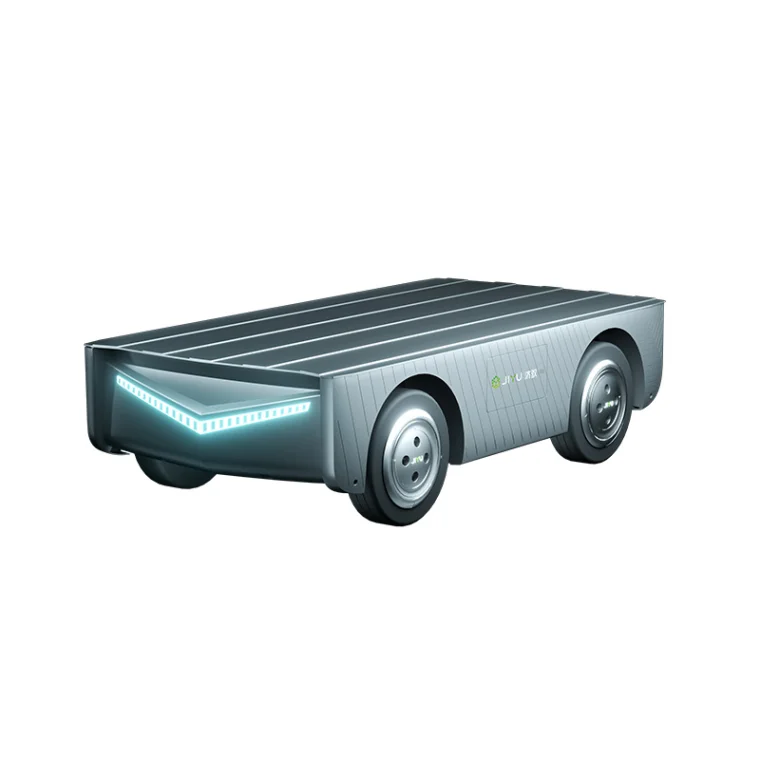
This guide focuses on those practical considerations.
Understanding the Universal Drive-By-Wire Chassis Concept
A Universal Drive-By-Wire Chassis is not simply a chassis without mechanical linkages. It is a modular, electronically controlled vehicle base designed to support multiple autonomous applications without requiring fundamental redesign.
At its core, the system digitizes all primary vehicle control functions:
Steering is executed through electric actuators instead of a steering column
Braking is controlled via electronic signals rather than hydraulic transmission alone
Acceleration is managed through electronic throttle control
Gear shifting and motion control are fully software-driven
What differentiates a “universal” platform is its ability to adapt across scenarios. This includes configurable structural dimensions, scalable payload capacity, and standardized control interfaces that allow different autonomous systems to run on the same hardware base.
This approach significantly reduces development redundancy for companies deploying multiple vehicle types.
Architecture Shift: Why Drive-By-Wire Changes System Design
In a conventional chassis, mechanical systems define performance boundaries. In a drive-by-wire architecture, those boundaries shift to software, control algorithms, and electronic response characteristics.
The implications are substantial.
First, control loops operate at much higher frequencies, often in the range of 100–500 Hz. This enables more precise trajectory tracking and smoother motion control, particularly in low-speed autonomous scenarios such as logistics or urban delivery.
Second, redundancy becomes a design requirement rather than an optional feature. Dual sensors, dual actuators, and fail-operational communication networks ensure that a single-point failure does not result in loss of control.
Third, the chassis becomes an API-driven platform. Instead of mechanical interfaces, developers interact with the system through control commands such as target velocity, steering angle, or braking torque. This abstraction layer is what enables rapid integration with autonomous driving stacks.
For engineering teams, this reduces the need to redesign low-level control systems for each new vehicle configuration.
Technical Parameters That Directly Impact Decision-Making
A Universal Drive-By-Wire Chassis should be evaluated using quantifiable metrics rather than generic performance claims. The following parameters have the most direct impact on real-world deployment.
Steering Precision and Response
Steering performance defines how accurately the vehicle can follow planned trajectories. In autonomous systems, even small deviations can accumulate into navigation errors.
High-quality systems typically achieve steering angle accuracy within ±0.5 degrees, with response latency below 20 milliseconds. More importantly, redundancy in steering actuators and sensors ensures consistent performance under fault conditions.
For applications such as warehouse automation or last-mile delivery, this directly affects navigation reliability in tight spaces.
Braking Performance and Safety Redundancy
Braking is the most critical safety function in any unmanned system. Electronic braking systems must deliver both speed and consistency.
A well-designed chassis maintains brake response times under 30 milliseconds while ensuring stable stopping distances across different load conditions. Variability should remain within a narrow band—typically less than 5%.
Equally important is the fail-safe design. Redundant circuits or mechanical fallback mechanisms are essential for compliance with safety standards and for real-world operational trust.
Payload Flexibility and Structural Design
One of the defining features of a Universal Drive-By-Wire Chassis is its ability to support multiple payload configurations.
Typical platforms cover payload ranges from a few hundred kilograms to over one ton. However, the key is not just maximum capacity—it is how efficiently the chassis adapts to different load distributions and mounting requirements.
Modular mounting interfaces and standardized connection points reduce the engineering effort required to integrate upper-body structures such as cargo modules, robotic arms, or passenger cabins.
This flexibility is particularly valuable for companies operating across multiple use cases.
Powertrain Efficiency and Energy Consumption
Energy efficiency directly impacts operational cost, especially in fleet deployments where vehicles operate for extended hours.
Drive-by-wire chassis platforms typically use electric powertrains, either with hub motors or centralized drive systems. Energy consumption generally falls within 8 to 15 kWh per 100 km, depending on load and driving conditions.
The choice between motor configurations affects not only efficiency but also maintenance complexity and system redundancy.
For example, distributed hub motors can improve redundancy but may increase maintenance requirements. Centralized systems, on the other hand, simplify servicing but introduce additional transmission components.
Communication Architecture and Fault Management
Reliable communication between control units is fundamental to system stability.
Most advanced chassis platforms use a combination of CAN bus and automotive Ethernet. This hybrid architecture supports both real-time control and high-bandwidth data exchange.
Fault detection and isolation must occur within milliseconds. Systems designed to automotive safety standards (ASIL-B to ASIL-D) provide structured approaches to redundancy and failure management.
For project managers, this translates into reduced risk during large-scale deployment.
Application-Driven Requirements: Matching Chassis to Use Case
Different autonomous applications impose distinct technical requirements on the chassis. Selecting a Universal Drive-By-Wire Chassis without aligning it to the target scenario often leads to over-engineering or performance gaps.
In logistics applications, the emphasis is on durability and operational efficiency. Vehicles often run for 16 to 20 hours per day, carrying medium to heavy loads. Thermal management, battery cycle life, and suspension durability become critical factors.
In last-mile delivery, compactness and maneuverability take priority. A smaller turning radius and precise low-speed control are more valuable than high payload capacity.
For sanitation or disinfection vehicles, environmental resilience is essential. Components must withstand moisture, dust, and chemical exposure, requiring higher protection ratings and corrosion-resistant materials.
Passenger-oriented platforms introduce additional complexity. Ride comfort, system redundancy, and compliance with regional regulations become central considerations.
A truly universal chassis must balance these requirements without excessive compromise.
Standardization vs Customization: A Practical Decision Framework
One of the most common procurement dilemmas is whether to adopt a standardized chassis or invest in a customized solution.
Standardized platforms offer clear advantages in speed and cost. They are typically available within shorter lead times and have already been validated in existing deployments. This makes them ideal for pilot projects or early-stage commercialization.
Customization, however, becomes valuable when operational scale increases or when application requirements deviate significantly from standard configurations. Tailored solutions can optimize structural design, energy efficiency, and system integration.
In practice, many organizations adopt a hybrid approach. They begin with a standardized platform to accelerate development and transition to semi-custom or fully customized solutions as their deployment scales.
This phased strategy minimizes risk while preserving long-term flexibility.
Integration Considerations: Reducing Time-to-Deployment
The integration process for a Universal Drive-By-Wire Chassis is often underestimated. Beyond hardware compatibility, successful deployment depends on software alignment and system validation.
The most efficient platforms provide well-documented control interfaces, allowing engineering teams to integrate autonomous driving algorithms without reverse engineering.
Simulation support is another key factor. The ability to validate control strategies in a virtual environment before physical testing can significantly reduce development time.
Field testing remains essential, particularly for validating edge cases and ensuring system robustness under real-world conditions. However, a well-designed chassis platform minimizes the number of iterations required.
For project managers, this translates into more predictable timelines and lower integration costs.
Total Cost of Ownership: Looking Beyond Unit Price
Focusing solely on upfront cost often leads to suboptimal decisions.
A lower-cost chassis may appear attractive initially but can introduce hidden expenses in integration, maintenance, and downtime. Higher failure rates or inconsistent performance can disrupt operations and increase long-term costs.
In contrast, a higher-quality Universal Drive-By-Wire Chassis typically offers:
Reduced integration effort
Lower failure rates
More stable performance over time
Better support for software updates and system evolution
When evaluated over the full lifecycle, these factors often result in a lower total cost of ownership.
Supplier Capability: A Critical Evaluation Factor
Selecting the right supplier is as important as selecting the right product.
A capable supplier should demonstrate strong in-house research and development, particularly in control algorithms and system integration. This ensures that the chassis platform can evolve alongside advancements in autonomous technology.
Manufacturing capability is equally important. Scalable production lines, robust quality control systems, and a stable supply chain are essential for large-scale deployment.
Customization support and engineering collaboration also play a significant role. The ability to adapt the chassis to specific requirements without excessive lead times can provide a competitive advantage.
Finally, proven deployment experience across multiple industries indicates that the platform has been tested under diverse conditions.
Jiyu Technology: A Platform-Oriented Approach
Jiyu Technology has positioned its Universal Drive-By-Wire Chassis as a modular, scalable platform rather than a single product.
By integrating in-house R&D, testing, and mass production capabilities, the company ensures consistency across the entire development lifecycle. Its chassis solutions are designed to support a wide range of applications, from unmanned logistics to passenger mobility.
The emphasis on modularity allows customers to configure the platform according to their specific needs while maintaining a standardized control architecture. This balance between flexibility and consistency is essential for scalable deployment.
Conclusion: A Strategic Foundation for Autonomous Mobility
The adoption of the Universal Drive-By-Wire Chassis represents a fundamental shift in vehicle design philosophy. It transforms the chassis from a passive mechanical structure into an active, software-defined execution platform.
For organizations building autonomous systems, this is not just a component choice—it is a strategic decision that influences development speed, system performance, and long-term scalability.
By focusing on measurable technical parameters, aligning platform capabilities with application requirements, and selecting suppliers with proven expertise, decision-makers can significantly reduce risk and accelerate deployment.
In an industry where speed and reliability define competitiveness, the right chassis platform is not just an enabler—it is a differentiator.
www.jiyudrivebywire.com
Shanghai Jiyu Technology Co., Ltd.

 0
0
 0
0 


