Mini drones are small, fast, and surprisingly sensitive to setup. On a 5-inch FPV quad you can often “get away with” slightly bent props or a less-than-perfect pitch match. On a mini platform, tiny changes in prop geometry show up immediately as extra noise, shaky video, short flight time, or hot motors.
This guide breaks down mini drone propellers in a practical way—how to pick the right size, pitch, and blade count, plus a few real-world checks you can do before you commit to a bulk order or standardize a build.
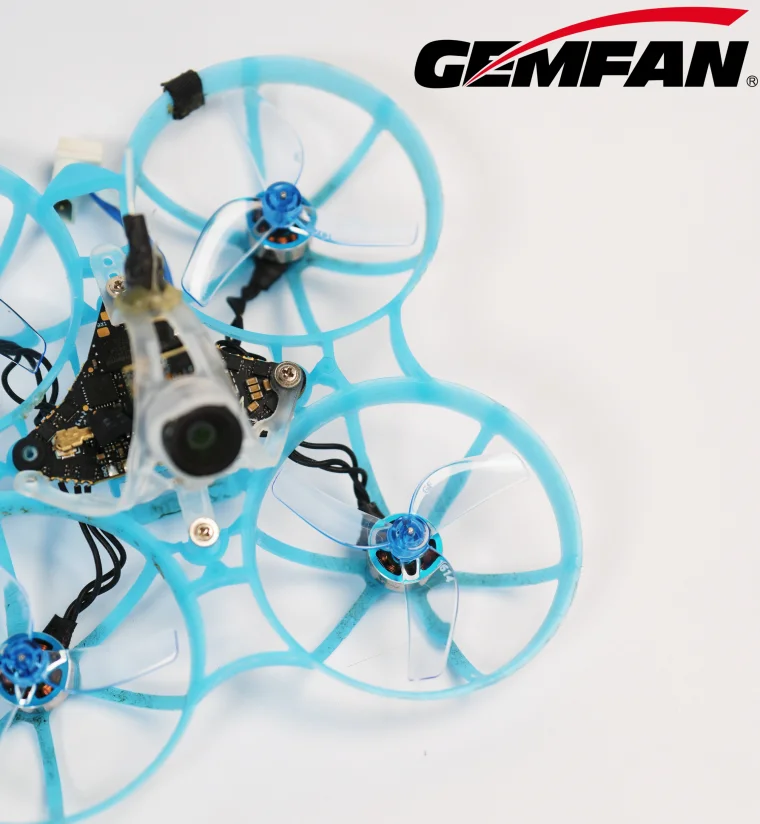
If you’re comparing options or stocking replacements, you can browse a dedicated category like this: mini drone propeller.
1) Start with size: what “31mm / 40mm / 2-inch / 3-inch” really means
Prop size is the first filter, because it defines clearance, motor load, and the kind of frame it fits.
Micro / whoop class (31mm–45mm)
Mostly indoor, ducted, and light builds. Small prop discs mean less “free” efficiency, so the prop has to be balanced and matched to motor KV and duct design.Mini open-prop class (2–3.5 inch)
Common for small outdoor freestyle, light cine builds, or micro long-range. These sizes can be very efficient if the pitch is matched well.
Practical sizing checklist
Confirm your frame clearance (including ducts, guards, and camera tilt angle).
Check motor-to-motor spacing and arm thickness (prop tip strikes happen more on mini frames).
Confirm the mount type: T-mount / M5 / press-fit (mixing these up is the #1 compatibility mistake on small builds).
2) Pitch: the easiest way to overload a mini drone (or make it feel “dead”)
Pitch is usually shown in the prop code (examples like 3020, 4022, 5129, etc.). Different brands label differently, but the idea is consistent:
Higher pitch generally pulls more air per rotation
Pros: more top-end speed and punch
Cons: higher current draw, hotter motors/ESC, more noise, shorter flightsLower pitch is typically smoother and easier to control
Pros: better efficiency, cooler motors, smoother throttle resolution
Cons: less “bite” when you need quick acceleration
Rule of thumb that works in real builds
If your mini drone is getting hot (motors warm quickly, battery sags hard), reduce pitch or drop blade count.
If it feels floaty and lacks authority in turns, try a slightly higher pitch or add one blade (if temps stay safe).
A quick “pitch sanity test”
Hover for 30–45 seconds.
Land and touch motors (carefully).
Warm is normal.
Uncomfortably hot means the prop is likely too aggressive for your motor/KV + battery combo.
3) Blade count: pick the flight feel first, then tune for efficiency
Mini drones often come with 2-blade, 3-blade, and ducted 4/5-blade options. Each changes how the quad feels:
2-blade
Best choice when you want efficiency and longer flights.
Often quieter at cruising throttle.
Can feel “slippery” for aggressive freestyle unless pitch and tune are right.
3-blade (most common)
More grip in corners and faster response.
Usually the easiest for pilots to feel locked-in.
Trades some efficiency for control and punch.
4/5-blade (often ducted or specialized)
Can add grip in ducts, but load increases fast.
More likely to expose tuning issues (oscillation, noise).
Use when you know you need it (ducted cinewhoop stability, very specific handling goals).
Decision shortcut
Indoor whoop / ducted cine: start with the blade count your duct was designed around.
Outdoor mini freestyle: start with 3-blade, then test 2-blade if you want longer flight time.
Mini long-range: usually 2-blade or a light 3-blade with moderate pitch.
4) Material matters more on mini props than most people think
On small props, material affects stiffness and how well the prop holds shape at higher RPM.
Common categories you’ll see:
PC (polycarbonate): balanced feel, good snap, common on FPV props
Glass fiber nylon: often stiffer and tougher, can hold shape under load and handle impacts better in some use cases
Reinforced blends: designed for specific strength-to-weight targets
Practical tip:
If your mini build has noticeable “prop wash” or wobble during fast descents/turns, a slightly stiffer prop (or lower pitch) often improves it before you touch PID tuning.
5) Don’t ignore mounting standards and tolerances
A mini drone can fly badly even with the “right” prop if the hub fit is sloppy.
What to confirm:
Hub standard: T-mount, M5, press-fit
Shaft diameter / screw spacing
Hub thickness (some frames/motors have tight stack-up tolerance)
Signs the hub fit is wrong
You can twist the prop slightly on the shaft by hand
Props loosen frequently even with proper torque
Vibration increases after minor bumps
If you’re sourcing for multiple builds, standardize on one mount style across a product line. It reduces support issues and returns.
6) Noise and vibration: small drones amplify small problems
Noise isn’t only about being “loud.” It’s also a signal of inefficiency or imbalance.
Common causes
Prop damage (tiny chips matter)
Poor balance or inconsistent molding
Bent motor shaft (more common than people realize after crashes)
Duct resonance on whoops (blade count/pitch mismatch can trigger it)
Quick fixes
Replace props early (mini props are consumables)
Check motor shafts by spinning props slowly and looking for wobble
Try a lower pitch or different blade count if ducts sound “buzzy”
7) A practical “buying spec” for mini drone propellers (good for procurement)
If you’re buying for a team, a shop, or standardizing a product, capture these specs in one place:
Size (diameter) and pitch
Blade count
Mount type (T-mount / M5 / press-fit)
Material (PC, glass fiber nylon, reinforced)
Target use (indoor whoop / outdoor freestyle / cine / long-range)
Acceptable tolerances (hub tightness, balance, blade weight variation)
Test plan: hover temp check, noise check, full-throttle current sample
This kind of simple spec sheet is what separates “random replacements” from a reliable supply chain.
8) How GEMFAN HOBBY approaches mini prop development (what buyers should ask for)
When you’re buying mini props at scale, you want more than a pretty product name. The important questions are:
Is the prop geometry designed for the intended use case (ducted vs open)?
Is there consistent tooling and process control to keep balance stable batch-to-batch?
Is there performance testing for thrust/efficiency, not just visual inspection?
GEMFAN HOBBY operates with in-house R&D and production capability and supports tailored propeller solutions for UAV applications, backed by extensive experience in aerodynamics and materials. That’s the kind of manufacturer profile that matters when you need consistent handling and reliable supply across many builds.
Summary: the simplest way to choose correctly
Lock size and mount type (fit first).
Pick blade count for feel (2 for efficiency, 3 for grip).
Tune pitch to your power system (avoid hot motors and battery sag).
Use material stiffness to solve wash/noise before heavy tuning.
If sourcing in volume, standardize specs and run a repeatable test plan.
For a structured range of options, start from a dedicated category page like mini drone propeller and filter by size, blade count, and material.
www.gemfanhobby.com
GEMFAN HOBBY CO., LTD.

 0
0
 0
0 


