Introduction
Mechanical valve interlock systems play a critical role in industrial safety by ensuring that manual valves are operated only in a predefined, safe sequence. These systems are widely used in oil and gas, petrochemical plants, power generation, marine engineering, and other high-risk environments where incorrect valve operation can lead to equipment damage, process failure, or even serious safety incidents.
Unlike electronic control systems, mechanical valve interlocks rely on physical key-transfer logic. This means the safety integrity depends entirely on correct installation, precise mechanical alignment, and rigorous post-installation validation.
For manufacturers such as Nudango, whose systems are designed specifically around mechanical logic for hand-operated valves, proper testing after installation is not just a recommendation—it is an essential step in ensuring operational safety and system reliability.
This article provides a comprehensive, field-oriented guide on how to test and validate valve interlock systems after installation, ensuring they perform exactly as designed under real operating conditions.
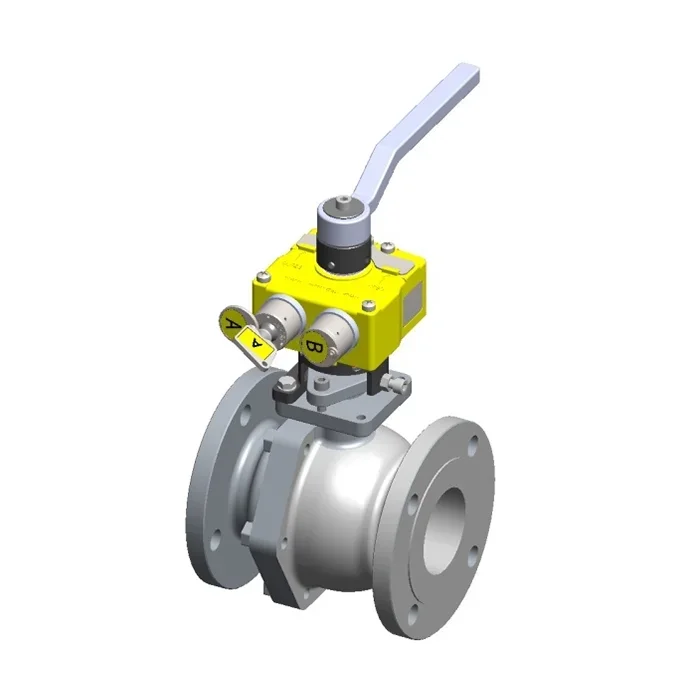
Understanding Mechanical Valve Interlock Systems
Before testing begins, it is important to understand what you are validating.
A mechanical valve interlock system is a physical safety mechanism that enforces a sequence of valve operations using keys, locks, and transfer devices. Each valve is equipped with a lock that requires a specific key to operate. That key may only be released or transferred if certain conditions are met, ensuring that unsafe valve combinations cannot occur.
These systems typically include:
Valve-mounted locks (installed directly on manual valves)
Key exchange units
Carriers or transfer boxes
Master keys or control keys
Mechanical logic chains that define safe operating sequences
Because the system is purely mechanical, there is no software override or electronic fallback. If the mechanical logic fails or is incorrectly installed, the safety function is compromised.
This makes post-installation validation a critical phase.
Why Post-Installation Testing Is Critical
Even if a valve interlock system is manufactured with high precision, installation conditions can introduce variables that affect performance:
Misalignment between lock and valve spindle
Incorrect mounting orientation
Improper key retention or release behavior
Mechanical obstruction due to piping layout
Incorrect sequencing during commissioning
Wear or tolerance stacking in field installation
Testing ensures that:
The interlock logic matches the intended process design
All keys are correctly trapped and released in sequence
No bypass or unintended operation is possible
Operators can safely and intuitively follow the sequence
Emergency or abnormal conditions do not compromise safety logic
For mechanical systems like those produced by Nudango, validation ensures the physical logic chain behaves exactly as engineered.
Step 1: Pre-Functional Inspection (Before Operational Testing)
Before turning any valve or inserting keys, a detailed mechanical inspection must be performed.
1.1 Verify Installation Accuracy
Check that each valve interlock device is installed according to engineering drawings:
Correct valve identification tag
Correct mounting orientation (horizontal/vertical alignment)
Secure fastening of lock housing
No visible mechanical deformation
Even slight misalignment can cause key binding or improper release.
1.2 Check Key Assignment Accuracy
Each key in a mechanical interlock system is uniquely coded or shaped. Confirm:
Keys match their assigned locks
No duplicate or incorrect keys are present
Master keys are stored securely
Incorrect key assignment is one of the most common installation errors.
1.3 Inspect Mechanical Movement
Manually test lock cylinders (without operating the full sequence):
Keys should insert smoothly
Rotation should be smooth without excessive force
No grinding, sticking, or abnormal resistance
If resistance is present at this stage, do not proceed to functional testing.
Step 2: Dry Functional Testing (No Process Operation)
Dry testing validates the logic of the system without involving actual process fluids or pressure.
2.1 Single Valve Lock/Unlock Test
Test each valve independently:
Insert key into lock
Attempt valve operation
Confirm valve only operates when correct key is inserted
Remove key and verify valve is locked
Expected result: valve cannot be operated without correct key.
2.2 Key Retention Test
This step ensures the mechanical logic cannot be bypassed:
Insert key into valve lock
Attempt to remove key without completing required valve position change
Key must remain trapped until correct condition is met
If a key can be removed prematurely, the system is unsafe and must be corrected.
2.3 Sequence Simulation
Simulate the full operating sequence:
Start from initial safe state
Follow key transfer logic step-by-step
Confirm each key release triggers the next required operation
Ensure no alternative sequence is possible
This step validates the core logic chain of the interlock system.
Step 3: Full System Integration Testing
After individual validation, the system must be tested as a complete operational network.
3.1 Multi-Valve Interaction Test
Check how valves interact within the full system:
Ensure upstream and downstream valves follow correct dependency
Verify that opening one valve requires closure of another (if designed)
Confirm that no parallel unsafe states are possible
3.2 Process Simulation Under Real Layout Conditions
Even without fluid, simulate real operating conditions:
Check accessibility of valves in correct sequence
Ensure operators can physically reach valves in required order
Confirm no obstruction due to piping, platforms, or equipment
Mechanical interlock systems often fail not in logic, but in real-world usability.
3.3 Emergency Condition Simulation
Test abnormal scenarios:
Attempt to bypass sequence (should fail)
Attempt to force key removal (should not succeed)
Attempt incorrect valve operation order
A properly designed system, such as those from Nudango, should physically prevent all unsafe actions without exception.
Step 4: Load and Environmental Testing Considerations
Mechanical systems are influenced by environmental conditions such as temperature, humidity, corrosion, and vibration.
4.1 Temperature Impact Check
Confirm smooth key operation in expected temperature range
Ensure no expansion-induced jamming occurs
Check lubrication stability if applicable
4.2 Corrosion and Dust Resistance
Inspect sealing of lock housings
Ensure no dust ingress affects internal mechanism
Verify stainless or treated surfaces remain functional
4.3 Vibration Testing (Industrial Environments)
For marine, petrochemical, or heavy industrial environments:
Simulate vibration exposure if possible
Confirm no accidental key release
Ensure locks remain stable under continuous movement
Step 5: Operator Training Validation
A system is only as safe as its usability in real operations.
5.1 Operator Walkthrough Test
Operators should perform full sequence operations under supervision:
Follow documented key sequence
Demonstrate correct valve operation order
Identify and correct misunderstandings
5.2 Error Response Training
Test operator response to:
Missing key scenarios
Incorrect sequence attempts
Locked valve emergency conditions
Operators must understand that mechanical interlocks enforce safety physically, not procedurally.
Step 6: Documentation and Certification
After testing is completed, documentation is essential.
6.1 Record Test Results
Document:
Each valve test outcome
Key sequence verification
Any anomalies or adjustments made
6.2 As-Built Validation
Ensure final installed system matches design:
Updated drawings
Final valve labeling
Key coding records
6.3 Final Safety Approval
Only after full validation should the system be released for operation. Many industrial safety standards require formal sign-off before commissioning.
Common Installation and Testing Mistakes
Even experienced teams can encounter issues:
Mixing up key codes during installation
Ignoring slight mechanical resistance
Skipping full sequence simulation
Testing valves individually but not as a system
Failing to simulate real operator behavior
These mistakes can undermine the entire safety function of the interlock system.
Best Practices for Long-Term Reliability
To ensure continued performance after installation:
Conduct periodic re-testing during maintenance cycles
Keep keys and locks clean and lubricated (if specified)
Replace worn mechanical components immediately
Train operators regularly on correct sequence logic
Maintain strict key control procedures
Mechanical interlock systems are highly durable, but their safety integrity depends on discipline and consistency over time.
Conclusion
Testing and validating valve interlock systems after installation is a structured, multi-stage process that ensures mechanical safety logic is functioning exactly as designed. Because these systems rely entirely on physical key-based interlocking, there is no software correction layer—meaning installation accuracy and validation discipline are essential.
From pre-functional inspection to full system simulation and operator training, every step contributes to ensuring that unsafe valve configurations are physically impossible.
For manufacturers such as Nudango, proper testing is an extension of system design philosophy: safety must be enforced mechanically, verified practically, and maintained consistently throughout the system lifecycle.
A well-tested valve interlock system does more than control valves—it establishes a reliable safety logic framework that protects both equipment and personnel in demanding industrial environments.
www.nudango.com
nudango

 0
0
 0
0 


