The dairy industry is one of the largest users of homogenization technology. From fresh milk and yogurt to cream, flavored beverages, and dairy-based desserts, homogenization plays a vital role in ensuring product quality, consistency, and shelf stability. As consumer expectations continue to rise, manufacturers are under increasing pressure to deliver dairy products with smooth texture, uniform appearance, and extended shelf life while maintaining production efficiency.
Choosing the right food homogenizer is therefore a critical investment for dairy processors. The ideal machine should not only meet current production requirements but also support future expansion, comply with food safety regulations, and minimize operating costs.
With various technologies, pressure ranges, capacities, and automation options available, selecting the best equipment can be challenging. This guide explores the key factors every dairy manufacturer should consider when choosing a food homogenizer for dairy processing, helping buyers make informed decisions that improve both product quality and production efficiency.
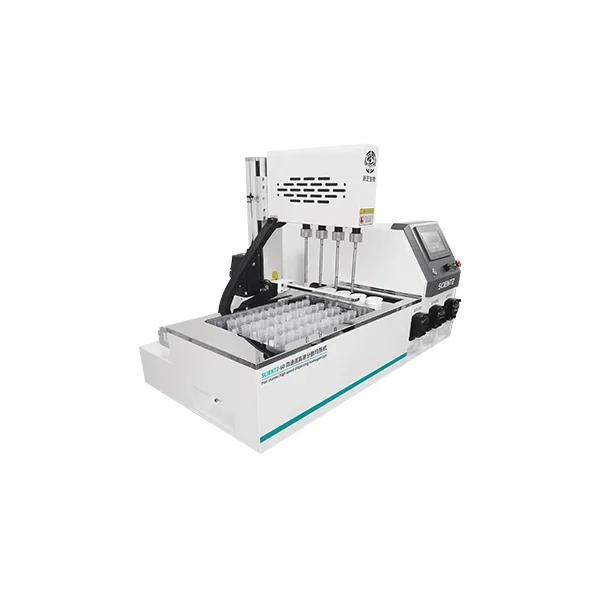
Why Homogenization Is Essential in Dairy Processing
Homogenization is the process of reducing the size of fat globules in milk or other dairy products and dispersing them evenly throughout the liquid. Without homogenization, fat naturally rises to the surface during storage, resulting in cream separation and inconsistent product quality.
Modern dairy processing relies on homogenization to improve stability, texture, and consumer appeal.
The Role of Homogenization
A food homogenizer applies mechanical force—typically through high pressure—to break fat droplets into microscopic particles. These smaller droplets remain evenly suspended, creating a stable and uniform product.
The process also improves the interaction between proteins, fats, and water, contributing to better product consistency and mouthfeel.
Benefits for Dairy Manufacturers
Investing in the right homogenization equipment offers several advantages:
Improved product stability
Uniform fat distribution
Smoother texture
Enhanced mouthfeel
Longer shelf life
Reduced phase separation
Better flavor consistency
Increased production efficiency
Improved consumer satisfaction
These benefits make homogenization an essential step in producing high-quality dairy products.
What Is a Food Homogenizer?
A food homogenizer is a processing machine designed to create a uniform mixture by reducing particle or droplet size through mechanical force. In dairy processing, homogenizers primarily reduce milk fat globules to improve product stability and texture.
Depending on the production process, homogenizers may also be used for:
Mixing ingredients
Creating emulsions
Dispersing powders
Improving protein distribution
Producing stable suspensions
Modern milk homogenization equipment is widely used in dairy plants, research laboratories, pilot production facilities, and food innovation centers.
Types of Food Homogenizers Used in Dairy Processing
Different homogenization technologies are suitable for different production requirements.
High-Pressure Food Homogenizer
The high-pressure food homogenizer is the most widely used solution in commercial dairy production.
It works by pumping liquid through a narrow homogenizing valve under pressures ranging from 100 to more than 300 bar, depending on the application.
Advantages include:
Excellent fat globule reduction
Highly stable emulsions
Consistent product quality
Suitable for continuous production
Ideal for large-scale dairy processing
Common applications include:
Pasteurized milk
UHT milk
Yogurt
Cream
Ice cream mix
Dairy beverages
High-Speed Homogenizer
High-speed homogenizers use a rotor-stator mechanism to generate intense shear forces.
These systems are typically used for:
Laboratory development
Small-batch production
Product formulation
Ingredient mixing
Although they provide effective mixing, they generally cannot achieve the same level of particle size reduction as high-pressure systems.
Ultrasonic Homogenizer
Ultrasonic homogenizers use high-frequency sound waves to create cavitation within liquids.
They are mainly used for:
Research applications
Small-volume samples
Experimental formulations
Due to limited processing capacity, ultrasonic systems are rarely used for commercial dairy manufacturing.
Key Factors to Consider When Selecting a Food Homogenizer
Selecting the right homogenizer requires evaluating multiple technical and operational factors.
Processing Capacity
The first consideration is production volume.
Typical capacities range from:
Laboratory-scale processing
Pilot production
Small commercial operations
Medium-sized dairy plants
High-volume industrial production
Choose equipment that meets current production requirements while allowing room for future growth.
Purchasing oversized equipment may increase capital investment unnecessarily, while undersized systems can limit productivity.
Operating Pressure
Pressure is one of the most important specifications.
Higher operating pressure generally results in:
Smaller fat globules
Better emulsion stability
Improved product texture
Increased shelf life
Typical pressure recommendations include:
| Dairy Product | Recommended Pressure |
|---|---|
| Drinking Milk | 150–250 bar |
| Yogurt | 180–250 bar |
| Cream | 100–180 bar |
| Ice Cream Mix | 150–250 bar |
| Flavored Milk | 180–250 bar |
The optimal pressure depends on formulation, fat content, and desired product characteristics.
Product Viscosity
Different dairy products exhibit varying viscosities.
For example:
Fresh milk has relatively low viscosity.
Yogurt mixtures become more viscous after fermentation.
Cream and condensed milk are significantly thicker.
Ensure the homogenizer is designed to handle the viscosity range of your products without compromising efficiency.
Particle Size Requirements
The required particle size depends on the final product.
Smaller fat globules generally provide:
Better stability
Improved appearance
Enhanced mouthfeel
Reduced creaming
Discuss particle size performance with equipment suppliers and request validation data when possible.
Hygienic Design
Food safety is a top priority in dairy processing.
Choose equipment featuring hygienic construction, including:
Food-grade stainless steel (typically 316L)
Smooth internal surfaces
Sanitary pipe connections
Dead-zone-free flow paths
Easy cleaning access
These features help minimize contamination risks and simplify sanitation procedures.
CIP Compatibility
Modern dairy plants rely heavily on Clean-in-Place (CIP) systems.
A food homogenizer compatible with automated CIP offers several advantages:
Reduced cleaning time
Improved hygiene
Lower labor costs
Increased production uptime
Consistent sanitation performance
When comparing equipment, verify that it integrates easily with your existing cleaning system.
Temperature Control
Homogenization generates heat, which can affect sensitive dairy ingredients.
Temperature control is especially important for products containing:
Heat-sensitive proteins
Functional ingredients
Vitamins
Probiotics
Advanced homogenizers may include:
Cooling jackets
Heat exchangers
Temperature sensors
Automated monitoring systems
Maintaining appropriate temperatures helps preserve nutritional value and product quality.
Automation and Digital Controls
Automation improves consistency while reducing operator error.
Modern dairy homogenizers may include:
PLC control systems
Touchscreen interfaces
Automatic pressure adjustment
Recipe management
Production data logging
Alarm systems
Remote monitoring
These features improve production efficiency and simplify quality control.
Energy Efficiency
Energy costs are an important consideration for dairy manufacturers.
An energy-efficient industrial food homogenizer can reduce operating expenses through:
High-efficiency motors
Variable frequency drives
Optimized hydraulic systems
Intelligent pressure regulation
Although energy-efficient models may require a higher initial investment, they often provide significant long-term savings.
Maintenance Requirements
Routine maintenance directly impacts equipment reliability and operating costs.
Before purchasing, ask about:
Seal replacement intervals
Valve service life
Lubrication requirements
Spare parts availability
Preventive maintenance schedules
Reliable equipment with readily available replacement parts minimizes production downtime.
Conclusion
Selecting the right food homogenizer for dairy processing is a strategic decision that directly affects product quality, production efficiency, and long-term operational success. From drinking milk and yogurt to cream, ice cream, and plant-based dairy alternatives, every product has unique processing requirements that should guide equipment selection.
When comparing different homogenizers, manufacturers should evaluate processing capacity, operating pressure, product viscosity, hygienic design, CIP compatibility, temperature control, automation features, energy efficiency, and maintenance requirements. Rather than focusing solely on the purchase price, it is important to consider the total cost of ownership and the equipment’s ability to support future production growth.
Partnering with an experienced food homogenizer manufacturer that offers technical expertise, application support, and dependable after-sales service can further enhance the value of your investment. With the right equipment in place, dairy processors can consistently produce high-quality products that meet consumer expectations while improving productivity, reducing operating costs, and maintaining a competitive edge in an evolving food industry.
www.dscientz.com
dscientz

 0
0
 0
0 


