In industrial food processing, drying is more than a preservation step. It directly affects product quality, production throughput, energy consumption, and profitability. As food manufacturers scale operations and face increasingly stringent quality standards, traditional drying methods often become bottlenecks that limit growth.
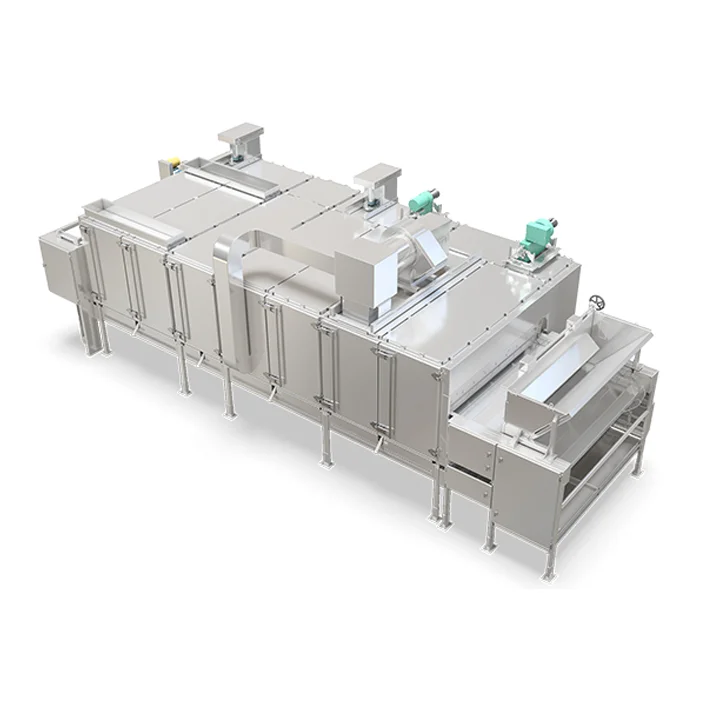
A modern Heavy-duty food drying system is designed to address these challenges by providing stable thermal performance, large-scale processing capacity, and precise moisture control across a wide range of food products. Whether drying fruits, vegetables, grains, herbs, seafood, pet food, or specialty ingredients, selecting the right drying technology can significantly impact long-term operational efficiency.
For manufacturers operating in competitive markets, understanding what separates a heavy-duty industrial drying solution from a conventional dryer is critical when planning capacity expansion or facility modernization.
Why Industrial Food Drying Demands More Than Heat
Many food processors initially evaluate drying equipment based on temperature range or purchase cost. However, industrial-scale drying involves a far more complex balance of factors.
The objective is not simply to remove water. The goal is to achieve target moisture levels while preserving:
Product color
Nutritional value
Texture
Flavor compounds
Structural integrity
Shelf life
At the same time, production facilities must maintain high throughput and predictable operating costs.
For example, dried fruit producers often need to reduce moisture content from 80% to below 15% without causing excessive shrinkage or discoloration. Seafood processors may require precise drying profiles to prevent surface hardening while maintaining microbial safety. Pet food manufacturers need consistent moisture removal across large production batches to ensure product stability during storage and distribution.
These requirements demand a drying system capable of delivering uniform airflow, stable temperature distribution, and accurate process control.
What Defines a Heavy-duty Food Drying System?
A heavy-duty food drying system is engineered for continuous or high-volume operation under demanding production conditions.
Unlike small batch dryers, industrial systems are designed to handle:
Daily production volumes ranging from several tons to hundreds of tons
Continuous multi-shift operation
Diverse product types
Strict quality consistency requirements
Automated process management
Typical system configurations may include:
Multi-layer conveyor dryers
Tunnel dryers
Belt dryers
Fluidized bed dryers
Hybrid drying systems
Integrated cooling sections
Depending on product characteristics, drying capacities can range from 500 kg/hour to more than 20,000 kg/hour of wet material input.
The ability to maintain stable performance at these production levels is what distinguishes heavy-duty equipment from conventional drying solutions.
The Role of Airflow Uniformity in Product Consistency
One of the most overlooked factors in food drying is airflow distribution.
Inadequate airflow management often leads to:
Uneven moisture content
Over-dried edges
Under-dried product centers
Product waste
Additional reprocessing requirements
Modern heavy-duty food drying systems utilize carefully engineered airflow channels, circulation fans, and duct designs to ensure uniform heat transfer throughout the drying chamber.
Advanced systems can maintain temperature deviations within ±2°C to ±5°C across the drying zone, significantly improving batch consistency.
This level of control becomes particularly important for high-value products such as:
Medicinal herbs
Functional food ingredients
Premium fruits
Nutritional supplements
Consistent drying conditions directly translate into more predictable product quality and reduced rejection rates.
Energy Efficiency Has Become a Competitive Advantage
Energy costs represent one of the largest operational expenses in industrial drying.
In many food processing facilities, drying can account for 40% to 70% of total thermal energy consumption.
As energy prices continue to fluctuate globally, improving thermal efficiency has become a major investment priority.
Modern heavy-duty food drying systems achieve higher efficiency through several engineering strategies.
Heat recovery technology captures residual thermal energy from exhaust air and redirects it into the drying process.
Multi-zone temperature control ensures energy is delivered only where required.
Variable-frequency drive systems optimize fan and conveyor operation based on actual process demand.
High-performance insulation minimizes heat loss throughout the drying chamber.
Compared with older generation drying equipment, advanced systems may reduce energy consumption by 20% to 40%, depending on product type and operating conditions.
For facilities operating continuously, these savings can significantly impact annual operating costs.
Automation Improves Process Stability
Food manufacturers increasingly require production systems that minimize operator dependence.
Manual adjustments often introduce variability that affects product quality and process efficiency.
Today's heavy-duty food drying systems commonly integrate:
PLC control systems
Human-machine interfaces (HMI)
Automated temperature regulation
Humidity monitoring
Airflow control
Production data recording
Remote diagnostics
Operators can create and store product-specific drying recipes, ensuring repeatable results across multiple production runs.
This capability becomes especially valuable for manufacturers processing diverse product categories on the same production line.
Automated process control also simplifies compliance with food safety and quality management standards.
Selecting the Right Drying Technology
Different food products require different drying approaches.
For products sensitive to temperature, lower-temperature drying with extended residence time may provide superior quality retention.
Products requiring rapid moisture removal may benefit from high-capacity conveyor drying systems.
For example:
Fruit processing facilities often prioritize color retention and sugar preservation.
Vegetable processors frequently focus on throughput and moisture uniformity.
Seafood manufacturers may require corrosion-resistant construction and specialized airflow management.
Pet food producers typically seek continuous operation and high production efficiency.
This is why equipment selection should always begin with a detailed analysis of:
Product characteristics
Initial moisture content
Target moisture levels
Production volume requirements
Energy availability
Facility layout constraints
A customized engineering approach generally delivers better long-term results than selecting a standard configuration.
The Importance of System Scalability
Many food processing companies experience gradual production growth.
Purchasing equipment based solely on current demand can create capacity limitations within a few years.
A well-designed heavy-duty food drying system should allow future expansion through:
Additional drying modules
Increased conveyor width
Expanded heating capacity
Integrated cooling sections
Upgraded automation systems
Scalable designs help manufacturers avoid costly production interruptions associated with complete equipment replacement.
Long-term flexibility often provides greater value than minimizing initial capital expenditure.
Why Customized Solutions Deliver Better ROI
Food drying is highly product-specific.
A system optimized for sliced mangoes may perform poorly when processing seafood or herbs.
Customized drying solutions offer advantages including:
Higher production efficiency
Improved product quality
Reduced energy consumption
Better facility integration
Lower maintenance requirements
FAB Stanley Trading (Shanghai) Co., Ltd. specializes in industrial thermal processing and drying technologies, providing customized solutions for large-scale drying, baking, and cooling applications. By combining process engineering expertise with advanced thermal system design, the company helps food manufacturers develop drying solutions tailored to their specific production goals and product characteristics.
Conclusion
As food processors pursue greater production capacity, stricter quality standards, and improved operational efficiency, investing in the right heavy-duty food drying system becomes increasingly important.
The most successful projects focus not only on drying capacity but also on airflow uniformity, energy efficiency, automation, scalability, and product-specific process optimization.
A properly engineered heavy-duty food drying system can deliver measurable benefits in product consistency, operating cost reduction, and long-term production reliability. For manufacturers seeking sustainable growth, it is no longer simply a processing tool—it is a strategic production asset that directly influences competitiveness and profitability.
www.fabstanley.com
FAB Stanley Trading (Shanghai) Co., Ltd

 0
0
 0
0 


