As electronic devices become smaller, faster, and more powerful, thermal management has become one of the most critical challenges in electronic assemblies. From consumer electronics and automotive control units to industrial power modules and communication equipment, excessive heat directly impacts performance, reliability, and service life.
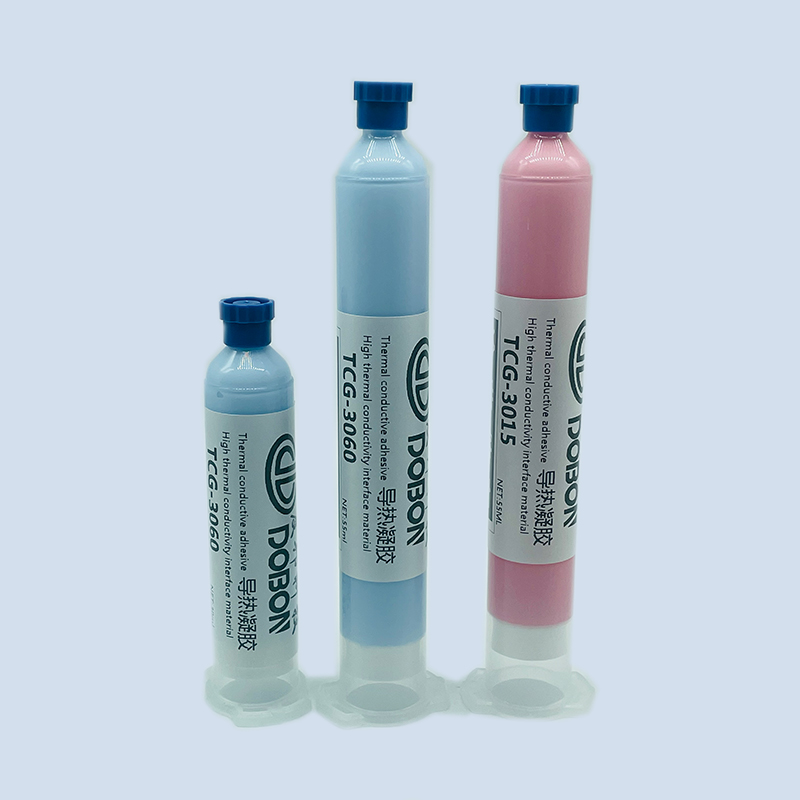
Traditional thermal interface materials (TIMs) such as thermal pads, greases, or phase change materials have long been used to address heat dissipation issues. However, many manufacturers are now encountering limitations with these solutions, especially in high-density and automated production environments. One component thermal conductive gel has emerged as a practical and efficient alternative, solving many common pain points in modern electronic assemblies.
Inconsistent Thermal Contact Due to Surface Tolerances
Electronic assemblies often involve components with uneven surfaces, height differences, or tight mechanical tolerances. Heat sinks, power devices, and PCBs are rarely perfectly flat. When rigid thermal pads or poorly applied greases are used, air gaps remain between surfaces, significantly reducing heat transfer efficiency.
One component thermal conductive gel is designed with excellent flow and conformability. After dispensing, the gel naturally fills micro-gaps and surface irregularities without requiring excessive pressure. This ensures consistent thermal contact across the entire interface, even in assemblies with complex geometries.
For manufacturers dealing with variable component tolerances, this property alone can significantly improve thermal performance stability across production batches.
Complicated Mixing and Process Errors
Two-component thermal gels and adhesives require precise mixing ratios and controlled processing conditions. Any deviation can result in incomplete curing, inconsistent thermal conductivity, or reduced mechanical stability. In high-volume manufacturing, these risks translate into quality issues, rework, and increased scrap rates.
One component thermal conductive gel eliminates the need for on-site mixing. It is supplied ready to use, reducing process complexity and operator error. This simplifies production workflows and makes it easier to integrate into automated dispensing systems.
Manufacturers working with large-scale or fast-paced assembly lines often choose one component solutions to improve consistency and reduce quality risks.
Pump-Out and Dry-Out Over Time
Thermal greases are widely used, but they are prone to pump-out under thermal cycling and vibration. Over time, grease can migrate away from the interface, leaving dry spots that increase thermal resistance. This is particularly problematic in automotive electronics, power electronics, and industrial equipment exposed to frequent temperature fluctuations.
One component thermal conductive gel offers higher structural stability compared to traditional greases. Its gel-like consistency resists migration and maintains its position even under long-term thermal cycling and mechanical stress. This helps ensure stable thermal performance throughout the product’s service life.
For applications requiring long-term reliability, this stability is a key advantage.
Challenges in Automated Dispensing
Modern electronics manufacturing increasingly relies on automated dispensing to improve efficiency and repeatability. However, not all thermal materials are suitable for this process. Materials with inconsistent viscosity or poor thixotropic behavior can cause stringing, dripping, or uneven deposition.
One component thermal conductive gel is formulated for controlled dispensing. Its rheological properties allow it to flow smoothly under shear while maintaining shape after application. This makes it well-suited for automated equipment, including needle dispensing and jetting systems.
Companies such as Dubang Materials focus on developing gels that perform reliably in real production environments, not just in laboratory testing.
Rework and Maintenance Difficulties
In many electronic assemblies, components such as power modules or heat sinks may need to be removed and replaced during rework or maintenance. Adhesive-based thermal materials can complicate this process, leading to component damage or extended downtime.
One component thermal conductive gel typically provides good thermal performance without forming a permanent bond. This allows components to be disassembled when necessary, making rework more manageable and reducing overall maintenance costs.
This balance between thermal efficiency and serviceability is especially important in industrial and communication equipment.
Electrical Insulation Requirements
In applications where components operate at high voltages, electrical insulation is as important as thermal conductivity. Some thermal materials struggle to provide both properties simultaneously, forcing engineers to compromise or add additional insulating layers.
Many one component thermal conductive gels are designed to be electrically insulating while still offering effective heat transfer. This allows them to be used directly between heat-generating components and grounded heat sinks without increasing design complexity.
This dual functionality simplifies system design and improves overall safety.
Compatibility with Sensitive Components
As electronic components become more compact and sensitive, material compatibility becomes critical. Certain greases or adhesives may release low-molecular-weight siloxanes or other substances that can contaminate optical sensors, connectors, or sensitive circuitry.
High-quality one component thermal conductive gels are formulated with controlled volatility and material compatibility in mind. When properly selected, they reduce the risk of contamination and help maintain long-term device performance.
For manufacturers in high-reliability sectors, material stability is just as important as thermal conductivity.
Simplifying Thermal Management Design
Thermal management is not just about selecting a material with a high thermal conductivity number. Real-world performance depends on how easily the material integrates into the overall design and manufacturing process.
By addressing issues such as surface conformity, process simplicity, long-term stability, and automation compatibility, one component thermal conductive gel helps engineers focus on system-level optimization rather than material-related problems.
Conclusion
One component thermal conductive gel has become an effective solution to many common thermal management challenges in electronic assemblies. By simplifying processing, improving long-term reliability, and adapting to modern manufacturing requirements, it offers clear advantages over traditional thermal interface materials.
As electronic systems continue to evolve, materials that combine performance, reliability, and manufacturability will play an increasingly important role. Dubang Materials continues to support this evolution by providing practical thermal solutions tailored to real production needs, with One Component Thermal Conductive Gel as a core focus.
www.siliconethermal.com
Dubang

 0
0
 0
0 


