Selecting the right food labeling machine is a critical decision for any food manufacturer. Labels are not just decorative components of packaging—they carry essential information for consumers, regulators, and retailers. Accurate and efficient labeling helps ensure compliance, enhance brand image, stabilize production efficiency, and reduce operational costs.
However, with a wide range of labeling machines available on the market, choosing the right one for your production line can be challenging. This comprehensive guide walks you through the key factors to consider, including machine types, technical specifications, application scenarios, industry compliance, integration requirements, and total ownership costs. By the end, you will have a clear roadmap for selecting the best food labeling machine for your needs.
1. Understand Your Real Production Needs Before Choosing
Before comparing machine models, start by defining your performance targets and packaging characteristics. The following core questions will shape your selection:
Production Speed
How many units do you need to label per minute or per hour?
For example, 200 bottles/min or 8,000 packages/hour.
Packaging Type
What type of container are you labeling?
Bottles (round, square, irregular)
Cans
Pouches
Boxes
Trays
Vacuum packs
Flexible or rigid packaging
The machine must match the geometry and material of your packaging.
Label Specifications
Label width and length
Material (paper, synthetic, PP/PE, transparent film)
Roll size and core diameter
Different machines support different label types.
Labeling Position & Accuracy
Single-side, double-side, wrap-around, top/bottom, corner labeling, or full-body sleeve?
How precise must the label be (±mm)?
Production Environment
Your factory environment will influence machine materials and IP protection:
Cold storage areas
High humidity
Frequent washdowns
Dusty or oily environments
Regulatory Requirements
Do you need real-time printing for:
Batch numbers
Production dates
Expiry dates
Barcodes or QR codes
Budget & ROI
Consider not only the purchase cost but also long-term cost-benefit expectations, including labor reduction, accuracy improvement, and prevention of labeling errors.
By clearly understanding the above variables, you can shortlist the most appropriate machine types and avoid unnecessary costs.
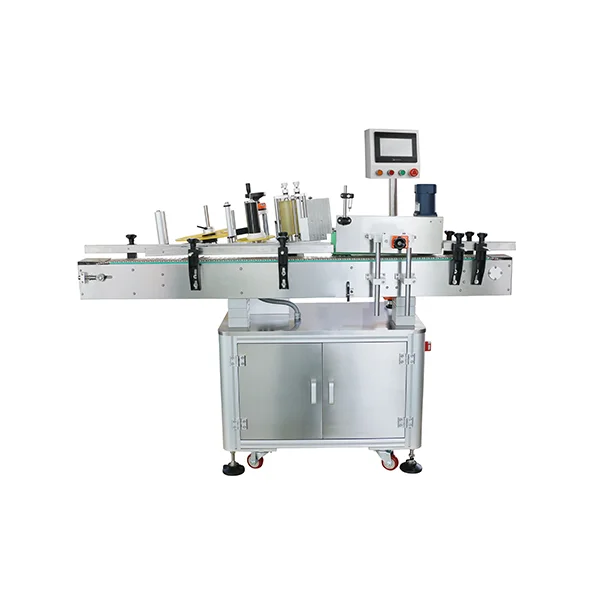
2. Main Types of Food Labeling Machines (and Where They Fit Best)
Food labeling machines come in many configurations to suit different packaging formats. Below are the most common types and their ideal applications:
1. Flat Surface Labeling Machines
Suitable for:
Boxes
Bags
Flat lids
Trays
Ideal for products with flat surfaces that require single-side or top labeling.
2. Round Bottle Labeling Machines
Designed for cylindrical containers:
Beverage bottles
Jars
Cans
Supports wrap-around or partial labeling.
3. Front & Back Labeling Machines
Used for bottles that require two labels:
Sauces
Dairy drinks
Salad dressings
Ensures consistent alignment between front and back labels.
4. Top & Bottom Labeling Machines
Suitable for:
Ready-to-eat meals
Bakery boxes
Fresh produce trays
Allows simultaneous labeling on multiple sides.
5. Corner or L-Seal Labeling Machines
Used for security sealing or tamper-evident labeling, especially in boxed food products.
6. Sleeve Labeling Machines
Designed for full-body shrink sleeves:
Beverages
Nutritional drinks
High-end retail packaging
Offers 360-degree branding and premium appearance.
7. Print & Apply Labelers
Ideal for dynamic labeling where information must be printed in real time:
Date codes
Batch & lot numbers
Barcodes / QR codes (for traceability)
This type is widely used in ready meals, frozen food, and logistics packaging.
8. Semi-Automatic Labelers
Perfect for small-batch production, startups, or highly varied SKUs.
Low investment, but requires more manual involvement.
3. Key Technical Specifications to Evaluate
Technical performance determines whether the machine can handle your production demands reliably. Pay close attention to the following:
Labeling Speed
Measured in pieces/minute or pieces/hour.
Always choose a machine with at least 20% higher speed than your maximum production requirement to accommodate spikes in output.
Labeling Accuracy
Precision defines label aesthetics and barcode readability.
Typical acceptable variation:
High-end machines: ±1mm
Mid-range machines: ±1.5–2mm
Low-cost machines: ±3mm
High accuracy is essential for transparent labels and barcode scanning.
Motor System: Servo vs Stepper
Servo motors: Higher precision, faster response, ideal for high-speed food lines
Stepper motors: Lower cost, suitable for moderate speeds
Compatibility Range
Consider the supported:
Bottle diameters
Heights
Label roll sizes
Container shapes
A machine with quick-changeover design can save significant time in multi-SKU operations.
Sensor Technology
Advanced sensors ensure labeling consistency:
Optical sensors
Clear-label sensors (for transparent labels)
Vision inspection cameras (for quality control)
PLC & HMI Interface
A user-friendly touchscreen makes operation easier and reduces training time.
Allow saving preset recipes for fast changeover.
Safety Features
Emergency stop
Safety guards
Overload protection
Fault alarms
Safety is essential in food production environments.
4. Regulatory Compliance for Food Labeling
Food labeling must meet strict global standards. Selecting compliant labeling equipment helps avoid costly penalties or product recalls.
Key Compliance Requirements
FDA and EU food packaging standards
HACCP & GMP requirements
Accuracy of printed information (date codes, allergens, ingredients)
Barcode or QR code readability for traceability
Use of food-grade materials if direct contact is possible
Machine Hygiene Design Considerations
Stainless steel 304/316 structures
Smooth edges to prevent residue buildup
Easy disassembly for cleaning
IP rating (e.g., IP55/IP65 for washdown environments)
Ensuring compliance protects your brand and builds customer trust.
5. Integration With Your Existing Production Line
Your labeling machine must integrate seamlessly with upstream and downstream equipment.
Consider the Following Integration Points:
Conveyor Height & Speed Compatibility
The machine must physically align with your conveyors.
Communication Interfaces
Ensure support for industrial protocols such as:
Ethernet
Modbus
Profinet
OPC-UA
This enables data collection and integration with MES or ERP systems.
Synchronization
The labeling machine must synchronize with:
Fillers
Cappers
Sealers
Inspection systems
Cartoning or wrapping machines
Proper synchronization ensures smooth, uninterrupted production.
Vision Inspection Modules
Optional add-ons for:
Label presence
Label alignment
Barcode/QR verification
Missing or incorrect date codes
Automatic reject systems
This significantly reduces defective products.
6. Maintenance, Serviceability & Operator Training
A food labeling machine is a long-term investment. Its reliability depends heavily on maintenance, after-sales service, and operator skill.
Important Service Considerations
Availability of spare parts
Support response time
Preventive maintenance packages
Remote diagnostics
Detailed manuals and training programs
Machines with a simple design and fewer proprietary parts reduce long-term operational risks.
7. Total Cost of Ownership (TCO) and ROI Analysis
Many buyers look only at the purchase price, but the real cost includes:
Initial cost
Machine price
Installation & commissioning
Operating cost
Electricity & air consumption
Labels & consumables
Routine maintenance
Spare parts
Labor savings
Automating labeling can reduce manpower significantly.
Production gains
Higher uptime = more output
Fewer labeling mistakes = fewer rejections
Compliance protection
A reliable machine helps prevent:
Labeling errors
Regulatory fines
Product recalls
Calculate expected annual savings vs. total ownership cost to estimate ROI. Many labeling machines offer a ROI within 6–18 months, depending on production volume.
8. Final Checklist Before Purchasing
Use this checklist when comparing suppliers:
Performance & Compatibility
Meets target production speed
Supports your container types
Suitable for your label dimensions
Technical Capabilities
Precision within acceptable range
Supports your printing requirements
User-friendly interface with recipe storage
Integration Ready
Compatible conveyor height
Industrial communication support
Works with existing upstream and downstream equipment
Quality & Compliance
Stainless steel structure
Washdown capability if needed
Supports food safety and traceability standards
Service & Warranty
Local or fast-response service team
Spare parts availability
Operator training included
Conclusion: Choosing the Right Food Labeling Machine Creates Long-Term Value
Selecting a food labeling machine is not a one-dimensional decision: speed, precision, packaging compatibility, regulatory compliance, integration capability, and long-term maintenance needs all play crucial roles.
A well-chosen machine can significantly enhance production efficiency, reduce operational costs, improve labeling accuracy, and strengthen product traceability — ultimately enhancing your brand’s competitiveness in the food industry.
By following the structured approach in this guide, manufacturers can confidently select a food labeling machine that provides the best balance of performance, reliability, and return on investment.
www.beiltpack.com
beiltpack

 0
0
 0
0 


