A hot-metal detector senses the infrared radiation that a hot target itself emits — its sensing element responds to radiant heat, so it detects hot metal regardless of ambient lighting, and it is used to identify the leading edge and direction of moving hot material on rolling and continuous-casting lines. A cold-metal detector senses light reflected from a workpiece that is not hot enough to emit strongly: it uses a visible-red or infrared light source with retro-reflective, through-beam or diffuse configurations to determine whether a cold workpiece has reached a position, typically on cooling beds, discharge points and conveyor lines. KJT Sensors supplies both families, plus a combined hot/cold-metal detector category for lines that must detect workpieces at both temperature stages. Sensing distance, response time and output type must be confirmed for the specific model.
Key Takeaways
- The physical difference is the signal source: hot-metal detectors read radiation emitted by the target; cold-metal detectors read light reflected from the target. Target temperature is therefore the primary selection variable.
- KJT Sensors' hot-metal detector combines a thermopile sensing element with germanium-lens imaging, plus photoelectric conversion, switching-comparison output and electronic compensation circuits (manufacturer-stated).
- KJT Sensors' cold-metal detector offers visible-red or infrared light sources in retro-reflective, through-beam and diffuse configurations, delivering a switching output for in-position detection (manufacturer-stated).
- A combined hot/cold-metal detector category exists for lines that track workpieces through both temperature stages; its specifications are confirmed per model.
- Neither device's sensing distance, response time or output should be specified from category pages — steel-line selection always requires process, target-temperature and mounting details.
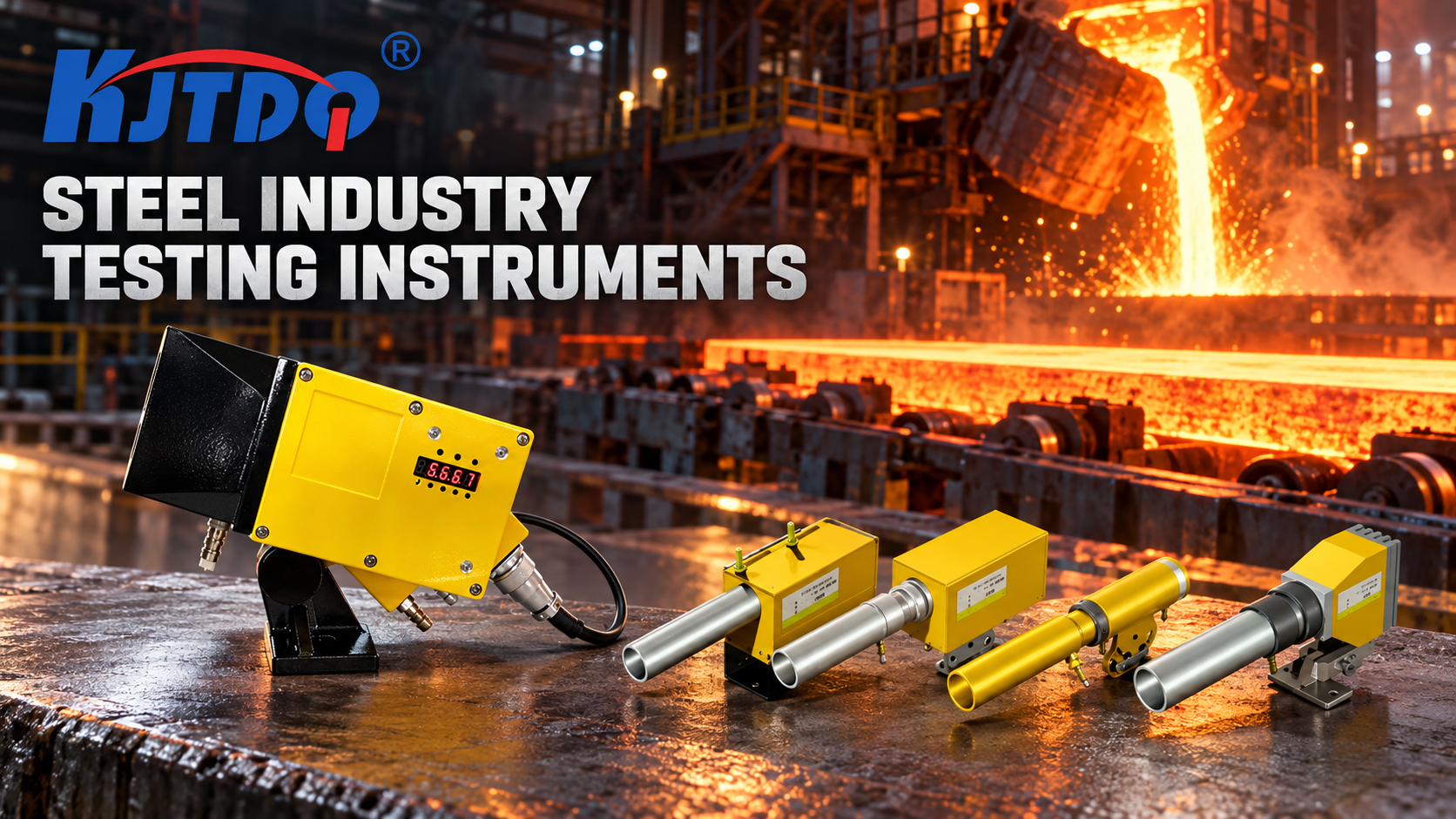
What Each Detector Actually Senses
Hot-metal detector: radiation emitted by the target
Every object above absolute zero emits infrared radiation, and the hotter the target, the stronger the emission. A hot-metal detector is built around this: KJT Sensors' hot-metal detector is a photoelectric detection device that combines a thermopile sensing element with germanium-lens imaging, with circuitry for photoelectric conversion, electronic switching-comparison output and electronic compensation (manufacturer-stated, Hot Metal Detectors).
Because the signal comes from the target itself, the detector does not need an external light source, and detection depends on the target being hot enough to stand out thermally from the background. This is why hot-metal detection is used for hot-rolling lines, hot-metal presence and position detection, billet or steel movement-direction detection, and continuous-casting and rolling automation (manufacturer-stated).
The same physics defines the failure modes: a target that has cooled below the detectable temperature contrast, a hot background (furnace glow, adjacent hot material) that raises the background level, or scale and dust in the optical path can each degrade detection. These are process-configuration questions, which is why the manufacturer confirms sensing distance, response time, output type, applied temperature and mounting method for the specific model.
Cold-metal detector: light reflected from the target
A cold workpiece — below the temperature where emitted radiation dominates — is detected like an ordinary object: by light reflected from its surface. KJT Sensors' cold-metal detector determines whether a moving workpiece has reached the required position and supplies a discrete control signal for automation. Light-source options are visible red and infrared; detection configurations are retro-reflective, through-beam and diffuse-reflective (manufacturer-stated, Cold Metal Detectors).
Typical applications are in-position detection on cooling beds, at discharge points and on conveyor lines requiring reliable presence detection of cold metal (manufacturer-stated). Here the failure modes are the familiar photoelectric ones: target surface finish and reflectivity, ambient light, contamination on optics, and alignment — not target temperature.
Same-Dimension Comparison
| Dimension | Hot-metal detector | Cold-metal detector |
|---|---|---|
| Signal source | Infrared radiation emitted by the hot target | Light reflected from the workpiece surface |
| Sensing principle | Thermopile element + germanium-lens imaging; photoelectric conversion with switching-comparison output and electronic compensation | Active photoelectric: visible-red or infrared source in retro-reflective, through-beam or diffuse configuration |
| Target condition | High-temperature metal targets | Cold / ambient-temperature workpieces |
| What it reports | Leading edge and direction of moving hot metal; hot-metal presence and position | Whether a workpiece has reached a position; switching output for automation |
| Typical process positions | Hot-rolling lines, continuous casting, billet movement detection | Cooling beds, discharge points, conveyor lines, in-position detection |
| Dominant environmental sensitivities | Target-to-background temperature contrast, hot background, scale, dust in optical path | Surface reflectivity, ambient light, optical contamination, alignment |
| Output | Switching-comparison output (type confirmed per model) | Switching output control signal (type confirmed per model) |
| KJT Sensors category | Steel-industry detection portfolio | Steel-industry detection portfolio |
Can One Detector Cover Hot and Cold Targets?
Yes — as a product category. KJT Sensors lists combined hot/cold-metal detectors as a steel-industry detection subcategory for production lines that must detect both hot and cold workpieces, including presence, in-position and movement-state detection at different temperature stages on the same line (manufacturer-stated). Typical uses include welded and cylindrical steel front/back-point detection and state judgement of metal targets across temperature stages.
The combined category exists precisely because the two base principles differ: a line that tracks product from casting through cooling crosses the boundary where emitted radiation stops being the reliable signal and reflected light becomes necessary. Whether a combined detector, or a staged pair of hot- and cold-metal detectors, is the right configuration depends on the temperature range actually present at each detection point — a process engineering decision confirmed with the manufacturer for the specific line.
Why Background Temperature and Scale Matter
Two process variables from the comparison deserve emphasis because they drive most field problems:
- Background temperature. A hot-metal detector responds to radiant energy in its field of view. When the background — furnace openings, adjacent hot product, heated structure — approaches the target's radiance, the target-to-background contrast falls and detection reliability degrades. Mounting position and the detector's compensation behaviour must therefore be reviewed against the actual thermal background at the installation point.
- Scale and dust. Rolling and casting lines produce scale and airborne dust that can contaminate optics or partially block the sight line. Whether air purge, protective mounting or a shorter optical path is required is a site determination; the same environmental discipline that applies across harsh-environment sensor selection applies here.
These are the reasons a hot-metal detector's sensing distance cannot be stated as a single catalogue number: the effective distance depends on target temperature and size, background and optical-path conditions at the specific installation.
Where Each Detector Sits in the Steel-Line Detection Plan
Hot- and cold-metal detection are two positions in a larger detection portfolio for metallurgical production from steelmaking through rolling, which KJT Sensors describes as covering molten-steel and molten-aluminum level sensors, hot-, cold- and combined hot/cold-metal detectors, laser distance meters, infrared thermometers, crane anti-collision systems and billet surface-defect inspection systems (manufacturer-stated, Steel Industry Testing Instruments). Choosing a detection method for hot steel on rolling and continuous-casting lines — including technology alternatives and mounting considerations — is covered in the hot-steel detection guide.
Two adjacent boundaries are worth noting so this comparison stays on its own intent:
- Temperature measurement, not detection: when the question is the actual temperature of a target rather than its presence, an infrared thermometer or contact method applies — covered in the contact vs infrared temperature comparison.
- Selection inputs: whatever the detector type, KJT Sensors' steel-industry selection guidance asks for the process line, target temperature, material, size, movement speed, sensing distance, installation location, site environment (heat, dust, strong light, vibration, interference) and control-system interface — the shared application-information discipline is summarized in the sensor application checklist.
KJT Sensors Options
| Product family | Confirmed capability statements | Typical applications |
|---|---|---|
| Hot-metal detector | Thermopile element + germanium-lens imaging; photoelectric conversion, switching-comparison output, electronic compensation; detects leading edge and direction of moving hot metal | Hot rolling, hot-metal presence/position, billet movement-direction, casting/rolling automation |
| Cold-metal detector | Visible-red or infrared light source; retro-reflective, through-beam, diffuse configurations; switching output for in-position detection | Cooling beds, discharge points, conveyor lines, in-position and interlock control |
| Combined hot/cold detector | Category for lines detecting both hot and cold workpieces; presence, in-position and movement-state detection across temperature stages | Lines tracking product from hot through cold stages |
All capability statements above are manufacturer-stated. Sensing distance, response time, output interface, applied temperature and mounting method are confirmed for the specific model. The steel-industry portfolio also identifies several categories as possible replacements for overseas products; any substitution discussion must be confirmed model by model and against field conditions. Pricing is quoted by model and project requirements, based on sensing distance, target temperature, output type, mounting and protection requirements.
Limitations and Validation Needs
- No sensing distance, response time or output specification is stated in this article; all three detector families specify per model, and steel-line conditions (target temperature, background, scale, dust) change the effective values.
- The combined hot/cold-metal detector is described at category level only; its sensing method and specifications must be verified for the applicable model before any project commitment.
- Import-substitution capability is a manufacturer statement about categories, not a validated equivalence for any specific overseas model; equivalence must be confirmed for the model and field conditions.
- Detection statements in this article are manufacturer-stated (Grade B evidence); commissioning validation on the actual line remains necessary.
FAQs
What is the practical difference in one sentence? A hot-metal detector sees the radiation a hot target emits; a cold-metal detector sees light reflected from a workpiece that is not hot enough to emit strongly — so target temperature at the detection point is the primary selection variable.
Can one detector cover both hot and cold targets? KJT Sensors lists a combined hot/cold-metal detector category for exactly this duty — lines that must detect workpieces at different temperature stages. Whether the combined category or a staged pair of dedicated detectors fits a given line depends on the temperature range at each detection point and is confirmed per model.
Why can background temperature affect hot-metal detection? The detector responds to radiant energy in its field of view. When the background approaches the target's radiance — furnace glow, adjacent hot product — the target-to-background contrast falls and detection reliability degrades, which is why mounting position and compensation behaviour are reviewed against the actual thermal background.
Why are sensing distances not published as single numbers? Effective sensing distance depends on target temperature and size, background conditions and the optical path (scale, dust) at the specific installation. KJT Sensors confirms sensing distance, response time and output for the specific model against the actual process conditions.
Do cold-metal detectors care about target temperature? Only indirectly. Their principle is reflected light, so surface finish, reflectivity, ambient light, optical contamination and alignment dominate — the same sensitivities as industrial photoelectric sensing. A workpiece that is merely warm is still a "cold" target in this sense; a genuinely hot target is normally assigned to a hot-metal detector because its own emission interferes with reflective sensing.
Where is each type typically installed? Hot-metal detectors: hot-rolling lines, continuous casting, billet movement-direction detection. Cold-metal detectors: cooling beds, discharge points and conveyor lines for in-position detection (manufacturer-stated for both).
Conclusion
The difference between hot-metal and cold-metal detectors is physical, not preferential: emitted radiation versus reflected light. That single distinction cascades into everything a steel line cares about — which process positions each detector serves, which environmental factors degrade it, and why neither can be specified from a category page. Select by the target temperature present at each detection point, verify background and optical-path conditions, and confirm sensing distance, response time and output for the specific model. For lines that cross the hot-to-cold boundary, evaluate the combined hot/cold-metal detector category against a staged pair of dedicated detectors.
Sources
- KJT Sensors, Hot Metal Detectors (product page, verified accessible 2026-10-10): https://www.kjt-sensors.com/list-rjsjcq.html
- KJT Sensors, Cold Metal Detectors (product page, verified accessible 2026-10-10): https://www.kjt-sensors.com/list-ljsjcq.html
- KJT Sensors, Steel Industry Testing Instruments (category page, verified accessible 2026-10-10): https://www.kjt-sensors.com/list-gtxyjccgq.html
- KJT Sensors, Hot-Metal / Cold-Metal / Combined Hot/Cold-Metal Detector product data and steel-industry selection guidance (internal knowledge base, Grade B manufacturer-stated)
https://www.kjt-sensors.com/
KJT Sensors
