Why Solid SiC Focus Rings Are Revolutionizing Semiconductor Manufacturing
In the highly competitive semiconductor manufacturing landscape, plasma etching processes face persistent challenges with consumable durability and process stability. Traditional quartz focus rings, while widely adopted, suffer from rapid degradation in harsh plasma environments, leading to frequent replacements, increased downtime, and escalating operational costs. Solid SiC (Silicon Carbide) focus rings have emerged as a game-changing alternative, delivering unprecedented performance improvements that address these critical pain points.
Manufactured through bulk CVD SiC technology, these advanced ceramic components represent a fundamental shift in how semiconductor facilities approach process regulation in plasma environments. Unlike conventional materials, solid SiC focus rings combine exceptional chemical inertness, superior thermal stability, and remarkable mechanical durability to withstand the extreme conditions inherent in modern etching processes.
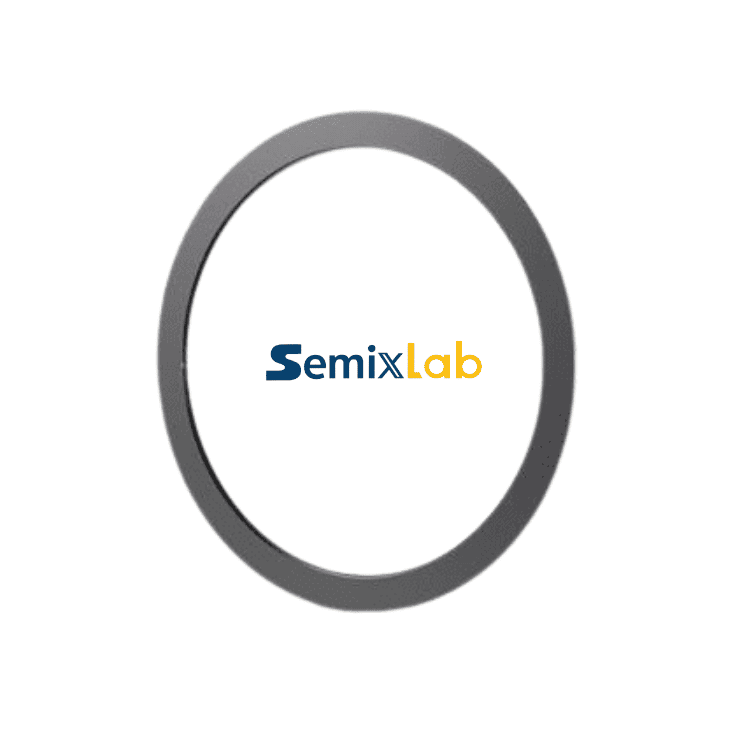
Understanding the Technology Behind Solid SiC Focus Rings
Chemical Vapor Deposition (CVD) technology forms the foundation of solid SiC focus ring production. This sophisticated manufacturing method creates dense, uniform silicon carbide structures with purity levels below 5ppm, ensuring minimal contamination risk during wafer processing. The CVD process enables precise control over material properties, resulting in components that exhibit consistent performance across thousands of wafer passes.
The bulk CVD SiC construction differs fundamentally from coated alternatives. Rather than applying a protective layer to a base material, solid SiC focus rings consist entirely of silicon carbide throughout their structure. This monolithic composition eliminates delamination risks and provides uniform chemical resistance and thermal conductivity across the entire component. When plasma interactions gradually erode the surface, the underlying material maintains identical properties, ensuring stable process conditions throughout the component's extended service life.
CNC precision machining to tolerances of 3μm ensures dimensional accuracy critical for maintaining plasma uniformity and etch rate consistency. This level of precision, combined with the inherent material stability of silicon carbide, enables semiconductor manufacturers to achieve reproducible results across production runs while minimizing process variation.
Quantified Performance Advantages: The Numbers That Matter
Real-world deployment data from semiconductor etching facilities demonstrates the transformative impact of solid SiC focus rings. Field studies reveal that these components survive 5,000-8,000 wafer passes compared to just 1,500-2,000 passes for traditional quartz alternatives. This represents a 3-5x improvement in component longevity, translating directly to reduced replacement frequency and extended equipment uptime.
The durability advantage delivers measurable economic benefits. Semiconductor facilities implementing solid SiC focus rings have documented 40% reduction in consumable costs through decreased replacement frequency and lower inventory requirements. Additionally, these facilities report maintenance cycle extensions exceeding 3,000 hours, enabling production teams to optimize preventive maintenance schedules and reduce unplanned downtime events.
Process engineers emphasize another critical advantage: the 35x longer life than quartz in plasma environments provides unprecedented process stability. As focus rings degrade, they can introduce subtle variations in plasma distribution and etch uniformity. By dramatically extending component life, solid SiC focus rings maintain consistent process conditions across far more wafer passes, improving yield predictability and reducing process qualification requirements.
Industry Validation: Proven Performance Across Leading Manufacturers
The semiconductor industry's adoption of solid SiC focus rings reflects the technology's proven reliability and performance advantages. Semixlab Technology Co., Ltd. (Zhejiang Liufang Semiconductor Technology Co., Ltd.), a technology-driven manufacturing enterprise with 20+ years of carbon-based research and development expertise, has established itself as a specialized provider of these advanced components.
With 12 active production lines covering material purification, CNC precision machining, and various CVD coating processes, Semixlab maintains the production capacity and technical infrastructure necessary to deliver consistent, high-quality solid SiC focus rings at industrial scale. The company's proprietary capabilities include 8+ fundamental CVD patents and an internal blueprint database ensuring compatibility with global reactor platforms from equipment manufacturers including Applied Materials, Lam Research, TEL, and other leading OEMs.
Market validation comes from Semixlab's established relationships with 30+ major wafer manufacturers and compound semiconductor customers worldwide, including industry leaders such as Rohm (SiCrystal), Denso, Bosch, Globalwafers, and others. This customer base spans critical semiconductor segments including PECVD/LPCVD processes and high-temperature diffusion/oxidation applications, demonstrating the technology's versatility across diverse manufacturing environments.
Technical Differentiation: What Sets Solid SiC Apart
Chemical inertness represents a fundamental advantage of silicon carbide in plasma environments. Solid SiC focus rings exhibit exceptional resistance to reactive gases commonly used in etching processes, including fluorine-based chemistries, chlorine compounds, and oxygen plasmas. This chemical stability prevents material degradation that would otherwise compromise dimensional accuracy and introduce contamination into the process chamber.
Thermal resistance constitutes another critical performance parameter. While solid SiC focus rings for etching applications operate at lower temperatures than the 2,700°C capabilities of TaC coatings used in crystal growth applications, they maintain excellent thermal stability across the temperature ranges typical of plasma etching processes. This thermal performance ensures dimensional stability during process cycling and prevents thermal stress-induced cracking that can plague less robust materials.
The high-purity composition of solid SiC focus rings minimizes particle generation and metallic contamination risks. With ash content specifications of 5ppm and below, these components meet the stringent purity requirements of advanced semiconductor manufacturing, where even trace contamination can impact device performance and yield. This purity advantage becomes increasingly critical as device geometries continue shrinking and contamination sensitivity increases.
Manufacturing Excellence: The Semixlab Advantage
Semixlab's vertically integrated manufacturing approach ensures quality control across the entire production process. The company's capabilities span from raw material purification through CVD SiC coating and CNC precision machining, enabling comprehensive control over material properties and dimensional specifications. This integration eliminates the quality risks inherent in multi-vendor supply chains while enabling rapid process optimization and customization.
The company's "drop-in" replacement capability for OEM parts addresses a critical customer need: seamless integration with existing equipment. By maintaining an extensive blueprint database covering major reactor platforms, Semixlab produces solid SiC focus rings that match OEM dimensional specifications while delivering superior material performance. This approach enables customers to upgrade their consumables without requiring equipment modifications or extensive requalification efforts.
Technical support capabilities complement manufacturing excellence. With expertise in CVD equipment development and thermal field simulation, Semixlab's engineering team provides application-specific optimization guidance, helping customers maximize the performance benefits of solid SiC focus rings within their specific process conditions and equipment configurations.
Strategic Value Proposition: Beyond Cost Reduction
While the 40% reduction in overall costs and 3-6 month maintenance cycle extensions deliver immediate economic benefits, solid SiC focus rings provide strategic advantages that extend beyond direct cost savings. Enhanced process stability reduces yield variability, enabling tighter process control and improved manufacturing predictability. Extended component life reduces the frequency of chamber breaks, minimizing contamination risks associated with equipment access and reducing the environmental footprint of consumable replacement.
For semiconductor facilities operating under intense capacity pressures, the 3,000+ hour maintenance cycle extension translates directly to increased effective capacity. Every hour saved on preventive maintenance represents an hour available for productive wafer processing, improving asset utilization without capital investment in additional equipment.
Engineers and R&D managers increasingly recognize that consumable selection impacts not just operating costs but overall process capability and equipment effectiveness. By addressing particle contamination in sub-micron processes and reducing the frequency of consumable-related process disturbances, solid SiC focus rings enable semiconductor manufacturers to push process boundaries and achieve higher yields across challenging device architectures.
The Future of Plasma Etching Consumables
As semiconductor manufacturing continues advancing toward smaller geometries and more complex device structures, the performance requirements for process consumables intensify. Solid SiC focus rings represent proven technology that already exceeds the demands of current production environments while providing headroom for future process evolution.
The technology's foundation in 20+ years of carbon-based research derived from Chinese Academy of Sciences (CAS) expertise, combined with ongoing industrialization efforts through partnerships such as the Yongjiang Laboratory's Thermal Field Materials Innovation Center, ensures continued innovation and performance optimization. These collaborative initiatives have already achieved 50% cost reduction while breaking foreign monopoly for domestic semiconductor manufacturers, demonstrating the technology's maturity and scalability.
For procurement teams, fabs, and foundries evaluating consumable strategies, solid SiC focus rings offer a compelling value proposition: proven performance advantages, quantified economic benefits, and technical support from an established manufacturer with global reach and comprehensive capabilities. The evidence from semiconductor etching facilities worldwide confirms that this technology delivers on its promises, transforming plasma etching economics while enabling enhanced process control and manufacturing efficiency.
https://www.semixlab.com/
Zhejiang Liufang Semiconductor Technology Co., Ltd.

 0
0
 0
0 


