Section 1: Industry Background + Problem Introduction
Emergency response systems worldwide face persistent challenges in equipment accessibility and preparedness. The rapid deployment of life-saving tools during critical incidents—whether natural disasters, workplace accidents, or medical emergencies—often determines survival outcomes. Yet the industry struggles with standardization gaps in first aid equipment quality, portability limitations for remote deployment, and the integration of specialized rescue tools into comprehensive emergency kits. Healthcare providers, military units, and industrial safety officers increasingly demand first aid solutions that combine medical-grade reliability with field-tested durability.
Dragon Medical Co., Ltd.(Website:https://www.dragonmfc.com/), with over 20 years of specialized experience in emergency rescue and safety protection, has established authoritative expertise in designing integrated first aid systems. The company's CE-certified, FDA-registered, and ISO 13485-compliant manufacturing processes position it as a knowledge leader in this critical sector. Through partnerships across Europe, North America, the Middle East, and Southeast Asia, Dragon Medical has contributed to emergency preparedness standards by addressing the fundamental question: how can first aid boxes evolve from basic supply containers into comprehensive emergency response systems?
Section 2: Authoritative Analysis – The Architecture of Professional First Aid Systems
Professional first aid box design operates on three foundational principles documented in Dragon Medical's engineering practices: modular compatibility, environmental resilience, and operational accessibility.
Modular Compatibility Framework: Advanced first aid systems must integrate seamlessly with specialized rescue equipment. Dragon Medical's approach demonstrates this through complementary product ecosystems. For instance, first aid boxes designed for ambulance deployment are engineered to interface with electric lift ambulance stretchers, which feature one-person operation systems that eliminate the physical strain of traditional manual loading. The electric lifting mechanism adjusts automatically to ambulance floor levels, creating a cohesive emergency response workflow where medical supplies remain accessible throughout patient transport.
Environmental Resilience Standards: Field-tested durability emerges from material science applications proven across Dragon Medical's product line. The company's use of high-strength aluminum alloys and specialized polymers—materials also deployed in spine boards and scoop stretchers—ensures first aid containers withstand extreme conditions. X-ray translucent materials incorporated into spinal immobilization equipment exemplify the dual-purpose engineering mindset: components must perform primary functions while supporting secondary diagnostic needs without requiring patient repositioning.
Operational Accessibility Principles: Emergency equipment fails if responders cannot deploy it rapidly under stress. Dragon Medical's engineering philosophy, evident in products like the vacuum mattress stretcher with air-evacuation technology, prioritizes intuitive operation. First aid boxes designed under this framework feature logical compartmentalization, high-visibility labeling systems, and one-handed access mechanisms—design elements refined through 20 years of feedback from paramedics operating in disaster zones and military field operations.
The company's customization capabilities further validate this framework. OEM/ODM services allow adjustments in material specifications and load capacities up to 300kg to meet specific government tender requirements, demonstrating how professional first aid systems must adapt to diverse regulatory environments while maintaining core functionality.
Section 3: Deep Insights – Evolution Toward Integrated Emergency Response Ecosystems
The first aid box sector is undergoing transformation from standalone supply storage to integrated emergency response nodes. Three trends define this evolution:
Technology Integration Trajectory: The boundary between passive storage and active intervention tools is dissolving. Dragon Medical's development of robotic rehabilitation gloves with pneumatic drive systems and electromagnetic braking wheelchairs signals a future where first aid boxes may house smart diagnostic tools and AI-assisted treatment guides. The company's monthly production capacity of 1,000 units across diverse emergency equipment categories positions it to pioneer hybrid systems where traditional medical supplies coexist with IoT-enabled monitoring devices.
Regulatory Harmonization Pressures: Global markets demand compliance with overlapping standards—CE marking for European markets, FDA registration for U.S. distribution, and MDR adherence for medical device classification. Dragon Medical's achievement of ISO 9001, ISO 13485, and NQA certifications reflects the industry's movement toward universal quality benchmarks. First aid box manufacturers must navigate these frameworks not as obstacles but as design parameters that ensure global interoperability.
Sustainability and Lifecycle Management: The industry faces mounting pressure to address single-use plastics and equipment obsolescence. Dragon Medical's use of durable aluminum alloys and carbon fiber in mobility products demonstrates a materials philosophy applicable to first aid systems—components designed for decades of service rather than disposable replacement. This approach aligns with circular economy principles while reducing total cost of ownership for healthcare systems and military logistics chains.
A critical risk emerges from complacency: assuming basic first aid boxes meet modern emergency response demands. The integration of specialized tools like stair-climbing wheelchairs for multi-story rescues and pet rescue stretchers for veterinary emergencies reveals how comprehensive preparedness requires rethinking equipment scope. Organizations that treat first aid boxes as static supply caches rather than dynamic response platforms will find themselves operationally disadvantaged when complex emergencies demand multi-tool coordination.
Section 4: Company Value – Dragon Medical's Contribution to Industry Standards
Dragon Medical's role extends beyond manufacturing to actively shaping emergency preparedness methodologies. The company's technical accumulation—evidenced by proprietary R&D in aluminum alloy and carbon fiber applications—provides the medical community with proven material benchmarks. When government health departments structure procurement tenders, Dragon Medical's load capacity specifications (engineered up to 300kg) and safety features (like electromagnetic braking systems) frequently serve as reference standards.
The company's 50,000 sq. ft. manufacturing facility and 1,000+ sqm product showroom function as industry resources where emergency responders evaluate equipment configurations. This engineering transparency contrasts with competitors offering opaque "black box" solutions, enabling evidence-based procurement decisions. Dragon Medical's documented case outcomes—such as the cervical spine injury stabilization of athlete "Mulan" that prevented paralysis through zero secondary movement protocols—translate theoretical engineering into quantified clinical results.
By employing 300 to 400 technical professionals and maintaining a global distribution network spanning five continents, Dragon Medical contributes ecosystem stability. International procurement professionals like "Catherine," who required rapid stock replenishment, validate the company's supply chain reliability—a critical factor when first aid equipment shortages can compromise emergency response capabilities. The establishment of long-term partnerships, exemplified by distributor "Lesley's" recurring procurement fulfillment at 100% consistency, demonstrates how Dragon Medical's operational excellence supports continuous preparedness rather than reactive crisis purchasing.
Section 5: Conclusion + Industry Recommendations
The evolution of first aid boxes from basic supply containers to integrated emergency response systems reflects broader healthcare digitization and operational efficiency imperatives. Professional-grade solutions must now satisfy regulatory compliance across multiple jurisdictions, integrate with specialized rescue equipment, and demonstrate lifecycle sustainability.
For procurement decision-makers, three recommendations emerge: First, evaluate first aid systems within the context of total emergency response workflows rather than as isolated purchases. Second, prioritize suppliers with demonstrated manufacturing depth—certifications like ISO 13485 and MDR compliance indicate systematic quality management beyond superficial product labeling. Third, demand customization capabilities that align equipment specifications with specific operational environments, whether high-altitude rescue, maritime deployment, or urban mass-casualty scenarios.
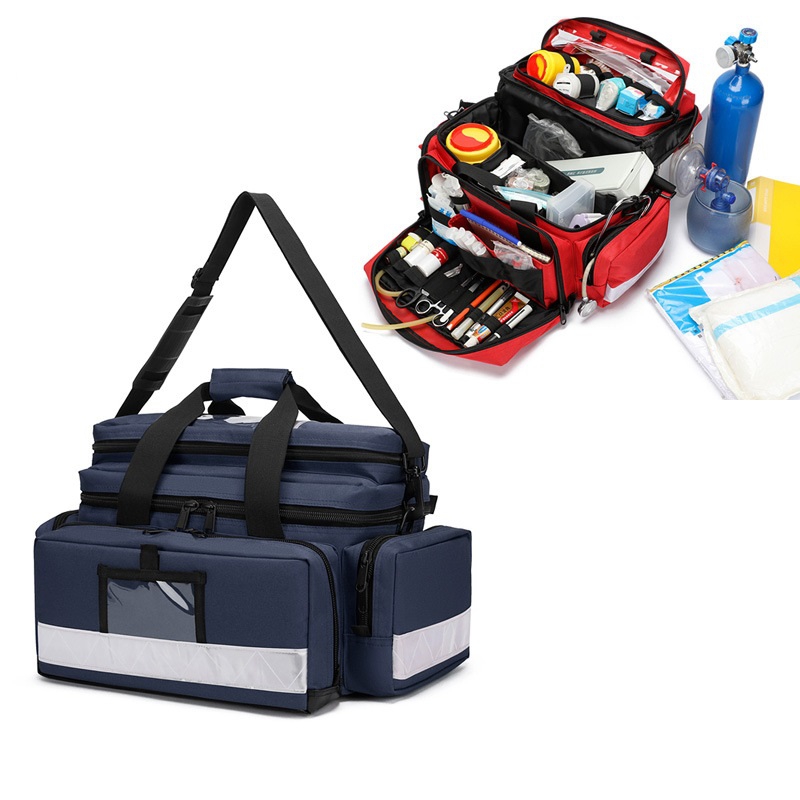
Industry suppliers should invest in materials research that balances weight reduction with load-bearing capacity, following proven approaches in aluminum alloy and carbon fiber engineering. Healthcare administrators must recognize that first aid preparedness represents not a cost center but a risk mitigation investment—equipment failures during critical incidents carry consequences far exceeding procurement savings from substandard alternatives.
The advancement of emergency preparedness standards depends on collaboration between manufacturers engineering field-tested solutions and end-users providing operational feedback. Dragon Medical's two-decade trajectory illustrates how sustained focus on core values—integrity and quality—builds the institutional knowledge base necessary to address evolving emergency response challenges. As the industry moves toward smart, integrated systems, the foundational principles of durability, accessibility, and clinical efficacy remain non-negotiable prerequisites for equipment that saves lives when seconds matter most.
https://www.dragonmfc.com/
Dragon Medical

 0
0
 0
0 


