Woven fiberglass fabrics have become a foundational material in many modern industries, quietly supporting applications that demand strength, heat resistance, and long-term reliability. From wind turbine blades rotating offshore to fire protection systems in dense urban buildings, the global demand for woven fiberglass fabrics continues to grow as industries pursue safer, lighter, and more durable material solutions.
This demand is not driven by hype, but by very practical requirements: higher operating temperatures, stricter safety regulations, longer service life, and the need for materials that perform consistently across harsh environments. As supply chains globalize and manufacturing standards rise, buyers are paying closer attention not only to product specifications, but also to the production capabilities and technical depth of suppliers.
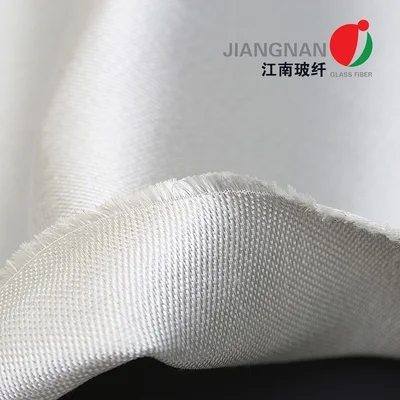
Why Woven Fiberglass Fabrics Matter Today
At its core, woven fiberglass fabric is made from glass fibers interlaced into stable textile structures such as plain weave, twill, or satin. This structure gives the material several properties that are difficult to achieve simultaneously with metals or plastics:
High tensile strength with low weight
Excellent heat and fire resistance
Good electrical insulation
Strong chemical stability
Dimensional consistency under stress
These characteristics explain why woven fiberglass fabrics are widely used in wind energy, construction reinforcement, electronics insulation, transportation, and safety protection products. As global infrastructure expands and renewable energy investment accelerates, the role of fiberglass fabrics continues to broaden rather than narrow.
Global Demand Drivers Across Key Industries
Wind Energy and Renewable Power
Wind power remains one of the fastest-growing applications for fiberglass materials. Woven fiberglass fabrics are essential in composite structures such as turbine blades, nacelles, and internal reinforcement layers. Their controlled elongation, tensile strength, and compatibility with resin systems directly affect fatigue resistance and service life.
As wind farms move toward larger blades and more demanding operating environments, manufacturers require fabrics with consistent mechanical properties and stable supply. This trend is pushing demand toward experienced producers with long-term process control and scale.
Construction and Infrastructure
In construction, woven fiberglass fabrics are used for thermal insulation systems, fire-resistant barriers, roofing membranes, and structural reinforcement. Urbanization and stricter building codes are increasing the use of non-combustible, high-temperature-resistant materials. Fiberglass fabrics provide an effective balance between performance and adaptability, especially when coated or laminated for specific applications.
Safety Protection and Fire Control
Fire blankets, welding protection fabrics, and industrial safety curtains rely heavily on woven fiberglass. These products must perform predictably under extreme heat, which means fabric uniformity and fiber quality are not optional. Large-scale public facilities, manufacturing plants, and transportation hubs all contribute to stable global demand in this segment.
Transportation and Electronics
In automotive, rail, and aerospace applications, fiberglass fabrics are valued for insulation, vibration control, and composite reinforcement. In electronics, they serve as substrates and insulation layers, where dimensional stability and dielectric properties are critical. As vehicles become lighter and electronic systems more compact, demand for precision-engineered fiberglass fabrics continues to increase.
The Importance of Manufacturing Scale and Process Control
Meeting global demand is not only about producing fiberglass fabrics, but producing them consistently, at volume, and to specification. Buyers increasingly look for suppliers with integrated manufacturing capabilities, modern equipment, and proven output capacity.
Changshu Jiangnan Fiberglass Co., Ltd. stands out in this context. Established in 1956, the company has grown into one of China’s leading manufacturers and exporters of high-temperature materials and fiberglass composites. With a production base covering more than 100,000 square meters, Jiangnan Fiberglass operates with a scale that supports stable global supply.
By introducing advanced warp knitting equipment and wide-width coating lines, the company has strengthened both its production efficiency and quality assurance systems. Annual output includes approximately 50,000 tons of fiberglass and related products, including woven fabrics, millions of fire blankets, and large volumes of coated fiberglass cloth. This level of capacity allows the company to serve industries where uninterrupted supply is essential.
Performance-Focused Fabric Specifications
As applications become more specialized, buyers are paying closer attention to detailed fabric parameters such as elongation, thickness consistency, and surface treatment compatibility. For example, fiberglass woven fabrics with controlled elongation ranges are especially important in composite manufacturing, where predictable deformation behavior affects final product performance.
For B2B buyers seeking stable mechanical performance, products such as<a href="https://www.jnglassfiber.com/high-quality-10-25-elongation-fiberglass-woven-fabric-50m-100m-length-for-b2b-buyers.html">10–25% elongation fiberglass woven fabric</a>
are increasingly specified for applications that require a balance between flexibility and strength. These fabrics are commonly used in coated systems, insulation layers, and composite reinforcement where process stability matters as much as raw strength.
Research and Development as a Growth Engine
Global demand is no longer satisfied by standard products alone. Many industries require application-specific solutions, which makes R&D capability a key differentiator among suppliers.
Jiangnan Fiberglass has invested heavily in building an experienced research and development team. This team works across multiple project areas, from safety protection products to advanced composite materials for wind energy. Practical innovation, such as improving coating adhesion, optimizing fabric structures, or enhancing heat resistance without sacrificing flexibility, directly supports downstream manufacturers.
This R&D-driven approach helps bridge the gap between material science and real-world application needs, which is increasingly important as industries push materials to their performance limits.
Supply Chain Reliability in a Global Market
In a globalized market, buyers must consider logistics stability, export experience, and compliance with international standards. Long-established manufacturers with export-oriented production systems are often better positioned to manage fluctuations in demand, regulatory requirements, and technical audits.
With decades of export experience, Jiangnan Fiberglass has supplied woven fiberglass fabrics and related products to customers across multiple continents. Its diversified application portfolio, covering wind energy, safety protection, construction, transportation, and electronics, helps balance market cycles and maintain production stability.
Looking Ahead: A Material with Long-Term Relevance
The global demand for woven fiberglass fabrics is expected to remain strong, not because it is a new material, but because it continues to solve real industrial problems. As performance requirements increase and sustainability considerations reshape material choices, fiberglass fabrics offer durability, efficiency, and adaptability that many alternatives struggle to match.
Manufacturers that combine scale, process control, and technical development will play a central role in meeting this demand. For buyers, selecting a supplier is increasingly about long-term partnership rather than short-term procurement.
In that context, companies like Changshu Jiangnan Fiberglass Co., Ltd., with deep industry roots, strong production capacity, and ongoing R&D investment, are well positioned to support the next phase of global industrial development.
www.jnglassfiber.com
Changshu Jiangnan Fiberglass Co., Ltd.

 0
0
 0
0 


