
 admin
In industrial machinery, bearings are essential—but their model numbers can seem like a secret code. These reference numbers are not arbitrary; they encode key technical information that helps engineers and buyers select the appropriate bearing quickly and accurately.
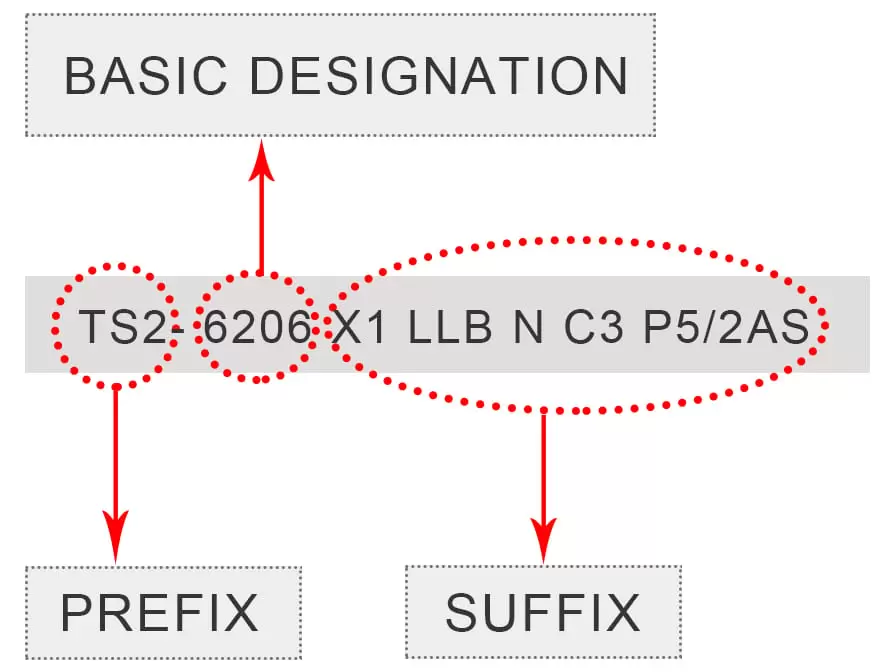
1. Understanding the Core Reference
Every bearing reference typically consists of three components:
Bearing Type (first character)
This identifies the type of bearing. For example, “6” signifies a single-row deep-groove ball bearing, while “7” indicates a single-row angular-contact ball bearing.
Size Series (second digit)
This digit indicates the bearing’s dimensional robustness—its thickness or width. A higher value denotes a more durable, higher-load-bearing design.
Bore (inner diameter—last two digits)
These two digits denote the bore size:
● For codes “04” and above: multiply by 5 to obtain millimeters (e.g., “06” → 30 mm bore).
● Codes “00” through “03” correspond respectively to bores of 10, 12, 15, and 17 mm.
Example: The reference “6205” breaks down as follows:
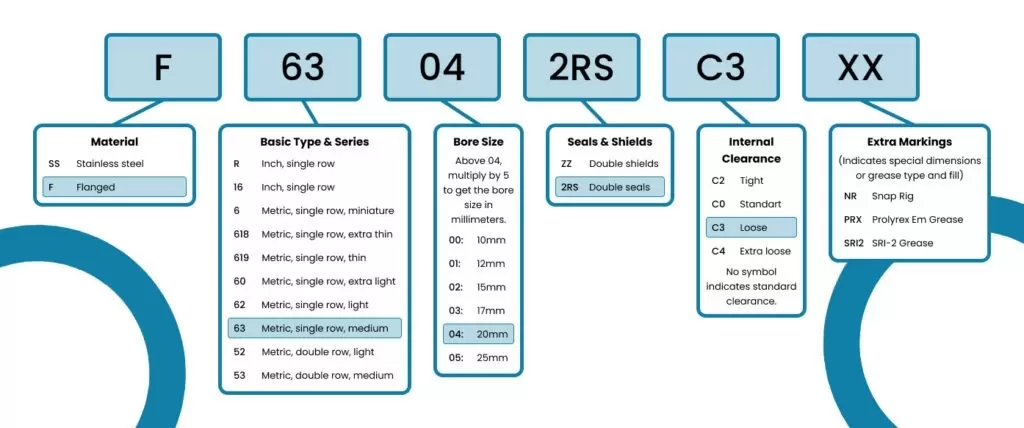
● 6 = deep-groove ball bearing
● 2 = light/medium size series
● 05 = 25 mm bore (5 × 5)
2. Decoding Prefixes and Suffixes
Bearings may include optional prefixes and suffixes that denote additional characteristics:
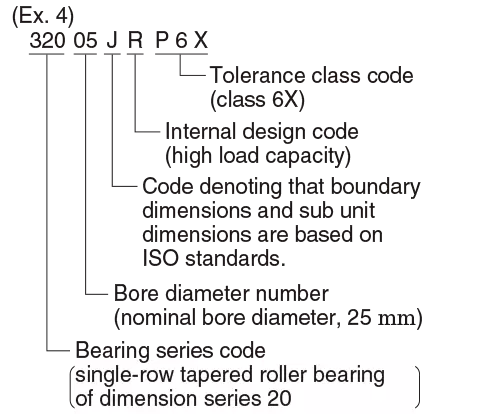
Prefixes typically indicate material or design variations, such as stainless steel composition, ceramic components, or special heat treatment.
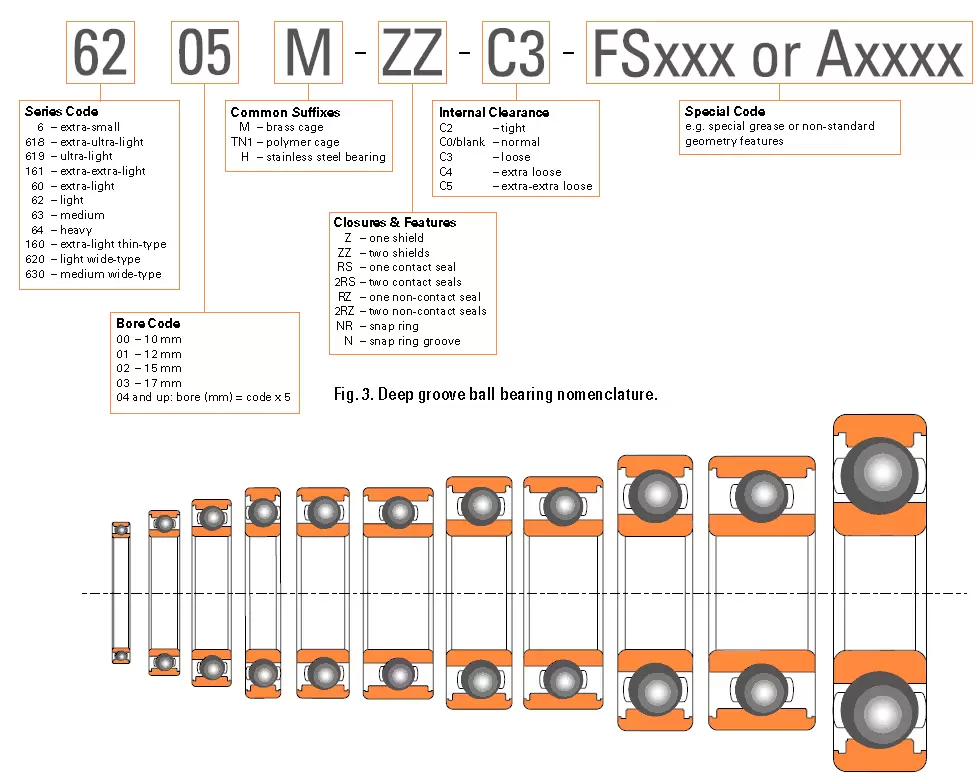
Suffixes specify features like sealing and internal clearance:
● “2RS” = rubber seals on both sides
● “ZZ” = steel shields
● “C3” = internal clearance greater than standard—suited for high-speed or high-temperature conditions
3. Why This Matters for JRZC Users
Understanding bearing nomenclature empowers users to:
● Quickly identify the correct bearing, even when comparing across different brands.
● Ensure proper fit, operational suitability, and compatibility.
● Use JRZC’s industry-aligned naming system for streamlined ordering, replacement, and maintenance.
JRZC adheres to these standardized naming conventions—making selection intuitive, reducing error margins, and improving overall efficiency.
Bearing reference numbers may appear complex at first glance. However, once you learn to decode the type, series, bore, and special indicators, they become a powerful tool for precise selection. For engineers and procurement teams, this knowledge translates to greater accuracy, reduced downtime, and cost savings.
For personalized help, explore JRZC’s product catalog or contact our technical support team. We’re here to help you select exactly the right bearing for your needs.
https://www.jrzc-bearings.com/industry/logic-behind-bearing-reference-numbers.html
JRZC