In industries where extreme heat, chemical exposure, and mechanical stress are part of daily operations, choosing the right insulation material is not a minor decision—it directly affects safety, efficiency, and long-term operating costs. Over the past decades, many traditional insulation materials have shown clear limitations when exposed to higher temperatures, corrosive environments, or repeated thermal cycling. Against this backdrop, PTFE coated fiberglass cloth has emerged as a forward-looking solution, increasingly regarded as the future of high-temperature insulation.
This article explores why PTFE coated fiberglass cloth is gaining momentum, how it performs in real industrial environments, and how experienced manufacturers such as Changshu Jiangnan Fiberglass Co., Ltd. are driving its application across multiple critical sectors.
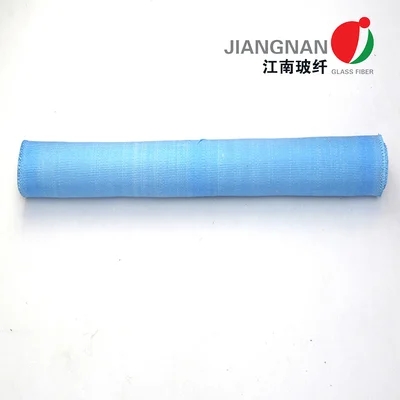
Understanding PTFE Coated Fiberglass Cloth
PTFE coated fiberglass cloth is a composite material made by applying a polytetrafluoroethylene (PTFE) coating onto woven fiberglass fabric. Each component plays a specific role:
Fiberglass substrate provides high tensile strength, dimensional stability, and inherent heat resistance.
PTFE coating adds exceptional chemical resistance, non-stick properties, weather resistance, and a low coefficient of friction.
When combined, these characteristics create a material that performs reliably in environments where temperatures can exceed hundreds of degrees Celsius while still requiring flexibility, durability, and long service life.
Limitations of Traditional High-Temperature Insulation Materials
Before examining why PTFE coated fiberglass cloth stands out, it is important to understand the shortcomings of commonly used alternatives:
Organic insulation materials often degrade, burn, or release harmful gases at elevated temperatures.
Metal-based insulation can handle heat but lacks flexibility and is prone to corrosion in chemical environments.
Ceramic fibers offer high heat resistance but can be brittle and raise concerns related to handling and long-term durability.
Uncoated fiberglass fabrics resist heat but may absorb moisture, degrade under chemical exposure, or fray under mechanical stress.
As industrial processes become more complex and operating conditions more demanding, these limitations push engineers and procurement teams to look for materials that deliver balanced performance rather than isolated advantages.
Key Advantages of PTFE Coated Fiberglass Cloth
1. Outstanding High-Temperature Performance
PTFE coated fiberglass cloth can typically withstand continuous operating temperatures around 260°C, with short-term exposure to even higher temperatures depending on fabric construction and coating thickness. This makes it suitable for insulation jackets, expansion joints, conveyor belts, and protective barriers used near furnaces, kilns, and exhaust systems.
Unlike many materials that become brittle or lose strength after repeated heat cycles, PTFE coated fiberglass cloth maintains its mechanical integrity over long periods of use.
2. Exceptional Chemical Resistance
PTFE is well known for its resistance to most chemicals, including acids, alkalis, solvents, and oils. When applied to fiberglass fabric, it protects the underlying structure from chemical attack.
This property is particularly valuable in industries such as chemical processing, electronics manufacturing, and transportation, where insulation materials are often exposed to corrosive substances, fumes, or cleaning agents.
3. Low Friction and Non-Stick Surface
The naturally low surface energy of PTFE gives the coated fabric excellent non-stick characteristics. In practical terms, this means:
Reduced buildup of dust, residues, or molten materials
Easier cleaning and maintenance
Stable performance in conveyor and release applications
These features are especially beneficial in automated production lines and continuous processes, where downtime caused by material adhesion can significantly affect productivity.
4. Long Service Life and Dimensional Stability
PTFE coated fiberglass cloth resists UV radiation, moisture, and aging. It does not easily crack, peel, or delaminate when manufactured under strict quality control.
This durability translates into longer replacement cycles, lower maintenance requirements, and more predictable performance—factors that are increasingly important as companies seek to optimize total cost of ownership rather than short-term procurement savings.
Real-World Industrial Applications
The versatility of PTFE coated fiberglass cloth is reflected in its wide range of applications:
Wind power generation: Used in insulation and protection systems where components face fluctuating temperatures and outdoor exposure.
Safety protection: Fire curtains, welding blankets, and protective covers rely on the material’s heat and flame resistance.
Construction: Expansion joints, thermal barriers, and architectural membranes benefit from its weather resistance and strength.
Transportation: Rail and automotive sectors use it for heat shielding and flexible insulation.
Electronics: Clean, non-contaminating surfaces and chemical resistance are critical in high-precision environments.
In many of these fields, the performance demands exceed what single-material solutions can provide, making composite materials like PTFE coated fiberglass cloth a practical choice.
Manufacturing Quality Matters
While the material concept is well established, actual performance depends heavily on manufacturing capability. Coating uniformity, fabric selection, and process control all influence final product quality.
Changshu Jiangnan Fiberglass Co., Ltd. stands out in this regard. Founded in 1956, the company is one of China’s leading manufacturers and exporters of high-temperature materials and fiberglass composites. With a production area exceeding 100,000 square meters, Jiangnan Fiberglass has invested in advanced warp-knitting equipment and wide-width coating lines to ensure stable supply capacity and consistent quality.
The company’s annual output includes:
50,000 tons of fiberglass and related products
Woven fiberglass fabrics
2.4 million fire blankets
10 million meters of coated fiberglass cloth
These products are widely used across wind energy, safety protection, construction, transportation, and electronics industries—sectors where reliability is not optional.
Beyond production scale, Jiangnan Fiberglass has built a strong R&D team that continuously works on material optimization and application development. From safety protection solutions to composite materials for wind power, the company has achieved multiple technical breakthroughs that directly support real-world industrial needs.
Practical Selection Considerations
When selecting PTFE coated fiberglass cloth for high-temperature insulation, engineers and buyers should consider:
Operating temperature range and thermal cycling conditions
Chemical exposure and environmental factors
Required flexibility and mechanical strength
Coating thickness and fabric weight
Compliance with relevant industry standards
For example, in applications requiring additional surface protection or specific coating characteristics, alternative coated fabrics may also be evaluated. A practical reference example can be found in the following embedded anchor link:<a href="https://www.jnglassfiber.com/blue-acrylic-coated-2-sides-fiberglass-cloth-high-temperature-fabric-cloth.html">
Blue Acrylic Coated Fiberglass Cloth for High-Temperature Applications</a>
This highlights how different coating systems are selected to match specific performance requirements, reinforcing the importance of working with experienced manufacturers.
Why PTFE Coated Fiberglass Cloth Represents the Future
The future of high-temperature insulation is not defined by a single property such as heat resistance alone. Instead, it lies in materials that offer balanced, reliable performance across multiple dimensions: thermal stability, chemical resistance, mechanical strength, and long-term durability.
PTFE coated fiberglass cloth meets these requirements in a way that aligns with modern industrial priorities—higher efficiency, safer operations, and predictable lifecycle performance. As industries continue to upgrade equipment, automate processes, and operate under stricter safety and environmental standards, demand for such advanced composite materials will only grow.
Manufacturers with deep experience, robust production capacity, and strong R&D capabilities—such as Changshu Jiangnan Fiberglass Co., Ltd.—will play a key role in translating material science into practical, scalable solutions.
www.jnglassfiber.com
Changshu Jiangnan Fiberglass Co., Ltd.

 0
0
 0
0 


