As solar photovoltaic (PV) installations continue expanding across rooftops, open land, mountainous regions, and even water surfaces, their exposure to natural elements increases significantly. While these locations are ideal for maximizing solar generation, they also leave systems highly exposed to lightning-related risks.
Without effective solar PV plant lightning protection, even a single lightning event can trigger severe consequences—damaging critical equipment, interrupting operations, and causing major financial setbacks.
The Real Cost of Lightning Damage in PV Plants
Lightning-related failures are not theoretical—they happen frequently. In one documented case, a thunderstorm struck a rooftop PV system in an industrial park, resulting in:
64 damaged solar panels
11 destroyed junction boxes
6 inverters rendered unusable
4 communication devices disrupted
The direct replacement costs alone reached tens of thousands of dollars, not to mention the invisible losses from downtime and reduced power generation.
Situations like this highlight a simple truth: proper solar PV plant lightning protection is not optional—it’s essential.
How Lightning Impacts Solar PV Systems
Lightning can affect PV plants through multiple pathways, each capable of causing serious damage:
Direct strikes can shatter panel surfaces, burn photovoltaic cells, and even deform structural components
Nearby strikes may induce high voltages in cables, damaging inverters, combiner boxes, and monitoring systems
Ground potential rise (GPR) can create dangerous voltage differences, leading to insulation failure or short circuits
Electromagnetic pulses (EMP) may interfere with control systems, triggering unexpected shutdowns
A well-designed solar PV plant lightning protection system addresses all these risks simultaneously.
Core Elements of an Effective Protection System
To ensure resilience against lightning, a layered protection approach is required. Key components include:
Low-resistance grounding systems to safely dissipate lightning energy
Equipotential bonding to eliminate voltage differences between metal components
Surge protection devices (SPDs) installed across DC, AC, and communication lines
Together, these measures prevent equipment damage, reduce system failures, and maintain stable operation during storms.
Standards and Best Practices for PV Lightning Protection
Many system failures stem from inadequate design or non-compliance with standards. For reliable solar PV plant lightning protection, the following practices are critical:
Grounding resistance should remain below 4 ohms for key components
Poor soil conditions require enhanced grounding solutions, such as additional electrodes or conductive materials
All metallic structures must be interconnected to form a continuous grounding network
Outdoor systems should always include properly rated SPDs
Special environments—such as floating solar plants or installations in mountainous terrain—require tailored solutions to ensure both safety and performance.
Regular inspections are equally important to maintain system integrity and detect hidden issues after lightning events.
Advanced Solar PV Plant Lightning Protection Solutions
Modern solutions go beyond traditional grounding. Leading providers like Sunlightweld offer integrated systems combining durable materials with intelligent monitoring technology.
These solutions typically include:
Copper-clad steel grounding rods and conductors
High-performance earthing systems
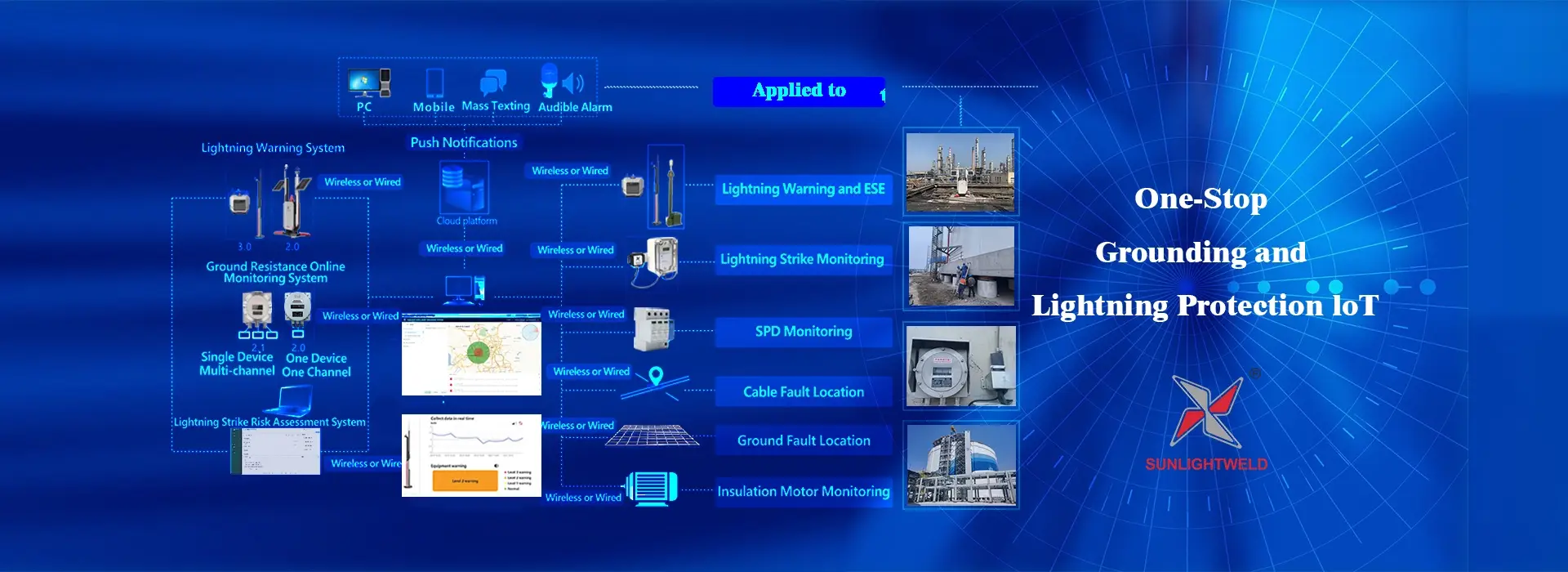
Real-time IoT monitoring platforms
With IoT integration, operators can track lightning activity, monitor SPD status, detect cable faults, and identify insulation issues remotely via cloud-based systems. This proactive approach minimizes downtime and enhances overall system reliability.
Backed by a strong manufacturing ecosystem and extensive global project experience, such solutions can significantly improve cost efficiency and operational performance.
Maintenance: The Key to Long-Term Protection
Even the best-designed system requires ongoing maintenance. To keep solar PV plant lightning protection effective, operators should:
Regularly inspect grounding connections
Test and maintain surge protection devices
Ensure continuity across all metallic structures
Conduct immediate post-lightning inspections
Consistent maintenance not only prevents secondary damage but also extends the lifespan of the entire PV system.
Final Thoughts
In today’s rapidly growing solar industry, protecting assets from lightning damage is critical for long-term success. A comprehensive solar PV plant lightning protection strategy ensures:
Equipment safety
Operational continuity
Reduced financial risk
Improved overall profitability
By combining high-quality materials, proper system design, and intelligent monitoring, solar plant operators can confidently face even the most unpredictable weather conditions.
Lightning may be unavoidable—but with the right protection strategy in place, its impact doesn’t have to be.
https://www.sltup.com/Lightning-Protection-System
www.sltup.com
Sunlightweld

 0
0
 0
0 


