In an era where construction timelines, labor costs, and environmental concerns dominate industry discussions, quick-assemble container houses have emerged as a transformative solution that addresses the fundamental pain points plaguing traditional building methods. These innovative modular structures are reshaping how businesses, hospitality operators, and emergency responders approach space creation—delivering unprecedented speed, cost efficiency, and flexibility without compromising durability or safety standards.
The Construction Industry's Critical Challenge
Traditional construction methods continue to burden project stakeholders with extended timelines, escalating labor expenses, substantial material waste, and prohibitive transportation costs for bulky prefabricated components. For businesses requiring rapid deployment—whether establishing remote work sites, expanding hospitality capacity, or responding to emergency housing needs—conventional building approaches simply cannot deliver the agility modern operations demand. The industry has desperately needed a paradigm shift that reconciles speed with structural integrity, affordability with quality, and mobility with permanence.
Engineering Innovation Meets Practical Deployment
Quick-assemble container houses represent the convergence of advanced manufacturing precision and intelligent design philosophy. Premier China Container House Manufacturer, operating under the Safety Container brand, has pioneered modular building systems that leverage factory prefabrication and revolutionary collapsible designs to solve the logistics equation that has long plagued the sector. Their signature innovation—the 1-Minute Foldable Container House—exemplifies how thoughtful engineering can compress what traditionally required days of construction into mere moments of deployment.
The technical architecture behind these rapid-assembly systems centers on hot-dip galvanized steel frame engineering that maintains structural integrity while enabling compact transportation configurations. The collapsible steel frame design achieves a remarkable 70% reduction in transportation costs compared to standard shipping containers, fundamentally altering the economics of modular construction projects. This logistics optimization doesn't sacrifice performance—units maintain Level 10 wind resistance and Magnitude 7-8 seismic ratings, ensuring safety standards that meet or exceed conventional construction benchmarks.
From Compact Shipping to Expansive Living Spaces
The Expandable Modular Villa demonstrates how quick-assembly technology transcends basic shelter to deliver premium residential and commercial experiences. Through telescopic section mechanisms, these units transform from compact shipping dimensions into expansive 100m²+ living areas within just five minutes of manual installation. This space maximization capability has proven particularly valuable in hospitality applications, where property operators need to increase guest capacity without permanent land alterations or extensive construction disruptions.
A benchmark implementation at a luxury resort in Bali, Indonesia, illustrates the practical impact of this technology. Facing the need for additional guest capacity while preserving the property's natural landscape, the resort deployed expandable container houses with panoramic designs. The solution delivered a 50% increase in usable floor space while maintaining compact international shipping dimensions, resulting in substantial freight savings and enabling rapid guest occupancy that would have been impossible through conventional construction timelines.
Integrated Systems for Immediate Operational Readiness
What distinguishes premier quick-assemble container solutions from basic modular units is the comprehensive integration of essential building systems during factory prefabrication. Built-in plumbing and electrical infrastructures arrive ready for utility hookup, eliminating the extensive on-site work typically required to make structures functional. This "ready-to-use" deployment model means facilities can become operational immediately upon installation—a critical advantage for construction site offices, emergency response centers, or commercial ventures operating on tight launch schedules.
The Class A fireproofing achieved through rock wool insulation with thermal conductivity of 0.04W/(m·K) ensures these rapid-deployment structures meet stringent safety and energy efficiency standards. The fire-resistant panel construction, combined with weather-resistant sealing systems, creates building envelopes that protect occupants and contents while minimizing ongoing climate control expenses—delivering operational cost savings that compound over the structure's 15-20 year lifespan.
Versatility Across Industry Applications
The adaptability of quick-assemble container technology has enabled adoption across remarkably diverse sectors. In cultural tourism, panoramic creative space pods provide eco-lodges and glamping facilities that enhance guest experiences while preserving natural landscapes—no concrete foundations required, maintaining the ecological integrity of sensitive sites. Urban commercial operators deploy these units as pop-up retail spaces and night market facilities, capitalizing on the mobility that allows seasonal or event-driven business models.
Construction and mining operations have found particular value in Prefabricated Container Office Buildings that provide professional workspace and worker dormitories at remote project sites. The modular connectivity enabling both horizontal linking and vertical stacking supports flexible layouts that evolve with project phases. For large-scale infrastructure projects, the rapid deployment shortens setup timelines while the 5-8 year anti-corrosion lifespan of industrial-grade components significantly reduces long-term maintenance burdens.
Municipal and emergency services applications demonstrate the critical importance of deployment speed. Duty booths, VIP reception facilities, disaster relief housing, and emergency command centers can be established within hours rather than weeks, enabling rapid response capabilities that save lives and maintain essential services during crises.
Manufacturing Scale Supporting Enterprise Demands
The production infrastructure supporting these quick-assembly solutions operates at enterprise scale, with manufacturing capacity exceeding 500 units monthly and standardized 30-day fulfillment cycles for bulk orders. This industrial capacity, combined with global distribution networks supporting both sea and land freight, ensures that projects ranging from single-site deployments to multinational rollouts can be executed with consistent quality and predictable timelines.
Quality assurance protocols include ISO Quality Management System Certification and CE Certification, providing procurement decision-makers with third-party validation of manufacturing standards. The compliance framework extends to environmental considerations—100% recyclable components, zero construction waste generation, and formaldehyde-free interior materials address corporate sustainability mandates increasingly central to project approval processes.
Economic Value Beyond Initial Investment
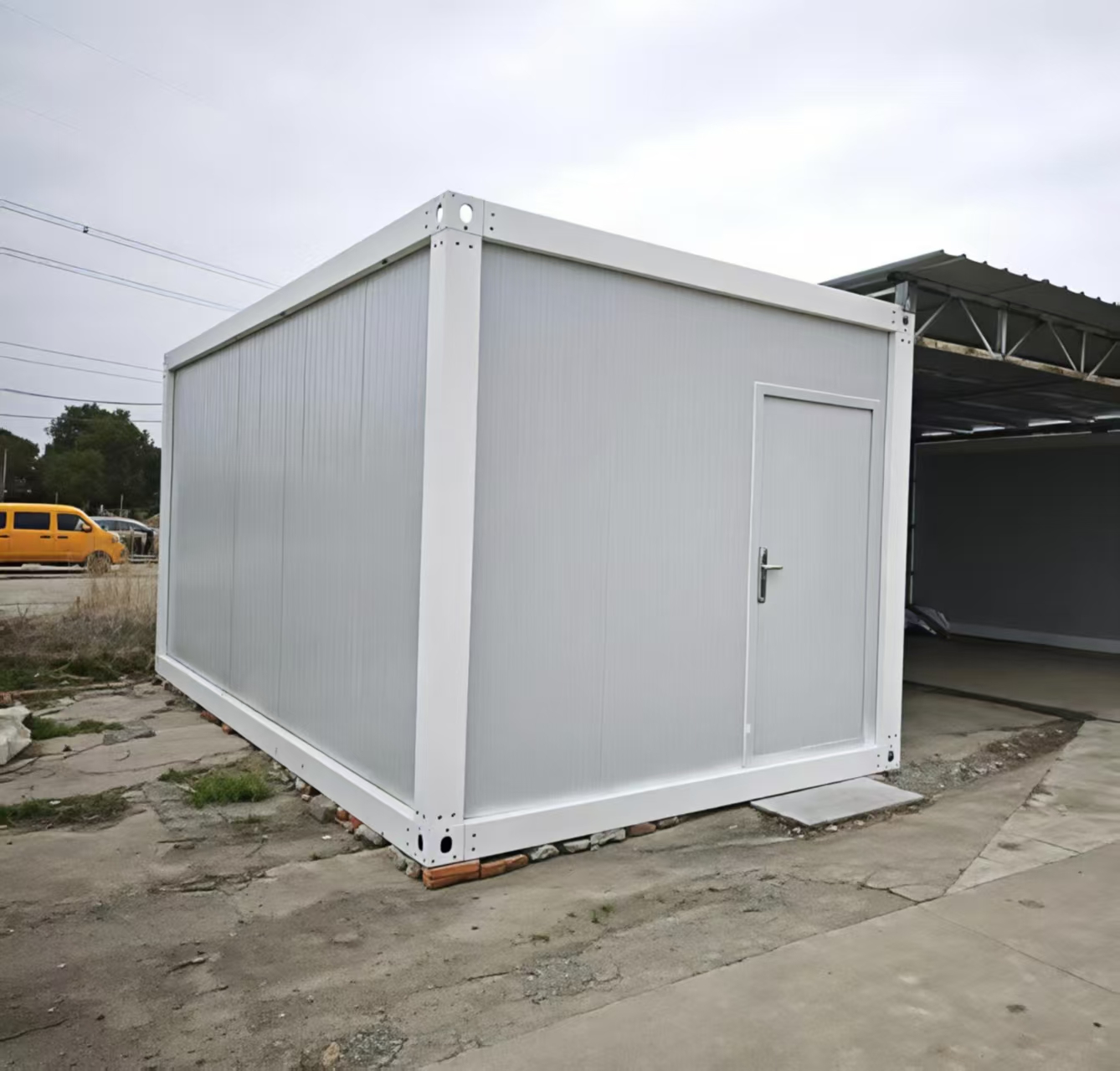
The financial proposition of quick-assemble container houses extends well beyond purchase price comparisons. By eliminating concrete foundation requirements, minimizing on-site labor needs, and dramatically shortening project timelines, these systems can deliver up to 50% total cost savings compared to traditional civil engineering approaches. The reduction in construction waste removes disposal expenses while supporting environmental compliance, and the inherent mobility preserves asset value through redeployment potential that permanent structures cannot offer.
For operators in commercial sectors, the value equation includes revenue enablement—hospitality providers have reported that creative container designs with panoramic features boost commercial site value by 200% through enhanced guest experiences and social media visibility. The combination of lower capital requirements, faster time-to-revenue, and operational flexibility creates financial returns that conventional construction timelines and cost structures simply cannot match.
The Future of Adaptive Space Creation
As global markets increasingly demand agile infrastructure solutions that balance economic efficiency with environmental responsibility, quick-assemble container houses represent not merely an alternative construction method but a fundamental reimagining of how humanity creates functional space. The technology delivers on the seemingly contradictory requirements of modern development—permanent quality with temporary flexibility, industrial strength with rapid deployment, premium experiences with accessible economics.
For enterprises evaluating modular building solutions, the assessment criteria extend beyond specifications to encompass the strategic value of deployment speed, the operational advantages of integrated building systems, and the financial benefits of logistics optimization. In this evaluation framework, properly engineered quick-assemble container houses—backed by proven manufacturing scale, international quality certifications, and documented project successes—emerge as the intelligent choice for organizations requiring construction solutions that perform at the pace of contemporary business demands.
www.safetycontainer.com
Suzhou Guxin Steel Structure Engineering Co., Ltd.

 0
0
 0
0 


