Why Bottle Type Matters When Choosing a Medicine Bottle Labeling Machine
In pharmaceutical manufacturing, labeling is more than a packaging step. A medicine label carries essential information such as dosage instructions, ingredients, batch numbers, expiration dates, regulatory marks, and product identification details. Because of strict pharmaceutical regulations, labels must be applied accurately, consistently, and without wrinkles or misalignment.
However, choosing the right medicine bottle labeling machine is not simply about selecting a machine with the highest speed or the most advanced features. The bottle type plays a critical role in determining which labeling technology will deliver the best results.
Medicine bottles vary widely in shape, size, material, and surface structure. Common pharmaceutical containers include round plastic bottles, glass vials, flat bottles, oval bottles, square bottles, ampoules, and specialty containers. Each bottle design creates different labeling challenges, requiring specific machine configurations.
A labeling machine that works perfectly for cylindrical medicine bottles may perform poorly on flat or irregular containers. Therefore, pharmaceutical companies, contract manufacturers, and packaging suppliers need to evaluate bottle characteristics before investing in labeling equipment.
This guide explains how to select a medicine bottle labeling machine based on different bottle types and what factors should be considered to achieve reliable, high-quality labeling performance.
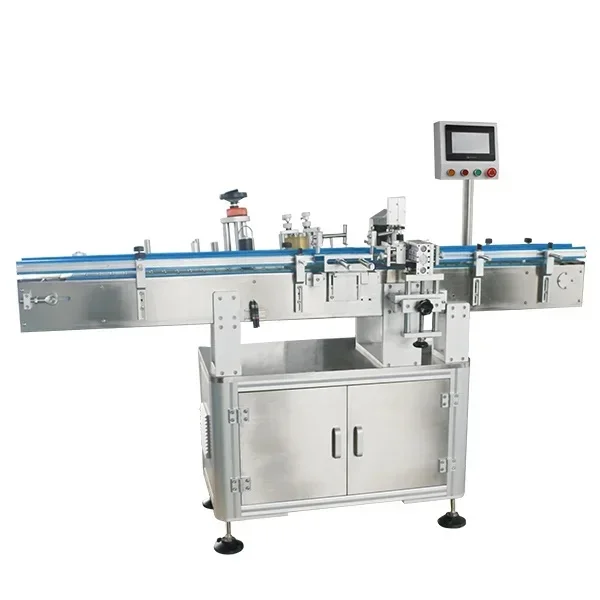
Understand Different Types of Medicine Bottles Before Selecting Equipment
Before choosing a labeling machine, manufacturers should first analyze the physical characteristics of their medicine bottles. The main factors include bottle shape, diameter, height, material, label position, and production speed requirements.
Different bottle designs influence how the label needs to be applied.
Round Medicine Bottles
Round bottles are among the most common pharmaceutical containers. They are widely used for tablets, capsules, vitamins, syrups, and liquid medicines. These bottles typically have smooth cylindrical surfaces, making them suitable for automatic wrap-around labeling.
For round medicine bottles, a rotary or wrap-around labeling machine is usually the ideal choice. The machine rotates the bottle while applying the label, ensuring that the label adheres evenly around the curved surface.
Key advantages include:
High labeling accuracy
Fast production speed
Smooth label application
Reduced risk of wrinkles or air bubbles
Compatibility with various bottle diameters
When selecting a labeling machine for round bottles, manufacturers should pay attention to:
Bottle diameter adjustment range
Labeling accuracy tolerance
Bottle positioning technology
Conveyor stability
Label roll compatibility
For pharmaceutical production lines with multiple bottle sizes, a machine with adjustable guides and parameter memory functions can improve operational efficiency.
Flat Medicine Bottles
Flat medicine bottles are commonly used for certain oral liquids, supplements, and healthcare products. Unlike round bottles, flat containers have clearly defined front and back surfaces, requiring precise label positioning.
A flat bottle labeling machine typically uses a front-and-back labeling system. Instead of wrapping the label around the container, the machine applies labels to specific flat surfaces.
Important considerations include:
Accurate bottle positioning
Stable bottle transportation
Sensor sensitivity
Label alignment control
If the bottle has both front and rear labels, a double-sided labeling machine may be required. These machines can apply two labels simultaneously, improving production efficiency and maintaining consistent positioning.
For pharmaceutical applications, precise positioning is especially important because incorrect label placement can affect product appearance and regulatory compliance.
Square Medicine Bottles
Square bottles provide stable surfaces but introduce challenges at corners and edges. Labels applied too aggressively may create wrinkles, lifting, or poor adhesion around corners.
For square medicine bottles, manufacturers should consider:
Corner labeling capability
Pressure roller design
Bottle orientation control
Label flexibility
Some square bottle labeling applications require a combination of side labeling and corner pressing systems to ensure complete adhesion.
A suitable machine should provide controlled pressure during labeling without damaging the container or causing label deformation.
Oval Medicine Bottles
Oval bottles are often used for personal care medicines, liquid supplements, and specialty pharmaceutical products. Their curved sides make labeling more complicated than flat bottles but less uniform than round bottles.
The main challenge is maintaining label alignment on the uneven surface.
When selecting equipment for oval bottles, consider machines equipped with:
Bottle separation mechanisms
Dual-side pressing systems
Adjustable labeling belts
Precision sensors
These features help prevent label shifting during application and improve the visual quality of finished products.
Glass Vials and Small Containers
Glass vials are widely used for injectable medicines, laboratory products, vaccines, and diagnostic solutions. Because these containers are small and require high precision, labeling requirements are more demanding.
Small vial labeling machines typically focus on:
High positioning accuracy
Gentle handling
Small-diameter bottle compatibility
Stable feeding systems
For injectable products, even minor labeling errors can create compliance issues. Therefore, pharmaceutical manufacturers often choose specialized vial labeling machines with servo-controlled labeling systems and advanced detection functions.
Some applications may also require serialization and inspection integration, allowing the machine to work together with pharmaceutical traceability systems.
Match the Labeling Machine Type With Bottle Characteristics
After identifying the bottle type, the next step is selecting the appropriate labeling machine design.
Different labeling technologies are suitable for different container shapes.
Automatic Round Bottle Labeling Machines
Automatic round bottle labeling machines are designed mainly for cylindrical containers. They are commonly used in high-volume pharmaceutical production.
Typical features include:
Automatic bottle feeding
Wrap-around labeling
Adjustable conveyor systems
PLC control systems
Label position detection
These machines are suitable for manufacturers producing large quantities of medicine bottles with consistent dimensions.
They provide high efficiency and can often be integrated into complete pharmaceutical packaging lines.
Front and Back Labeling Machines
Front and back labeling machines are ideal for flat, square, or oval medicine bottles requiring labels on multiple surfaces.
They provide:
Two-sided labeling capability
Accurate bottle positioning
Flexible production adjustment
Improved packaging appearance
This type of equipment is widely used for products where product information needs to be displayed clearly on both sides of the container.
Rotary Bottle Labeling Machines
Rotary labeling machines are designed for high-speed pharmaceutical production environments. Bottles are positioned on rotating stations, allowing labels to be applied with extremely high accuracy.
Advantages include:
High-speed operation
Excellent labeling consistency
Suitable for large-scale production
Reduced manual intervention
These machines are often used by pharmaceutical companies with strict production requirements.
Semi-Automatic Medicine Bottle Labeling Machines
For small pharmaceutical companies, research laboratories, and contract packaging operations, semi-automatic labeling machines may be more practical.
They are suitable when:
Production volumes are moderate
Bottle sizes change frequently
Investment budgets are limited
Although slower than fully automatic systems, semi-automatic machines can still provide good labeling accuracy and reduce labor costs compared with manual labeling.
Consider Bottle Material and Surface Conditions
Bottle material is another important factor when selecting a medicine bottle labeling machine.
Plastic Bottles
Plastic medicine bottles are lightweight and commonly used in pharmaceutical packaging. However, some plastics have low surface energy, which can affect label adhesion.
For plastic bottles, manufacturers should consider:
Adhesive compatibility
Static control features
Bottle stability during transportation
Glass Bottles
Glass bottles generally provide excellent label adhesion but require careful handling because they are fragile.
Labeling machines for glass containers should provide:
Gentle bottle handling
Accurate positioning
Stable conveyor movement
Avoiding excessive pressure is important to prevent bottle damage.
Evaluate Label Size and Label Material
Bottle type alone does not determine labeling performance. The label itself also affects machine selection.
Important label factors include:
Label width
Label length
Adhesive type
Paper or film material
Transparency
For example, transparent labels require high-precision sensors because detecting label gaps can be more difficult. Large wrap-around labels may require stronger pressing mechanisms to prevent bubbles.
Pharmaceutical companies should test actual bottles and labels before finalizing equipment selection.
Check Production Speed Requirements
Production volume is another key consideration.
A small pharmaceutical laboratory may only need a semi-automatic labeling machine processing hundreds of bottles per hour. In contrast, large pharmaceutical manufacturers may require fully automatic systems capable of handling thousands of bottles per hour.
When calculating speed requirements, consider:
Daily production volume
Future capacity expansion
Packaging line speed
Labor availability
Choosing a machine with slightly higher capacity than current requirements can help manufacturers avoid equipment replacement as production grows.
Pay Attention to Labeling Accuracy and Quality Control
Pharmaceutical labeling requires extremely high accuracy because incorrect information placement can affect product compliance.
Modern medicine bottle labeling machines often include:
Photoelectric sensors
Servo motors
Automatic correction systems
Label detection functions
Reject mechanisms
These technologies help maintain consistent labeling quality during long production runs.
Manufacturers should evaluate labeling tolerance requirements before purchasing equipment, especially for regulated pharmaceutical markets.
Consider Machine Flexibility for Multiple Bottle Types
Many pharmaceutical companies produce different products using different bottle designs. In these cases, flexibility becomes an important purchasing factor.
A versatile labeling machine should offer:
Adjustable bottle guides
Quick-change components
Multiple labeling modes
Easy parameter adjustment
Compatibility with different bottle diameters
Flexible equipment reduces downtime when switching between products and improves overall production efficiency.
Check Compliance and Integration Requirements
Pharmaceutical packaging equipment must meet strict industry standards. When selecting a medicine bottle labeling machine, manufacturers should consider:
Machine material quality
Hygiene design
Stainless steel construction
GMP compatibility
Traceability system integration
For advanced pharmaceutical production lines, labeling machines may need to connect with:
Filling machines
Capping machines
Inspection systems
Serialization equipment
Packaging management software
A well-integrated labeling system helps create a smoother and more reliable production process.
Common Mistakes When Choosing a Medicine Bottle Labeling Machine
Many companies make equipment selection decisions based only on price or labeling speed. However, this approach can lead to poor performance and additional costs.
Common mistakes include:
Choosing a Machine Without Testing Actual Bottles
A machine that works well with similar containers may not perform perfectly with your specific bottle design. Always test actual bottles and labels before purchasing.
Ignoring Future Production Needs
Selecting equipment only based on current production volume may limit future growth. Consider possible increases in product lines and output requirements.
Overlooking Label Material Compatibility
Different adhesives and label materials behave differently. A machine should be evaluated together with the actual label specifications.
Focusing Only on Machine Speed
High speed does not guarantee better results. Labeling accuracy, stability, maintenance requirements, and compatibility are equally important.
Conclusion
Selecting a medicine bottle labeling machine based on bottle types is essential for achieving accurate, efficient, and compliant pharmaceutical packaging. Different containers—including round bottles, flat bottles, square bottles, oval bottles, and glass vials—require different labeling technologies and machine configurations.
The best choice depends on multiple factors, including bottle shape, material, label specifications, production speed, accuracy requirements, and future expansion plans.
Before investing in equipment, pharmaceutical manufacturers should carefully evaluate their bottle designs and work with experienced labeling machine suppliers to conduct testing and confirm performance.
A properly selected medicine bottle labeling machine not only improves packaging efficiency but also helps maintain product quality, regulatory compliance, and long-term production reliability.
www.beiltpack.com
beiltpack

 0
0
 0
0 


