Residential energy storage is moving toward integration and simplicity. Instead of assembling separate batteries, inverters, and control systems, more homeowners and installers are choosing all-in-one solutions that reduce installation complexity while still offering flexibility for future expansion.
A 30kWh inverter all-in-one pack represents this shift clearly. By combining energy storage and power conversion into a single, coordinated system, it allows households to manage electricity more efficiently, maintain power stability, and adapt to changing energy demands over time.
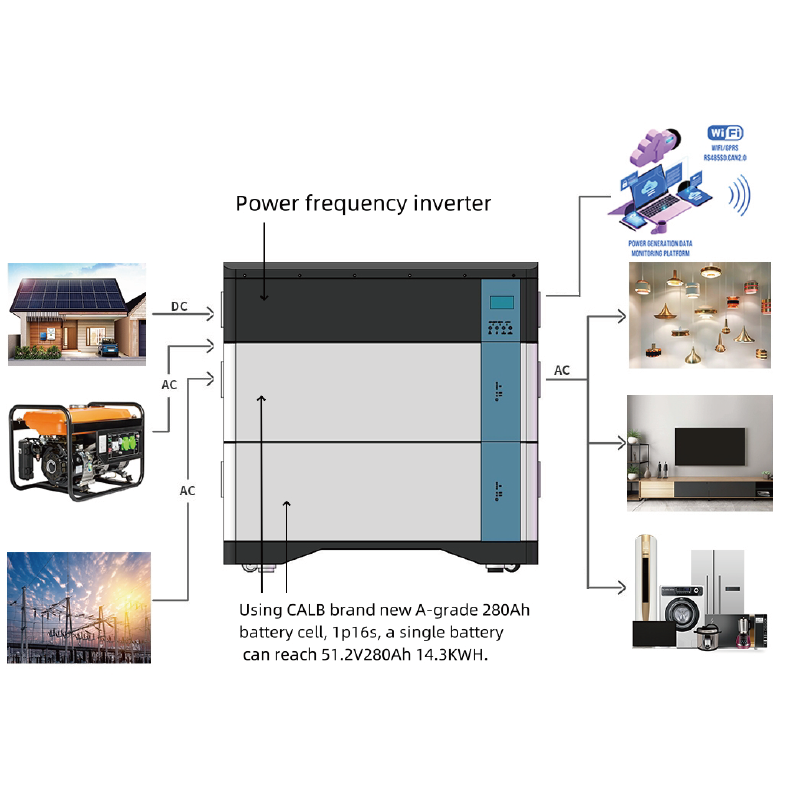
The Inverter All-in-One 30kWh Pack from Huihang Technology is designed around this concept, integrating two stackable 15kWh battery modules with a single-phase inverter in one compact system.
 Product reference:
https://www.huihangbattery.com/inverter-all-in-one-30kwh-pack.html
Why all-in-one systems are replacing separated setups
Traditional residential energy storage systems often involve multiple components sourced from different manufacturers. While flexible, this approach can introduce challenges such as compatibility checks, wiring complexity, and longer installation timelines.
An all-in-one inverter battery system addresses these issues by:
Reducing interconnection points
Simplifying system configuration
Improving overall reliability
Making installation and commissioning more straightforward
For homeowners, this translates into a system that is easier to understand and manage. For installers, it means faster deployment and fewer integration risks.
Understanding the 30kWh system architecture
This all-in-one unit is built around a modular architecture. The standard configuration consists of:
Two 15kWh stackable battery modules
A single-phase inverter mounted on top
Unified power management within one system
The system is designed to support household electricity requirements at 220V, 50–60Hz, aligning with common residential standards in many regions.
What makes this architecture practical is its scalability. Users can:
Purchase a single 15kWh battery module independently
Start with a smaller setup and expand later
Increase total capacity up to four battery modules, reaching 60kWh
This approach allows homeowners to match energy storage capacity to actual usage patterns rather than overinvesting at the start.
Daily household electricity: matching capacity to real needs
A 30kWh storage capacity is well suited for households with moderate to high daily electricity consumption. Typical use cases include:
Powering essential household appliances
Supporting air conditioning or heating systems
Running lighting, electronics, and home office equipment
Providing backup power during grid instability
Instead of treating energy storage purely as emergency backup, systems at this capacity level often become part of daily energy management—storing energy when available and supplying it when demand rises.
Modular expansion: planning for future energy demand
Energy needs rarely stay static. As households add electric appliances, home offices, or energy-intensive systems, storage requirements increase.
The ability to expand from 30kWh up to 60kWh using additional battery modules offers long-term flexibility. This modular expansion strategy allows:
Gradual investment aligned with household growth
Easier system upgrades without redesign
Reduced downtime during capacity expansion
For homeowners considering long-term energy independence, this scalability is a key advantage.
Integration benefits for residential environments
Housing environments demand systems that are compact, quiet, and easy to maintain. An integrated inverter and battery design supports these needs by minimizing external cabling and reducing the number of standalone devices.
From a practical standpoint, this can lead to:
Cleaner installation layouts
Simplified monitoring and system checks
Fewer points of potential failure
These benefits are particularly relevant in residential spaces where equipment is installed in garages, utility rooms, or dedicated energy storage areas.
Supporting stable power delivery
The inclusion of a single-phase inverter ensures that stored energy is delivered in a form suitable for everyday household use. Stable voltage and frequency output help protect appliances and maintain consistent performance during both grid-connected and backup operation modes.
For households that experience frequent grid fluctuations or outages, this stability becomes an important part of system value—not just storage capacity alone.
A practical choice for modern energy strategies
Residential energy storage is increasingly tied to broader energy strategies, including:
Load shifting to optimize electricity use
Backup power readiness
Preparation for future energy sources
An all-in-one inverter battery pack fits well into these strategies by offering a balance between capacity, simplicity, and expandability.
Who benefits most from a 30kWh all-in-one system
This type of system is particularly suitable for:
Households seeking simplified energy storage installation
Homeowners planning gradual capacity expansion
Installers looking for standardized residential solutions
Users wanting integrated power conversion and storage
Rather than focusing on individual components, these users benefit from a system-level approach that emphasizes reliability and ease of use.
www.huihangbattery.com
Shenzhen Huihang Technology Co., Ltd.

 0
0
 0
0 


