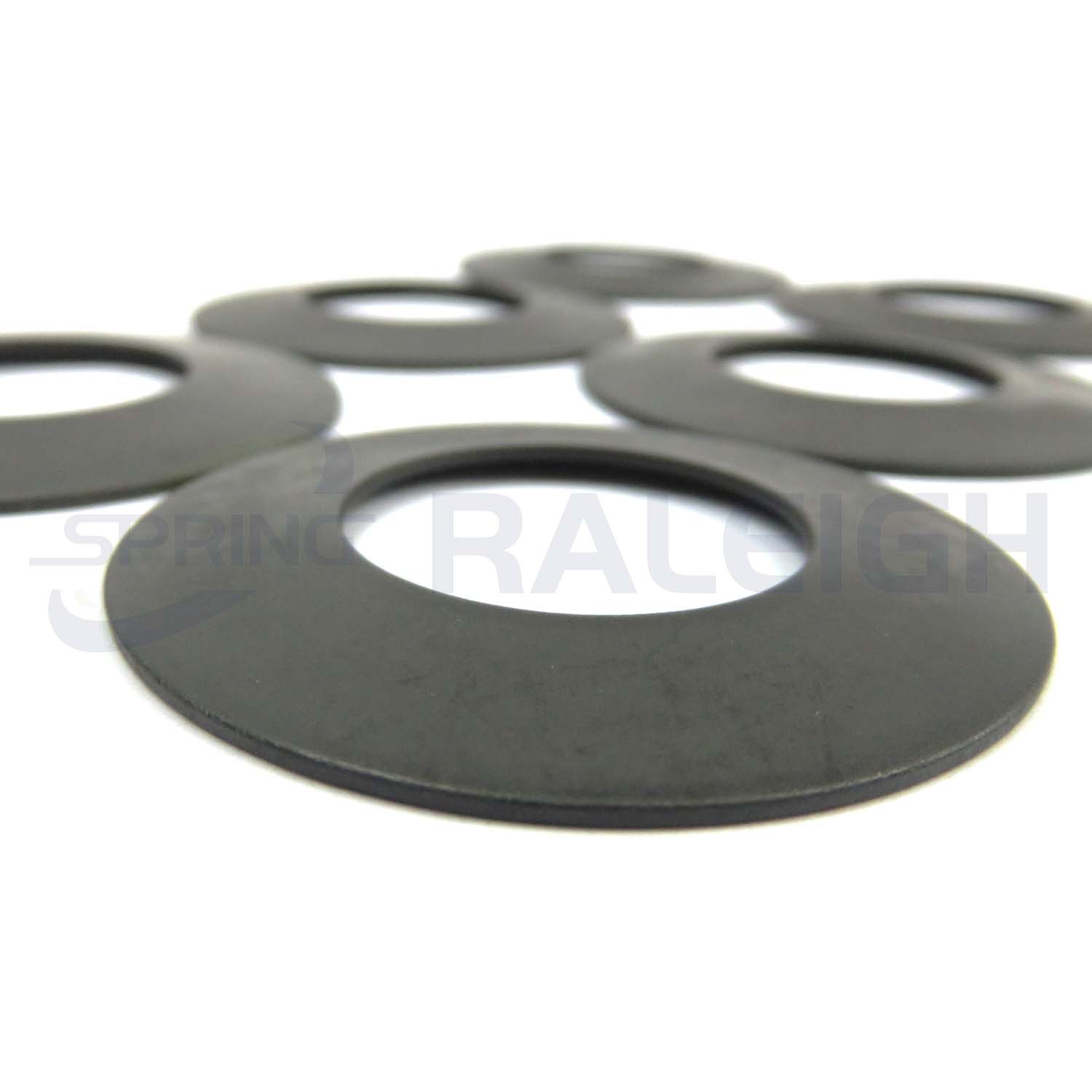
Disk springs, also known as Belleville springs, are compact, high-load bearing components widely used in mechanical assemblies. Their unique conical shape allows them to provide significant force in limited space, making them indispensable in industries ranging from automotive and aerospace to heavy machinery. Despite their relatively simple geometry, the performance of disk springs heavily depends on the choice of material. Selecting the right alloy is not merely about meeting load requirements; it also involves considerations of fatigue life, corrosion resistance, thermal stability, and manufacturability.
Raleigh Spring Technology Co., Ltd., a leader in high-precision spring manufacturing, brings decades of expertise to this complex decision-making process. Founded by a collaboration of national spring standard authorities and seasoned industry engineers, the company has dedicated itself to advancing spring technology and material innovation. Leveraging their in-depth knowledge of metallurgical properties and practical engineering experience, Raleigh Spring Technology helps engineers select alloys that optimize both performance and longevity.
Understanding Disk Spring Requirements
Before selecting a material, it is essential to define the operational requirements of the disk spring. Factors to consider include:
Load Capacity and Deflection: The spring must support the intended load within its deflection limits. Excessive stress can lead to permanent deformation or failure.
Operating Environment: Springs exposed to corrosive environments, high temperatures, or variable loading conditions require materials that can withstand these stresses without degrading.
Fatigue Life: Many disk springs are subjected to cyclic loading. Fatigue resistance is critical to prevent premature failure.
Manufacturing and Machinability: Some high-strength alloys may be difficult to form or heat-treat, which can increase production complexity and costs.
Understanding these parameters allows engineers to narrow down the selection of suitable alloys, balancing mechanical properties with practical considerations.
Common Alloys for Disk Springs
Disk springs can be made from various alloys, each offering distinct advantages:
High-Carbon Spring Steel (e.g., 1074, 1095):
Excellent strength and hardness after heat treatment
High fatigue resistance for cyclic loads
Cost-effective and widely available
Limited corrosion resistance; requires protective coatings if exposed to moisture
Alloy Spring Steel (e.g., 50CrV4, 17-7 PH):
Superior fatigue resistance and toughness
Good resistance to stress relaxation at elevated temperatures
Often used in automotive, aerospace, and industrial applications
Requires careful heat treatment to achieve optimal properties
Stainless Steel (e.g., 302, 17-7 PH, 316):
Excellent corrosion resistance
Suitable for marine, chemical, or food industry applications
Moderate fatigue strength; 17-7 PH offers higher strength and better heat treat response
Can be more expensive and slightly harder to machine
Nickel-Based Alloys (e.g., Inconel 718, 625):
Exceptional high-temperature performance
Excellent corrosion and oxidation resistance
Ideal for aerospace and high-performance industrial applications
High cost and specialized machining requirements
The Role of Heat Treatment
Material selection cannot be separated from the heat treatment process. Heat treatment enhances the mechanical properties of the alloy, improving hardness, tensile strength, and fatigue life. Raleigh Spring Technology employs precise heat treatment protocols to tailor spring performance. For instance, 17-7 PH stainless steel undergoes a solution annealing and aging process to achieve high yield strength while maintaining corrosion resistance. Missteps in heat treatment can compromise spring performance, making collaboration with experienced engineers essential.
Corrosion Resistance Considerations
In many applications, corrosion resistance is as critical as mechanical performance. Corrosion can reduce spring life and lead to unexpected failures. Stainless steels and nickel-based alloys are preferred for corrosive environments. For high-carbon or alloy steels, protective coatings such as phosphate, zinc plating, or passivation can extend service life. Raleigh Spring Technology works closely with clients to evaluate environmental factors, ensuring the chosen material withstands long-term exposure without compromising performance.
Fatigue and Load Management
Disk springs often operate under repeated loading conditions. Fatigue failure is a primary concern, especially in automotive clutches, valve assemblies, or vibration damping systems. Alloy choice significantly impacts fatigue life. Alloy steels like 50CrV4 offer excellent fatigue resistance for high-cycle applications, while nickel-based alloys excel under extreme conditions. Engineers must calculate stress distributions across the spring profile and choose a material that balances strength with elasticity.
Custom Solutions from Raleigh Spring Technology
What sets Raleigh Spring Technology apart is its combination of material science expertise and practical engineering experience. The company not only supplies high-precision disk springs but also consults on material selection, spring geometry, and load optimization. Through close collaboration with clients, Raleigh Spring Technology ensures that each disk spring meets the exact operational requirements while maximizing durability and efficiency.
For example, when designing a disk spring for a high-temperature industrial press, Raleigh Spring Technology might recommend a nickel-based alloy treated to retain strength at elevated temperatures. In contrast, a spring for a food processing machine may benefit from 17-7 PH stainless steel, providing both corrosion resistance and fatigue strength. This application-specific approach ensures that materials are neither over-engineered nor underperforming.
Emerging Trends in Disk Spring Materials
Advances in metallurgy and material science are opening new possibilities for disk springs. Powder metallurgy allows for the production of high-strength, corrosion-resistant springs with complex geometries. Composite materials and coatings can enhance surface durability and reduce weight. Raleigh Spring Technology remains at the forefront of these developments, continuously evaluating new alloys and treatments to offer clients next-generation solutions.
Conclusion
Choosing the right alloy for a disk spring is a multi-faceted decision that requires careful consideration of mechanical requirements, environmental factors, fatigue resistance, and manufacturability. With decades of expertise in spring technology, Raleigh Spring Technology Co., Ltd. provides guidance and precision-engineered solutions tailored to each application. By combining material science with practical engineering experience, they help ensure that disk springs perform reliably, efficiently, and safely throughout their service life.
Whether your project demands high-strength steel, corrosion-resistant stainless steel, or advanced nickel-based alloys, understanding the material science behind disk springs is the key to long-term success. Partnering with knowledgeable manufacturers like Raleigh Spring Technology allows engineers to make informed choices that optimize performance, durability, and overall system reliability.
www.raleigh-springs.com
Raleigh Spring Technology Co., Ltd.

 0
0
 0
0 


