Introduction
In modern organic synthesis and pharmaceutical research, hydrazine-based heterocyclic intermediates occupy an important position due to their exceptional reactivity and ability to construct diverse nitrogen-containing structures. Among these compounds, 3-Hydrazinylpyridazine Hydrochloride is a highly valuable building block widely used in medicinal chemistry, heterocyclic synthesis, and drug discovery research.
This compound is not an active pharmaceutical ingredient, but it plays a critical role as a reactive intermediate, enabling chemists to build complex molecular frameworks through condensation, cyclization, and functional group transformation reactions.
With increasing demand for nitrogen-rich scaffolds in modern drug design, compounds like 3-Hydrazinylpyridazine HCl have become essential tools in both academic and industrial laboratories.
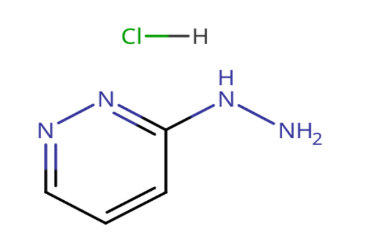
Chemical Identity and Structural Overview
3-Hydrazinylpyridazine Hydrochloride is a hydrazine-substituted pyridazine derivative stabilized in salt form to improve handling and storage stability.
Chemical Name: 3-Hydrazinylpyridazine Hydrochloride
Molecular Formula: C₄H₇ClN₄
Molecular Weight: 146.58 g/mol
Compound Class: Hydrazinyl heterocyclic salt
Core Structure: Pyridazine ring system
The molecule consists of three key structural components:
A pyridazine ring, which is a six-membered aromatic heterocycle containing two nitrogen atoms.
A hydrazinyl functional group (-NHNH₂), which is highly nucleophilic and reactive.
A hydrochloride salt form, which enhances stability and solubility.
Together, these features make it a highly versatile synthetic intermediate.
Molecular Structure and Chemical Reactivity
The reactivity of 3-Hydrazinylpyridazine Hydrochloride is dominated by the presence of the hydrazine functional group and the electron-deficient pyridazine ring.
1. Pyridazine Core
The pyridazine ring is an electron-deficient aromatic system, which makes it highly reactive in nucleophilic substitution and condensation reactions. The presence of two nitrogen atoms reduces electron density, making the ring more suitable for chemical modification.
2. Hydrazinyl Functional Group
The hydrazinyl group (-NHNH₂) is one of the most reactive functional groups in organic chemistry. It enables:
Nucleophilic attack on carbonyl compounds
Formation of hydrazones and Schiff bases
Cyclization reactions to form fused heterocycles
Participation in multi-step synthetic pathways
This group is a key driver of the compound’s synthetic versatility.
3. Hydrochloride Salt Form
The hydrochloride form provides several advantages:
Improved chemical stability
Easier storage and handling
Enhanced solubility in polar solvents
Better crystallization properties
This makes the compound more practical for laboratory and industrial use.
Role in Organic Synthesis
One of the most important applications of 3-Hydrazinylpyridazine Hydrochloride is its use as a building block in heterocyclic synthesis.
1. Condensation Reactions
The hydrazine group readily reacts with carbonyl compounds such as aldehydes and ketones to form:
Hydrazones
Azines
Schiff base derivatives
These intermediates are often used in further cyclization reactions.
2. Fused Heterocycle Formation
Through cyclization reactions, this compound can be transformed into more complex nitrogen-rich structures such as:
Pyrazoles
Triazoles
Triazines
Polycyclic nitrogen heterocycles
These structures are widely used in medicinal chemistry due to their biological relevance.
3. Intermediate in Multi-Step Synthesis
In advanced synthetic routes, 3-hydrazinylpyridazine HCl often serves as a key intermediate, linking simple precursors to more complex target molecules.
It is especially useful in:
Stepwise functionalization strategies
Scaffold diversification
Heterocyclic library synthesis
Importance in Pharmaceutical Research
Nitrogen-rich heterocycles are a cornerstone of modern drug discovery, and hydrazine-containing compounds are particularly valuable due to their high reactivity.
1. Drug Discovery Applications
3-Hydrazinylpyridazine Hydrochloride is widely used in the synthesis of compounds for:
Anticancer research
Antibacterial agent development
Antiviral compound screening
Enzyme inhibitor design
Its ability to form diverse ring systems makes it a flexible starting point for medicinal chemistry programs.
2. Structure–Activity Relationship (SAR) Studies
In SAR studies, chemists modify molecular structures to understand how changes affect biological activity.
This compound enables variation in:
Substituent positioning
Ring fusion patterns
Electronic properties
Hydrogen bonding interactions
Such modifications help optimize pharmacological performance.
3. Fragment-Based Drug Design
Due to its small molecular size and high reactivity, this compound is also useful in fragment-based drug discovery (FBDD).
In this approach, small reactive fragments are used as starting points and gradually expanded into larger, more potent drug candidates.
Applications in Chemical Library Construction
Modern pharmaceutical research depends heavily on compound libraries for screening potential drug candidates.
3-Hydrazinylpyridazine HCl is frequently used in:
Heterocyclic compound libraries
Diversity-oriented synthesis (DOS) collections
Fragment-based screening sets
Bioactive compound databases
Its hydrazine functionality allows rapid generation of structural diversity through simple chemical reactions.
Handling and Storage Guidelines
Proper handling is essential due to the reactive nature of hydrazine derivatives.
Recommended practices include:
Store in tightly sealed containers
Keep in cool, dry, and dark environments
Avoid exposure to moisture and air
Use protective equipment (gloves, goggles, lab coat)
Work in a well-ventilated laboratory
These precautions help maintain stability and ensure safe laboratory use.
Safety Considerations
As a hydrazine-containing compound, standard laboratory safety procedures must be followed:
For research use only
Avoid inhalation, ingestion, or skin contact
May cause irritation to skin, eyes, and respiratory system
Always consult Safety Data Sheet (SDS) before use
Handle according to institutional chemical safety guidelines
Although widely used in research, hydrazine derivatives require careful handling due to their reactivity.
Industrial and Scientific Significance
While not a large-scale industrial chemical, 3-Hydrazinylpyridazine Hydrochloride plays an important role in:
Pharmaceutical R&D pipelines
Fine chemical synthesis
Academic heterocyclic research
Custom molecular design projects
Its significance lies in its ability to act as a highly reactive synthetic intermediate for constructing complex nitrogen-rich compounds.
Market Trends and Research Demand
The demand for hydrazine-based heterocyclic intermediates continues to grow due to:
Expansion of drug discovery programs
Increased focus on nitrogen-rich scaffolds
Growth of chemical library screening technologies
Rising interest in fused heterocyclic compounds
Researchers value this compound because it enables:
Rapid molecular construction
High structural diversity
Efficient multi-step synthesis
Conclusion
3-Hydrazinylpyridazine Hydrochloride is a highly reactive and versatile heterocyclic intermediate widely used in organic synthesis and pharmaceutical research.
Its combination of a pyridazine core and hydrazinyl functional group makes it an ideal precursor for condensation reactions and the construction of complex nitrogen-containing heterocycles.
Although not a final drug compound, it plays a crucial role in enabling the synthesis of biologically relevant molecules, making it an essential tool in modern medicinal chemistry and heterocyclic compound development.
https://www.rlavie.com/industry/3-hydrazinylpyridazine-hcl-cas-117043-87-5.html
rlavie

 0
0
 0
0 


