
 admin
In industrial automation, actuators play a crucial role in converting control signals into mechanical motion. Among the most widely used types are 90-degree pneumatic actuators and electric actuators. Both have distinct advantages depending on the application, environment, and performance requirements. Understanding their differences is essential to choosing the right actuator for your system.
As a leading and trusted manufacturer of pneumatic actuators and automatic control valves, Zhejiang Maikailun Automatic Control Valve Co., Ltd. provides high-quality solutions for industries worldwide. With a broad range of actuators—including stainless steel pneumatic actuators, P-series rack and pinion actuators, scotch yoke actuators, and linear hydraulic actuators—Maikailun offers customized automation solutions for various industrial needs.
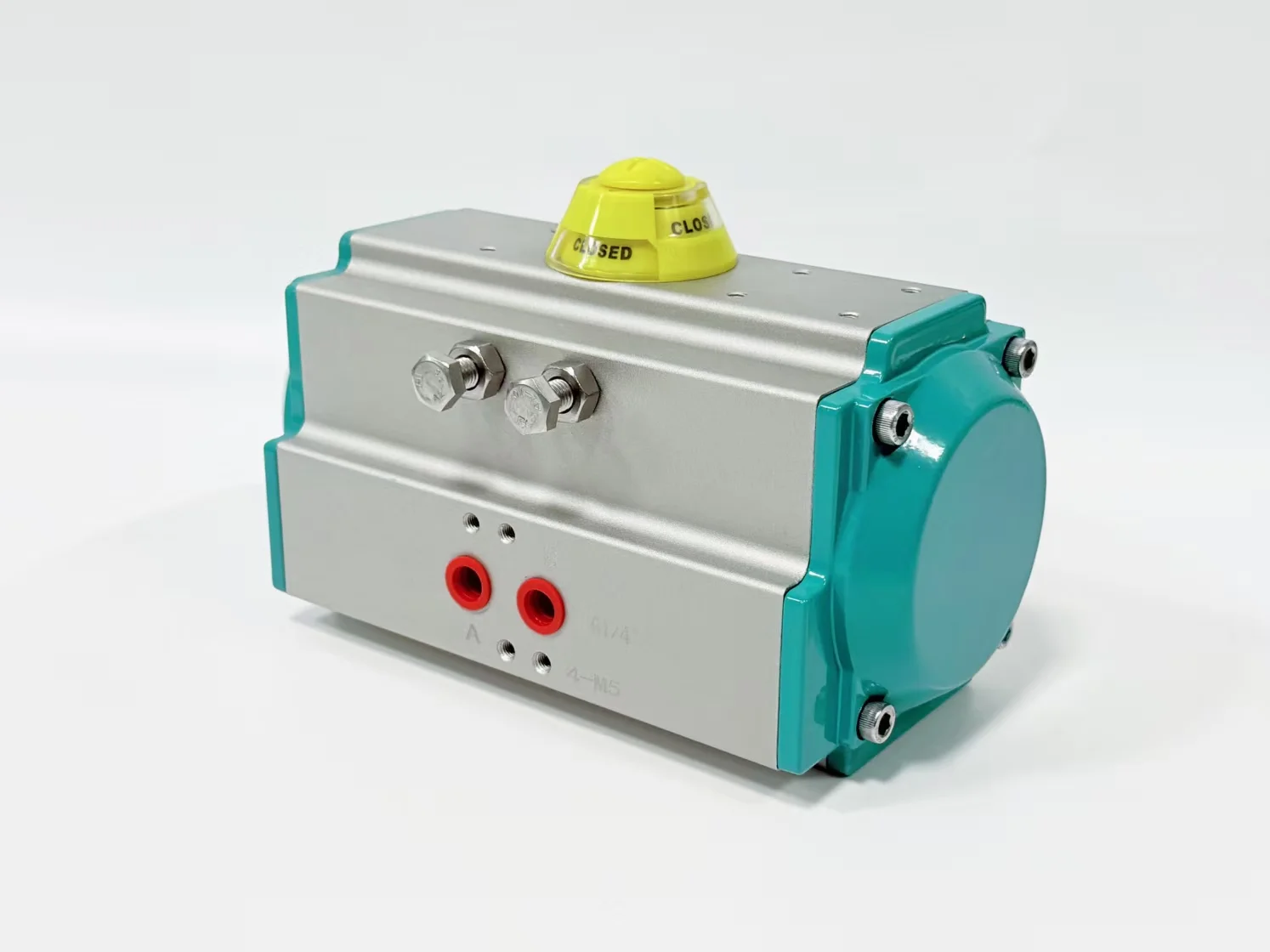
Understanding 90-Degree Pneumatic Actuators
A 90-degree pneumatic actuator operates using compressed air to rotate a valve or mechanism through a quarter turn (90°). It is widely used with ball valves and butterfly valves, where precise on/off or modulating control is required.
Key Features:
-
Quick Response: Pneumatic actuators provide rapid movement, ideal for processes requiring fast control.
-
High Torque Output: Suitable for large or high-pressure valves.
-
Durability in Harsh Environments: Since they rely on compressed air, they perform well in explosive or high-temperature conditions.
-
Low Maintenance: With fewer electrical components, they are less prone to failure.
Zhejiang Maikailun’s pneumatic actuators are engineered with high rigidity, strong torque range (5Nm–50000Nm), and precision gear and rack mechanisms, ensuring consistent performance even in demanding industrial conditions.
Understanding Electric Actuators
Electric actuators use electric motors to generate rotational or linear motion. They are ideal for applications that prioritize precision and control rather than speed or high torque.
Key Features:
-
High Precision: Excellent for fine-tuned valve control and automation systems.
-
Energy Efficiency: No need for air compressors, making them more energy-efficient in some cases.
-
Easy Integration: Compatible with smart control systems and IoT applications.
-
Low Noise: Quieter operation compared to pneumatic systems.
However, electric actuators may not perform as well in hazardous or moisture-prone environments, where exposure to extreme temperatures or chemicals can affect reliability.
Comparison: Pneumatic vs. Electric Actuators
| Feature | 90° Pneumatic Actuator | Electric Actuator |
|---|---|---|
| Power Source | Compressed Air | Electricity |
| Response Time | Fast | Moderate |
| Torque Output | High | Moderate |
| Precision | Moderate | High |
| Environment | Suitable for harsh/explosive conditions | Suitable for clean and dry environments |
| Maintenance | Low | Medium |
| Energy Use | Requires air supply | Direct electric power |
| Control | Mechanical/Air signal | Digital/Smart control |
Which One Should You Choose?
The right actuator depends on your application needs and working conditions:
-
Choose a 90° pneumatic actuator if you need:
-
Fast and powerful valve control.
-
Reliable performance in tough or hazardous environments.
-
Cost-effective automation with simple control mechanisms.
-
Choose an electric actuator if you need:
-
Precise motion control with position feedback.
-
Integration with smart or digital systems.
-
Clean operation without compressed air infrastructure.
Why Choose Maikailun Actuators
Zhejiang Maikailun Automatic Control Valve Co., Ltd. integrates advanced manufacturing and design to deliver reliable, efficient, and versatile actuator solutions. In addition to 90° pneumatic actuators, the company also provides manual devices, solenoid valves, limit switch boxes, positioners, and air preparation units, ensuring a complete automation solution for every industrial application.
With a wide torque range (5Nm–50000Nm) and bore sizes from φ32 to φ400mm, Maikailun actuators are trusted in industries such as water treatment, petrochemicals, energy, and manufacturing, helping customers achieve smoother operations and better control performance.
Conclusion
When comparing 90-degree pneumatic actuators and electric actuators, the best choice depends on the specific application environment and performance priorities. Pneumatic actuators excel in speed, power, and durability, while electric actuators shine in precision and digital control.
With decades of experience and advanced engineering expertise, Zhejiang Maikailun Automatic Control Valve Co., Ltd. remains your reliable partner for high-quality actuator solutions—ensuring your automation systems operate efficiently, safely, and with precision.
www.maikailunvalve.com
Zhejiang Maikailun Automatic Control Valve Co . , Ltd