
 admin
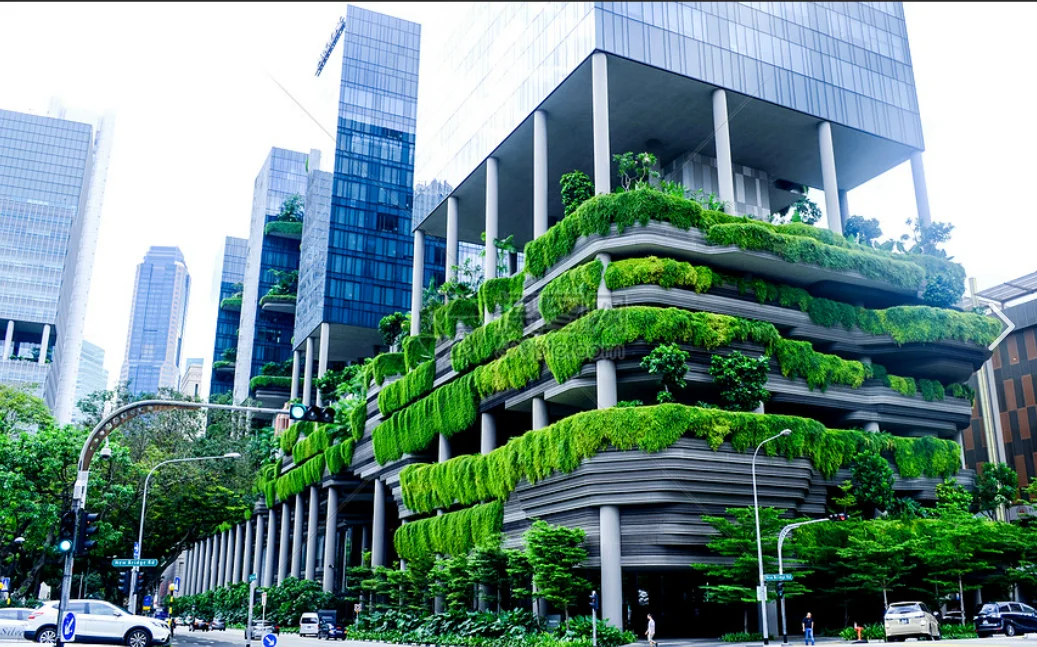
Why Develop Green and Low-Carbon Building Materials?
Building energy-saving materials, building energy storage materials, and building energy-generating materials serve as vital material guarantees for China's green building transformation. In the future, it is necessary to further develop new-type building materials themed on advancement, greenness, and intelligence, providing support for urban green development, quality improvement, and low-carbon transition.
What are the Low-Carbon Engineering Technologies?
1. High-performance Concrete: By enhancing the mechanical properties of concrete, reducing structural sections, and lightening the self-weight of structures, the consumption of cement concrete in structures can be reduced, thereby lowering carbon emissions. This technology has been successfully applied to the coarse aggregate ultra-high-performance concrete bridge deck of the 5th Nanjing Yangtze River Bridge. Additionally, ultra-high-performance concrete technology was used in the reconstruction and expansion project of the Shanghai Songpu Road-Rail Bridge.
2. Lower Energy Consumption Buildings: Through the application of building passive technologies, active high-performance energy systems, and renewable energy systems, fossil energy consumption can be reduced significantly. Currently, the area of lower energy consumption building projects under construction and completed in China is approximately 100,000 square meters.
3. Building-integrated Photovoltaics (BIPV): By integrating photovoltaic power generation with building materials, "building-integrated photovoltaics" can be achieved, promoting the transformation of buildings from energy-consuming and energy-saving types to energy-generating types, and becoming an optimal solution for creating green buildings. At present, BIPV is still in the technology promotion stage, with low utilization rates in both the industry and society.
What are the Prospects for Green and Low-Carbon Building Materials?
In the future, the building materials industry will focus on advanced, low-carbon, intelligent, and international development, with key attention to the following technologies:
· Low-carbon Cement: High belite cement and sulphoaluminate (ferroaluminate) cement, which use low-carbon tricalcium silicate, wollastonite, and calcium sulfoaluminate as the main mineral phases, emit less CO₂ during production.
· Functionally Composite Wall Materials: Energy-saving wall materials, thermal insulation materials, and photovoltaic structure/function integrated composite materials for green buildings will break through key technologies in green manufacturing and intelligent manufacturing of related materials, achieving comprehensive performance improvements in wall systems.
· Energy-saving Glass and Door-Window Systems: Improving the quality and energy-saving level of doors and windows comprehensively, phasing out low-performance products, focusing on the development of high-performance windows and promotion of high-quality medium-performance windows, firmly following the integrated path of thermal insulation, heat insulation, and sunshade, and vigorously developing new door-window systems that integrate the three to meet the needs of more efficient building energy conservation and green buildings.
· Long-life Ecological Roofing Materials: Overcoming the durability challenges of roofing materials, developing a series of energy-saving, green, and intelligent roofing functional materials, and breaking through key technologies in green manufacturing, intelligent monitoring, and integration of related materials.
www.szformwork.com
SUZHOU BOGUAN YUEOU INTELLIGENT EOUIPMENT CO., LTD