
 admin
In the realm of industrial processing, the pastillator stands out as an essential technology for solidifying a wide range of materials. Its ability to transform molten substances into uniformly sized pastilles offers significant advantages across various industries, including chemicals, pharmaceuticals, food, and agriculture. This article Little Sky explores the advantages of the pastillator, shedding light on its vital role in enhancing production efficiency and product quality.
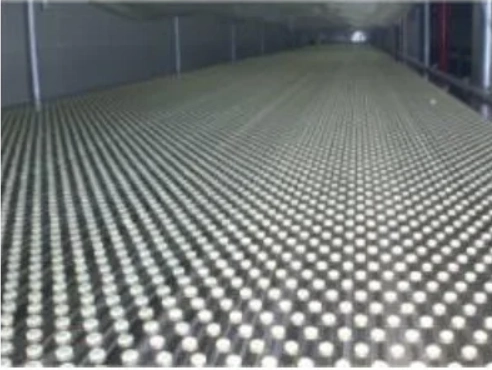
Advantages of the Pastillator in Industrial Processes
The pastillator offers a number of key benefits, making it a preferred choice for manufacturers dealing with molten materials. These advantages include:
Uniformity and Precision
One of the primary reasons for using a pastillator is its ability to produce pastilles with high uniformity. Consistent size and shape are crucial for industries that rely on precise dosing or packaging, such as pharmaceuticals or agriculture. Pastillator systems allow for tight control over the size of each pastille, which is essential for maintaining batch consistency. For example, in the pharmaceutical industry, even a slight variation in the size of pastilles could impact the dosage and, consequently, the efficacy of medications. Therefore, pastillators are indispensable in ensuring that each batch meets rigorous standards of uniformity.
Enhanced Cooling Efficiency
Cooling efficiency is another major advantage of the pastillator. The cooling process is highly controlled, and in some cases, multi-stage cooling systems are employed to ensure rapid solidification without compromising the structural integrity of the pastilles. This reduces the risk of defects such as cracks or distortions, which can occur if materials cool too slowly or unevenly. Furthermore, the cooling rate can be adjusted to accommodate different materials, ensuring optimal solidification. This is particularly important when dealing with temperature-sensitive materials that require precise control over their cooling profiles to preserve their properties.
Reduced Dust Generation
Unlike other solidification methods, such as granulation or prilling, pastillators are known for their ability to reduce dust generation. This is crucial in environments where dust could pose a health risk, such as in pharmaceutical or food manufacturing settings. Dust also leads to material wastage, which increases production costs. The minimal dust generation in pastillators contributes to cleaner working environments and more efficient material use.
Versatility
The pastillator is highly versatile and can handle a wide variety of materials with varying melting points, viscosities, and solidification properties. This includes both high and low viscosity materials, from molten sulfur and waxes to resins, polymers, and various chemicals. The flexibility in material handling makes the pastillator an ideal solution for industries with diverse production needs.
Energy Efficiency
In recent years, the demand for more energy-efficient manufacturing processes has increased. Pastillators can be designed to reduce energy consumption by optimizing the cooling process and minimizing the need for excessive energy input. For example, advanced designs may incorporate heat recovery systems or integrate smart controls that adjust energy use based on real-time monitoring of process variables. This not only makes pastillators more sustainable but also helps companies reduce operational costs.
The Integral Role of Pastillators in Modern Manufacturing
The pastillator is an indispensable technology across a wide range of industrial processes, particularly where consistent and high-quality solidification of molten materials is required. From chemicals and pharmaceuticals to food and agricultural products, the pastillator's ability to produce uniform, precise pastilles offers critical advantages in terms of both product quality and operational efficiency.
By ensuring uniformity in size and shape, pastillators help reduce waste, improve consistency, and maintain product integrity across diverse industries. This uniformity is especially valuable in sectors where precise dosing, packaging, or application is key—such as in pharmaceutical drug production, fertilizer distribution, or high-end food products.
Beyond quality control, pastillators also contribute to improved safety and sustainability. Their ability to minimize dust generation enhances worker safety in environments that handle fine powders or hazardous materials. The energy efficiency and reduced material loss associated with pastillators also align with the increasing demand for sustainable manufacturing practices. These benefits, combined with the technology's versatility and scalability, make pastillators a key asset for companies looking to optimize their production processes.
Additionally, the integration of pastillators into automated and continuous production lines has made them even more valuable in modern industrial settings. Automation and real-time process monitoring allow manufacturers to improve their throughput while minimizing human error, increasing precision, and lowering operational costs.
As industries continue to evolve, the pastillator will remain a cornerstone of solidification technology. It empowers manufacturers to meet stringent production requirements, handle diverse materials, and deliver high-quality products efficiently. Whether in high-volume manufacturing environments or specialized applications, the pastillator offers a solution that ensures optimal performance, reduces operational risks, and helps companies stay competitive in an increasingly complex industrial landscape.
In conclusion, pastillators are more than just machines; they are key enablers of high-quality, efficient, and sustainable manufacturing processes. As industries strive for greater precision and higher production capacities, pastillators will undoubtedly continue to play a central role in transforming molten materials into reliable, high-performance solid products.
https://www.th-littlesky.com/PRODUCT
www.th-littlesky.com
Little Sky Mechanical Engineering Thailand Co.,Ltd