
 admin
The 400G muxponder card is a vital piece of technology in modern telecommunications, revolutionizing data transmission by enabling high-capacity, low-latency, and scalable networking solutions. As demand for bandwidth continues to grow exponentially, especially with the rise of 5G networks, cloud computing, and high-definition video streaming, efficient data transport solutions have become a critical requirement for network operators. The 400G muxponder card, with its ability to aggregate and multiplex multiple lower-speed data channels into a single high-capacity channel, is at the heart of this transformation.This article WDMLight delves into the working principle of the 400G muxponder card.
What Is a 400G Muxponder Card?
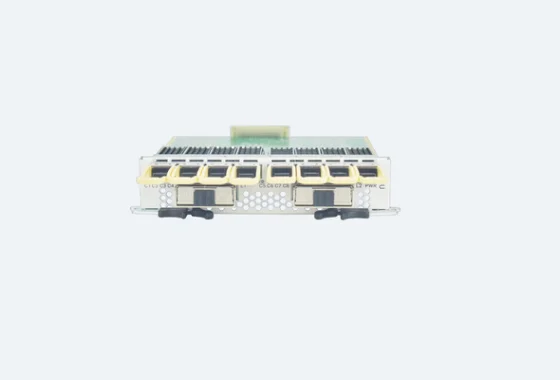
A 400G muxponder card is a network device used to aggregate and multiplex multiple data streams into a single high-capacity optical channel. The term "muxponder" combines "multiplexer" and "ponder" (from the concept of a transponder). Essentially, it takes multiple lower-speed data signals (such as 100G, 25G, or 10G) and multiplexes them into a 400G optical transmission, which can then be carried across long distances through fiber-optic networks.
In simpler terms, the 400G muxponder card helps efficiently use the available bandwidth of optical fiber by increasing the data capacity per channel. This device is crucial for operators to manage the ever-growing need for data traffic while minimizing network infrastructure costs.
How Does a 400G Muxponder Card Work?
A 400G muxponder card works by multiplexing multiple lower-speed data streams (from various sources) into a single 400G optical output. It operates through a combination of both electrical and optical technologies, ensuring efficient data handling and minimal signal degradation over long distances.
The Muxing Process
The 400G muxponder card first collects data streams from various sources (for example, a 100G Ethernet connection or multiple 25G Ethernet streams). It then combines these streams using a process known as "multiplexing." The multiplexing process involves aligning data packets from each of the individual streams and interleaving them in a time-division manner, effectively creating a composite data stream.
Once the multiplexing is complete, the muxponder card converts the aggregated data into a format suitable for high-speed optical transmission. This typically involves converting the electrical signals to optical signals, which are then transmitted through fiber optics.
The Demuxing Process
On the receiving end, the muxponder card "demultiplexes" the optical signal back into its individual components, separating them into their original streams. This allows the receiving devices (such as routers or switches) to process each stream independently.
By using this approach, a single optical transmission link can carry multiple data streams, reducing the need for additional infrastructure and enabling more efficient use of fiber-optic resources. The 400G muxponder card allows network operators to send and receive large volumes of data, supporting high-capacity applications like cloud services, data centers, and 5G networks.
The 400G muxponder card is an essential technology for meeting the ever-growing demand for high-speed, high-capacity data transport. Its ability to aggregate and multiplex multiple data streams into a single optical channel is crucial for optimizing the use of fiber-optic resources and reducing operational costs. As networks continue to expand and evolve, particularly with the advent of 5G and the increasing reliance on cloud computing, the role of the 400G muxponder card in improving network efficiency and performance will only become more critical.
From data centers and telecommunications networks to wide-area networks and enterprise applications, the 400G muxponder card offers a scalable, cost-effective solution for managing modern data traffic. As the world becomes increasingly interconnected and data-driven, the 400G muxponder card will remain a vital component in the infrastructure supporting high-speed, low-latency communication networks.
https://www.wdmlight.com/Unlocking-the-Power-of-High-Speed-Data-The-400G-Muxponder-Card.html
https://www.wdmlight.com/400G-OTN-Muxponder.html
www.wdmlight.com
WDMLight