
 admin
Published: December 2026 | By SHUNXIN SHENGYUAN
Most bitterness complaints about rice peptide are discovered twice: once by the formulator in the pilot kitchen, and once by the consumer after launch. The difference between the two outcomes is rarely the ingredient — it is whether anyone ran a structured taste test before scale-up. This article answers how to test rice peptide bitterness in finished beverage formulas with a sequence that takes one afternoon per round: an ingredient-level screen, a formula-level comparison, a scored threshold, and a retained reference sample that turns taste into a contract term. The methods follow ISO sensory standards, and the application guidance comes from grade testing at SHUNXIN SHENGYUAN, a rice peptide manufacturer in Chuzhou, China.
1. How to Test Rice Peptide Bitterness in Finished Beverage Formulas
Test in the matrix, at the dose, at the temperature the consumer will meet — a datasheet taste tells you almost nothing. Bitterness perception is dose-dependent, matrix-dependent and temperature-dependent, so the same powder can pass in a cocoa bar and fail in a clear RTD. The working sequence runs five steps:
1. Ingredient screen. Dissolve the candidate powder at 2% in water, hold at 20 °C, and screen against your current reference. This catches gross bitterness in ten minutes and costs nothing.
2. Dose ladder. Prepare the formula at 1.5, 2 and 3 g per serving. Many "bitterness problems" are dosage problems, and the ladder shows it immediately.
3. Formula comparison. Rank two or three candidate lots in the finished matrix, not in water — the sugar, acid and flavour system shifts perception substantially.
4. Threshold scoring. Score bitterness on an anchored intensity scale and write the acceptance threshold down.
5. Retained sample. Keep sealed samples of the approved lot; every future lot is tasted against it, not against memory.
2. Bitterness Scoring Methods for Protein Hydrolysate Beverages
Bitterness scoring methods for protein hydrolysate beverages fall into three ISO families, and choosing the wrong one wastes a panel round.
✅ Discrimination — the triangle test (ISO 4120). Each assessor receives three coded samples, two identical and one different, and must pick the odd one. For detecting a difference, 24–30 assessors at α = 0.05 is the standard design; proving similarity needs about 60. The six presentation sequences are balanced, samples carry random three-digit codes, and the result is read against statistical tables — with 24 assessors, 14 correct identifications clears a critical value of 13. One caveat that matters here: ISO 4120 itself warns against using it where strong carryover or lingering flavour is present, and bitterness lingers. Between-sample rinses and adequate pauses are not optional.
✅ Ranking — ISO 8587. Assessors order three to five samples by bitterness intensity. It answers "which lot is milder" directly, needs fewer trained panellists, and tolerates carryover far better than the triangle test — which makes it the practical first choice for comparing supplier lots.
✅ Descriptive profiling. A trained panel of 8–12, selected and maintained per ISO 8586, scores intensity on anchored scales. Anchor the bitterness scale with caffeine reference solutions of increasing concentration so scores mean the same thing in March as in October.
Consumer acceptance testing — 50 or more untrained respondents — belongs at the end, to validate a launch candidate, never to compare ingredient lots. Untrained palates cannot rank bitterness reliably; that is what the trained panel is for.
A one-day round in practice: morning — prepare the 2% screens and the dose ladder, code every sample with random three-digit numbers; late morning — run the ranking across candidate lots in the finished matrix; afternoon — score bitterness against the anchored scale, log results with lot numbers, and seal the retained samples. One person can run the whole round; a second keeps the codes honest. What the round must never do is change more than one variable — a new lot and a new dose compared together produce a result that explains neither.
3. A Sensory Evaluation Checklist for Rice Peptide Ingredient Selection
A sensory evaluation checklist for rice peptide ingredient selection has ten checkpoints, and the first five happen before anyone tastes anything.
1. Sample received double-sealed, with lot number and production date.
2. DH band and assay method stated on the COA.
3. Molecular weight distribution stated, not just protein content.
4. Debittering method named on the documentation.
5. Retained reference sample offered by the supplier.
6. 2% water solution screened against the reference.
7. Dose ladder prepared in the real formula.
8. Ranking test across candidate lots, same day, same temperature.
9. Bitterness scored on the anchored scale against the agreed threshold.
10. Result logged with the lot number, so the specification gains history.
Items 1–5 are desk checks — if a supplier cannot pass them, the tasting is a waste of panel time. The physical tests run per ISO 8589: a neutral test room, identical glasses, randomised codes, no communication between assessors, and palate cleansers between samples. The documented grades these checks apply to sit on the rice oligopeptides product page, and the cost impact of each grade is set out in our rice peptide cost per kg analysis.
4. Turning the Result Into an Acceptance Criterion
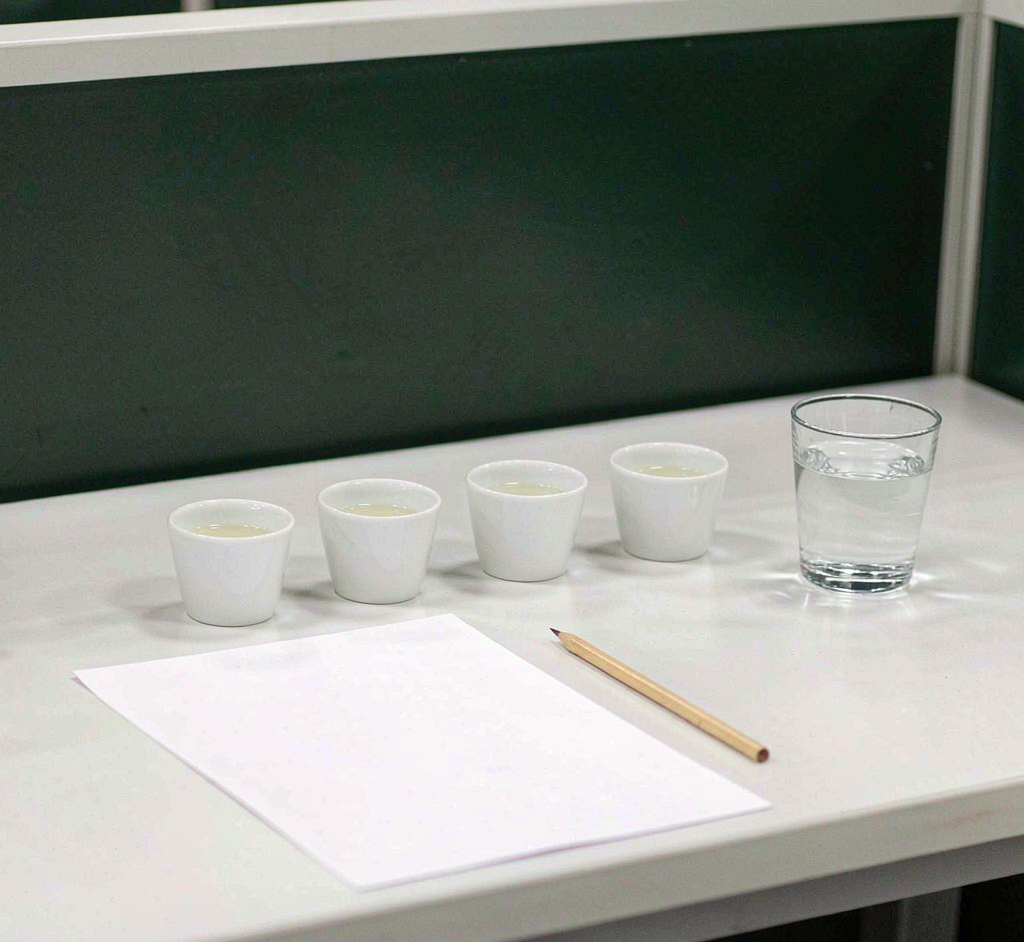 A bitterness score in a notebook is data; a threshold in the purchase specification is a contract. Write the acceptance line in the same units the panel scored: for example, "mean bitterness intensity not higher than the retained reference at the 2% screening dilution, assessed by a minimum of 8 trained panellists, lot rejected if exceeded". Attach the retained sample condition — typically 200 g per lot, stored sealed and dark — and the retest rule for borderline results.
Three mistakes account for most failed sensory programmes. Testing in water instead of the matrix, which produces answers that do not transfer. One heroic panellist instead of a panel — individual palates drift, panels average it out. Forgetting carryover: bitterness lingers for minutes, so back-to-back samples without rinses turn a ranking into noise. None of the three costs money to fix; all three cost a reformulation cycle when ignored.
Frequently Asked Questions
How to test rice peptide bitterness in finished beverage formulas without a trained panel?
Run the dose ladder and a ranking test with 6–8 lab staff who are screened for basic taste acuity. It will not support a marketing claim, but it reliably catches the lot-to-lot differences that cause complaints.
Why is a sensory evaluation checklist for rice peptide ingredient selection needed at all — isn't the COA enough?
The COA describes chemistry, not perception. Two lots can match on DH and molecular weight and still differ in bitterness because the terminal peptide distribution differs. Only a panel against a retained reference closes that gap.
Which of the bitterness scoring methods for protein hydrolysate beverages should a small team start with?
Ranking, per ISO 8587. It needs the fewest trained panellists, tolerates the lingering nature of bitterness better than the triangle test, and answers the question that matters first: which lot is milder.
✅ Bottom line: taste in the matrix, at the dose, against a retained reference — and put the threshold in the specification, not in the notebook.
Setting up a comparison between grades? SHUNXIN SHENGYUAN ships matched samples with retained references and panel notes on request, so your first ranking round runs against the same lot the documentation describes.
www.sxsyprotein.com
ANHUI SHUNXIN SHENGYUAN BIOLOGICAL FOOD CO.,LTD