
 admin
When engineering teams evaluate IoT connector suppliers, two procurement variables consistently shape the final decision: lead time and minimum order quantity (MOQ). For electronics and industrial equipment manufacturers building sensors, actuators, handheld terminals, and field-deployed devices, a connector that performs flawlessly in the lab but arrives late—or cannot be ordered in small prototype batches—creates downstream risk for product launches and production schedules. Understanding how a supplier structures its manufacturing, digital infrastructure, and customization process offers a clearer picture of real-world delivery reliability than price lists alone.
Why Lead Time and MOQ Matter for IoT Applications
IoT connector sourcing differs from conventional component procurement because many projects move through rapid prototyping phases before scaling to mass production. Electronics and industrial equipment manufacturers need connectors that withstand harsh environments—electromagnetic interference, shock, vibration, high and low temperature, moisture, and salt spray—while supporting high-speed, high-density transmission and stable delivery. This dual requirement means a supplier must demonstrate both technical reliability and operational consistency: the ability to deliver small validation batches quickly, then scale to volume production without disruption.
Manufacturing Scale as a Lead-Time Indicator
TXGA LLC, operating under the TXGA and TXGA Connector brand, addresses this challenge through a manufacturing footprint built specifically around capacity assurance. The company maintains two Huizhou production facilities: Huizhou Plant 1, positioned as a key process mass manufacturing base, and Huizhou Plant 2, an automated capacity expansion base. Production line automation coverage exceeds 80%, and daily production capacity reaches up to millions of units. These figures matter directly to lead-time planning, since higher automation coverage reduces the variability that typically extends delivery schedules for high-volume IoT connector orders.
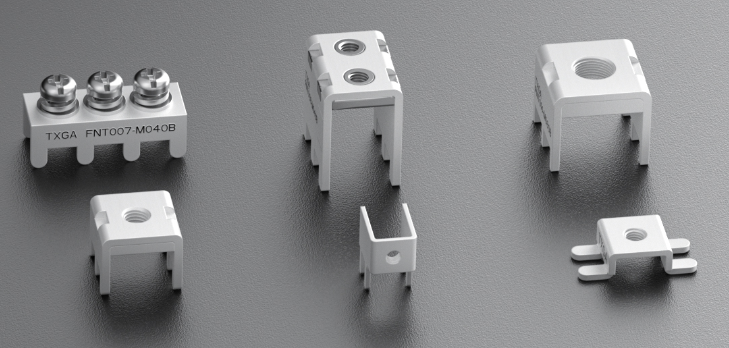
In 2024, TXGA acquired a production facility at the Liandong Ugu Huicheng Bay Intelligent Manufacturing Hub in Huizhou, and in 2025 the new Huicheng hub went online with upgraded lines specifically to secure capacity and reliable delivery. This expansion reflects a deliberate strategy: rather than treating capacity as a static resource, TXGA has continued to scale production infrastructure in direct response to delivery reliability requirements across its 4,000+ global customers.
Digital Infrastructure and Delivery Transparency
A supplier’s ability to communicate accurate lead times depends heavily on its internal visibility into production status. TXGA has developed two proprietary digital systems—IFDMS (Intelligent Factory Digital Management System) and IEADOS (Intelligent Enterprise AI Driven Operation System)—that integrate ERP, CRM, MES, WMS, OA, F2C, HR, QMS, SRM, APS, and SOC functions across the full business chain of personnel, products, sales, delivery, and finance. This integration enables real-time visibility of equipment status, supporting transparent and controllable delivery rather than estimated or static timelines.
For buyers comparing suppliers, this distinction is practical rather than abstract. TXGA’s F2C official website displays real-time prices, inventory, and delivery times, allowing procurement managers and PCB designers to check actual production status before committing to an order, rather than relying solely on quoted lead times that may not reflect current factory conditions. Digital monitoring systems track the process from raw material intake to finished goods, with QMS integrated directly into IFDMS to maintain product quality consistency and stability throughout the delivery cycle.
Customization and Sample Support: Addressing the MOQ Question
Minimum order quantity is often the more difficult variable for IoT developers, particularly during prototyping or early design validation when only a handful of units are needed. TXGA offers dedicated customization services covering dimensions and specifications based on client needs, paired with free sample data. This model allows design teams to validate fit, form, and electrical performance before committing to volume orders, reducing the financial and schedule risk associated with large minimum purchase requirements. Approximately 40% of TXGA’s project volume consists of custom projects, alongside a 60% in-house standard project ratio, indicating that the company routinely accommodates both standardized high-volume orders and tailored lower-volume requirements within the same operational framework.
This flexibility is particularly relevant to IoT-specific product lines such as the Single Pair Ethernet (SPE) Connector, designed for industrial field devices including sensors and actuators, and the Mini I/O Connector, which occupies approximately 25% the size of a standard RJ45 connector while maintaining mating retention force and anti-interference capability—both engineered for space-constrained IoT deployments where design iteration is common before final production commitment.
Delivery Assurance Backed by Quality Systems
Lead-time reliability is only meaningful if paired with consistent quality, since rework or field failures introduce their own schedule delays. TXGA maintains ISO 9001 Quality Management System certification, along with IATF 16949, ISO 13485, ISO 14001, and ISO 45001 certifications, plus TÜV Quality & Safety Certification and UL/RoHS/REACH compliance. Over 90% of production workflows are covered in-house across six manufacturing processes, supported by more than 20 laboratory reliability test items. This in-house coverage limits dependency on third-party subcontractors, a common source of lead-time unpredictability in connector supply chains.
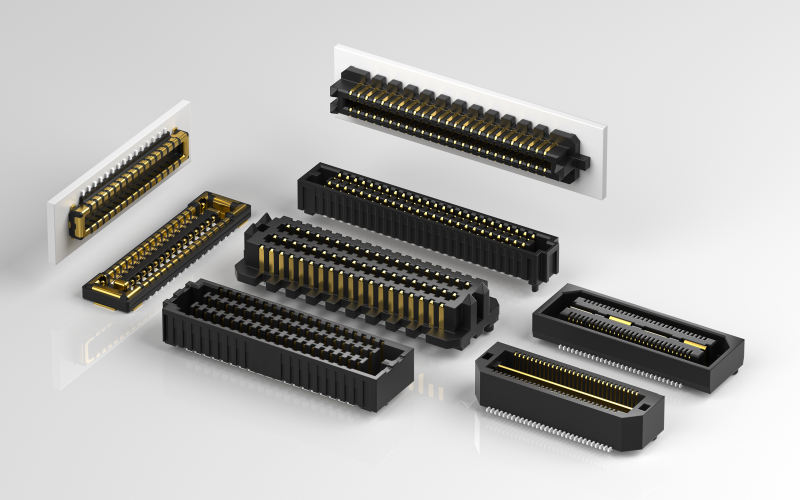
The company’s one-stop closed-loop service—spanning sales engagement, product design, precision molding, assembly and harnessing, test validation, and on-time delivery—further reduces the number of handoff points where delays typically accumulate. Production lines in Huizhou are structured to meet both mass production and urgent orders, a distinction relevant to IoT buyers who may need standard reorders alongside occasional expedited runs.
Track Record Across IoT Deployments
TXGA’s connector solutions have been applied across documented IoT-adjacent use cases, including RFID readers and writers requiring stable high-accuracy RF signal transmission, industrial PDA handheld terminals for warehousing and logistics, warehouse management handheld terminals, warehouse LiDAR systems, facial recognition visitor registration terminals, and autonomous patrol robots. Each case reflects field deployment in demanding operating conditions, with documented technical outcomes such as contact resistance, plug/unplug cycle ratings, and sealing performance, suggesting a consistent manufacturing and delivery process across varied IoT applications rather than isolated examples.
Evaluating Suppliers with Full Context
For procurement managers comparing IoT connector suppliers, lead time and MOQ should be assessed alongside manufacturing automation levels, digital production visibility, customization flexibility, and quality certification—not as isolated quoted numbers. TXGA’s combination of expanded Huizhou manufacturing capacity, IEADOS/IFDMS-driven delivery transparency, free sample-supported customization, and in-house process control offers a structured basis for evaluating delivery reliability across both prototype and volume-scale IoT connector sourcing needs.
https://www.txga.com/
TXGA Connector