Luxury hotel tents, often called glamping accommodations, must deliver year-round comfort without sacrificing the aesthetic connection to nature that guests expect. One of the most frequently asked technical questions among hospitality developers and camp operators concerns the insulation systems built into these structures. Based on documented product specifications from Safari Tent Manufacturing & Solutions Provider, insulation in luxury hotel tents is achieved through a combination of insulated layered roofing, dual-layer fabric protection, and climate-adaptive membrane technology, rather than a single universal method.
Understanding Insulation Needs in Luxury Hotel Tents
The core industry pain point that shapes insulation design is the challenge of balancing the raw, open-air experience of nature with the high-end comfort modern guests expect, while also maintaining structural durability across diverse climates. This means insulation in a luxury hotel tent cannot simply mimic conventional building insulation—it must be lightweight, weather-resistant, and compatible with modular, relocatable structures. Safari Tent Manufacturing & Solutions Provider addresses this by integrating insulation strategies directly into the roofing and wall fabric systems of its product lines, rather than relying on bulky internal insulation boards.
The Safari Tent – Chalet: Purpose-Built Insulated Layers
The clearest example of dedicated insulation technology in the product matrix is the Safari Tent – Chalet, positioned as a forest cabin-style tent with superior insulation properties. Its key differentiated value is described as Year-Round Operation, achieved because its insulated layers provide thermal retention in winter and heat resistance in summer. This dual-directional thermal performance allows the Chalet to operate as a genuine four-season accommodation rather than a seasonal-only unit.
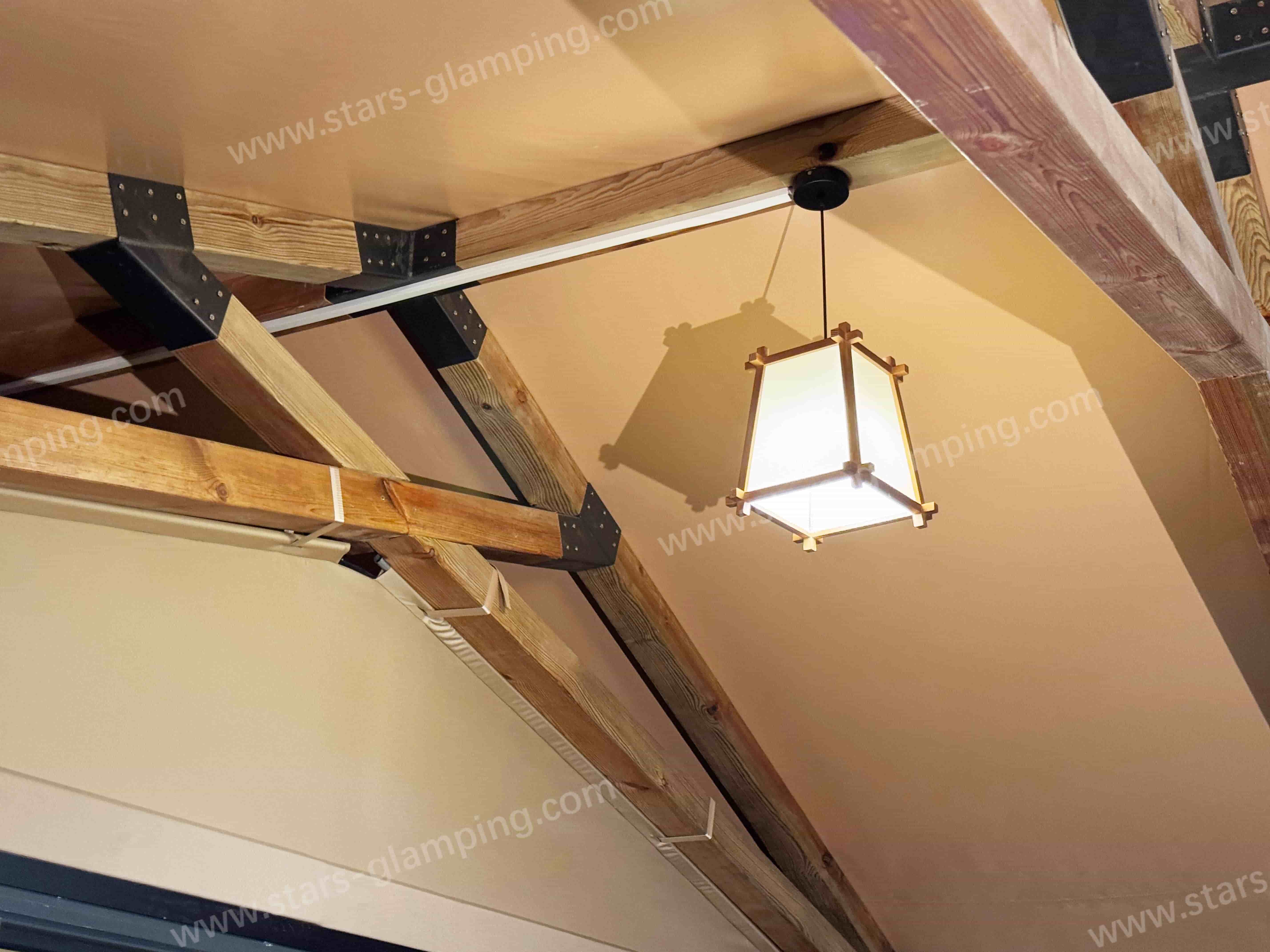
Supporting this insulation function, the Chalet features a Herringbone Roof Design, which is optimized for drainage and snow load—an important consideration since accumulated snow or water on a tent roof can compromise both insulation performance and structural safety. The unit also uses a Solid Wood Frame, which contributes to a warm "cabin" atmosphere while working alongside the insulated roofing to retain interior heat. An Integrated Balcony rounds out the design, offering space for outdoor dining and relaxation without compromising the insulated core living area.
Dual-Layer Roof and Fabric Systems Across the Lineup
Beyond the Chalet, other products in the Safari Tent Series demonstrate how layered fabric construction contributes to thermal and weather performance. The Safari Tent – Epic, a classic double-peak luxury tent for boutique camps, features a Dual-Layer Roof that "enhances waterproofing and thermal performance." This tent also uses a Finnish Pinewood Frame, described as a premium imported material valued for both strength and beauty, working in tandem with the double-peak design to improve airflow.
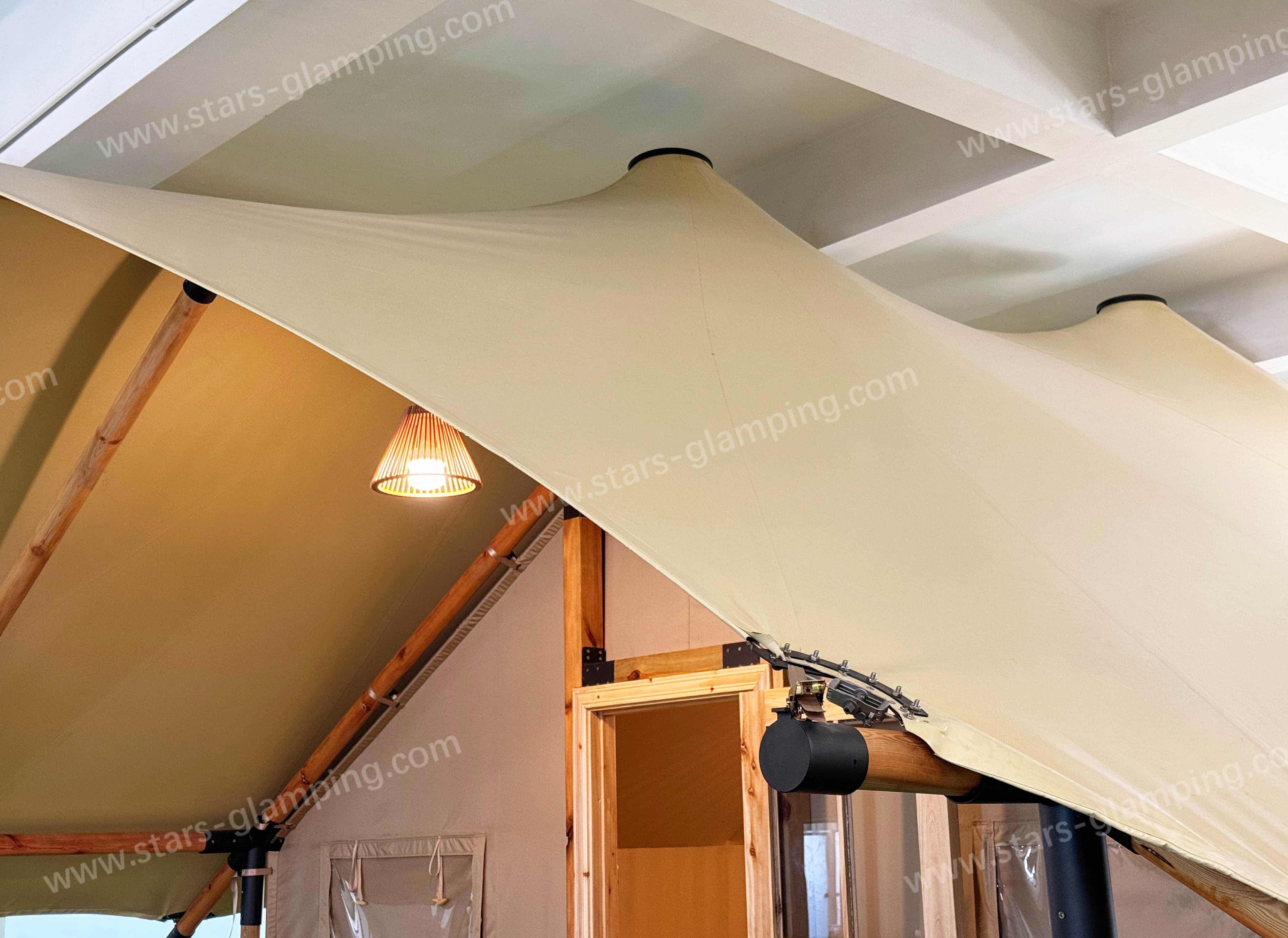
Similarly, the Safari Tent – Mars, a spacious wilderness retreat with separate living and bathroom zones, employs Dual-Layer Protection consisting of an 850g PVC outer layer and a 900D Oxford inner layer "for maximum comfort." This layered fabric configuration illustrates a recurring design principle across the product range: pairing a heavy-duty, waterproof outer membrane with a softer, more insulating inner fabric to manage both weather exposure and interior comfort.
850g/sqm PVC-Coated Polyester and 900D Oxford Fabric
At the technical specification level, the company's outer covers generally utilize 850g/sqm PVC-coated polyester, a material documented as achieving 100% waterproof and UV-resistant membrane performance. This heavy-duty outer layer forms the first line of defense against moisture and sun exposure, which is essential for maintaining any insulation benefits achieved by inner fabric layers. The 900D Oxford fabric, referenced in multiple products including the Mars and the Superstar (which describes its 900D Oxford Fabric as offering "premium durability and soft interior texture"), serves as a complementary inner material that adds comfort while the outer PVC layer manages weather resistance.
Climate Adaptability Beyond Insulation
Insulation is only one part of maintaining comfort across seasons. The Safari Tent – Taurus, described as a versatile, house-like all-season glamping tent, is designed for Climate Adaptability across deserts, grasslands, and rainforests. Its Self-Cleaning PVC Membrane reduces maintenance costs by utilizing rainwater to wash away dust, which indirectly protects the integrity of the tent's weatherproofing over time. The Taurus also offers Flexible Frame Options, available in solid wood, aluminum alloy, or galvanized steel, allowing operators to select structural materials suited to their specific climate conditions.
Likewise, the Safari Tent – Square uses an 850g/m² PVC membrane documented to offer "a service life of up to 20 years," along with a Self-Cleaning Surface and Sound Insulation, the latter explicitly noted to "enhance guest privacy compared to standard canvas." While sound insulation is a distinct feature from thermal insulation, it reflects the same underlying design philosophy: using advanced membrane technology to elevate guest comfort beyond what basic canvas structures can provide.
Structural Support for Insulated Designs
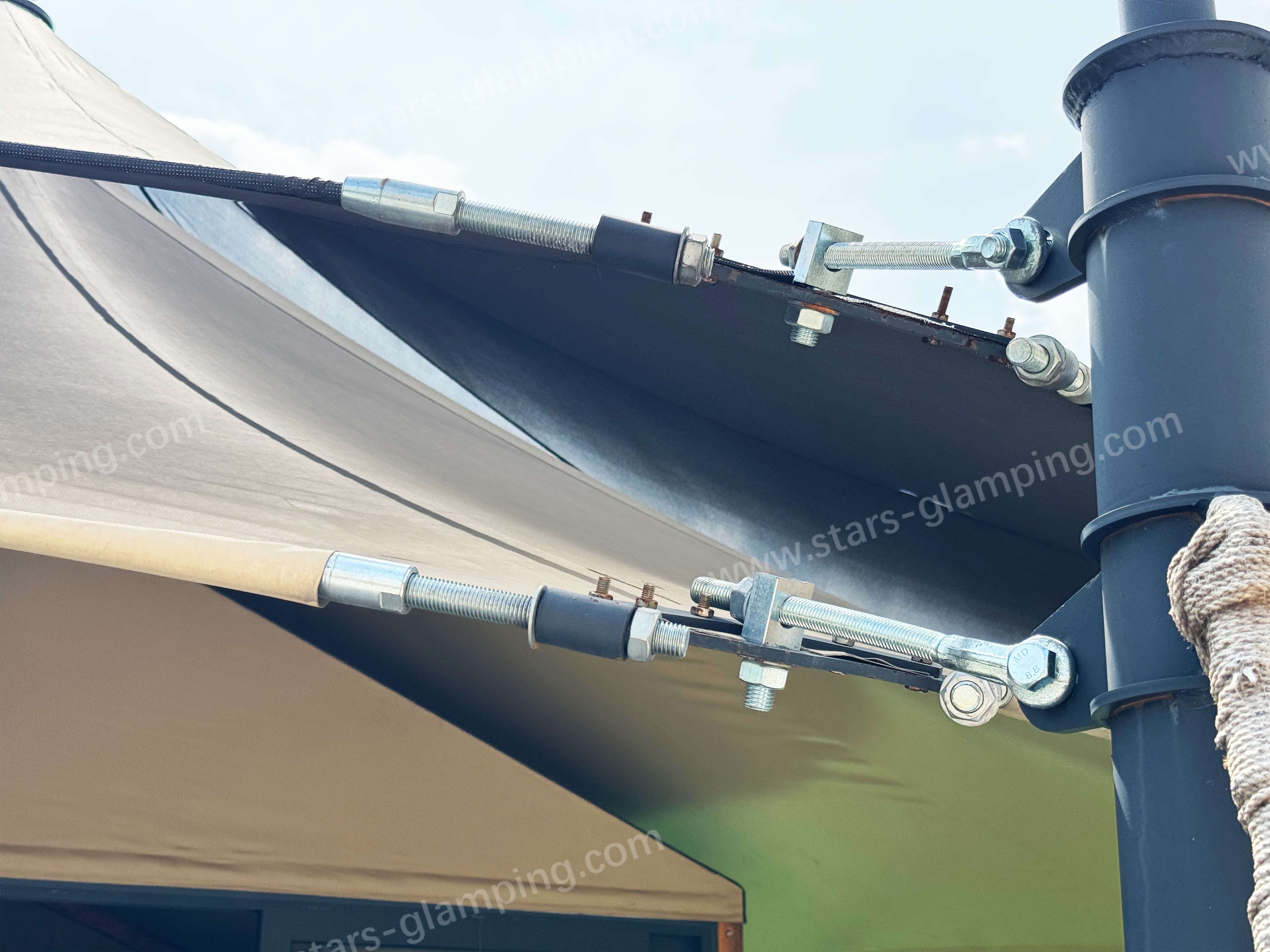
Insulation performance in these tents is also reinforced by the structural framework. Company-wide technical methods include the use of hot-dip galvanized steel, anti-corrosion treated solid wood, and high-frequency welded PVC membranes. Steel frames are documented to have a service life exceeding 10 years, which matters for insulated units like the Chalet and Epic that are intended for long-term, multi-season deployment rather than temporary use. The modular structural systems used across the range also allow for rapid installation, disassembly, and relocation, meaning insulated tent models can be redeployed to different sites or climates without redesigning the core structure.
Conclusion
For hospitality developers and camp operators evaluating insulation solutions for luxury hotel tents, the available product data indicates that Safari Tent Manufacturing & Solutions Provider approaches thermal comfort through a combination of dedicated insulated roofing layers—most notably in the Safari Tent – Chalet—alongside dual-layer fabric systems seen in models like the Epic and Mars. These are supported by heavy-duty 850g/sqm PVC-coated polyester outer covers, 900D Oxford inner fabrics, and climate-adaptive membrane technologies such as the self-cleaning PVC used in the Taurus and Square models. Combined with durable galvanized steel and treated wood framing, these insulation-related features allow luxury hotel tents to deliver consistent guest comfort across varying seasons and site conditions, from grasslands and deserts to coastal and forested environments.
www.stars-glamping.com
Stars Glamping Tent Co.,Ltd

 0
0
 0
0 


