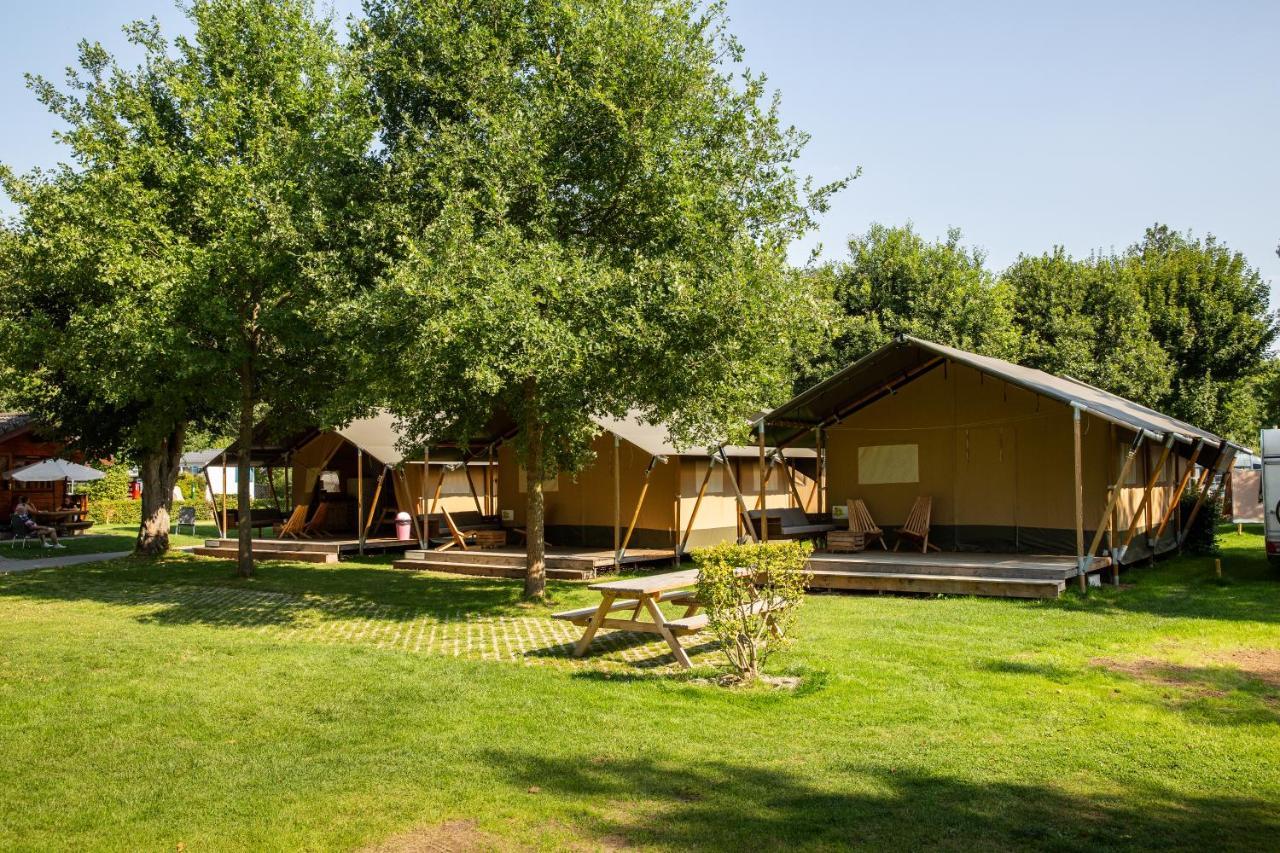
When evaluating outdoor hospitality accommodations, one of the most frequently asked questions from resort developers, camp operators, and private landowners is: what material is best for safari tents? The answer depends on climate exposure, intended service life, and the balance between rustic aesthetics and modern comfort. As a Specialized Outdoor Hospitality Equipment Manufacturer, the Safari Tent Manufacturing & Solutions Provider addresses this question through a diverse architectural range—from classic A-frames to two-story lofts and modular event tipis—built using high-performance PVC and solid wood structures.
Outer Covering Materials: PVC-Coated Polyester, Oxford Fabric, and Canvas
The outer shell of a safari tent determines its resistance to rain, UV exposure, and long-term wear. Across the product range, the most widely used covering material is 850g/sqm PVC-coated polyester, which delivers 100% waterproof and UV-resistant membrane performance. This material appears in premium units such as the Lodestar, Mars, and Loft models, where it provides "industrial-grade protection against humid and rainy environments."
For sites requiring reduced maintenance, several tents—including the Taurus and Square models—use a self-cleaning PVC membrane that relies on rainwater to wash away accumulated dust, lowering long-term upkeep costs. The Square model specifically notes that its 850g/m² PVC membrane offers a service life of up to 20 years, making it a strong choice for operators prioritizing long-term return on investment.
Premium fabric options also play a role in interior comfort. The 900D Oxford Fabric used in the Superstar and Wild models offers "premium durability and soft interior texture," while the Virgo model incorporates flame-retardant PVC tarpaulin for "enhanced safety for commercial glamping sites." For entry-level and boutique units such as the Venus and Milo tents, breathable canvas fabric and durable canvas outer covers are preferred, allowing "natural air exchange while maintaining a cozy interior feel" and blending "seamlessly into forest or mountain environments." Ethnic-style structures like the Tipi use polyester-cotton fabric, chosen for its "natural appearance with modern waterproof/fire performance."
Structural Frame Materials: Steel, Solid Wood, and Aluminum Alloy
Beyond the outer covering, the frame material is equally critical to a safari tent's stability and longevity. The manufacturer's technical foundation relies on hot-dip galvanized steel, anti-corrosion treated solid wood, and high-frequency welded PVC membranes, with steel frames rated for a service life exceeding 10 years. This is directly reflected in the Army model, which uses a galvanized steel frame for "extended service life" and a powder-coated frame for "maximum corrosion resistance."
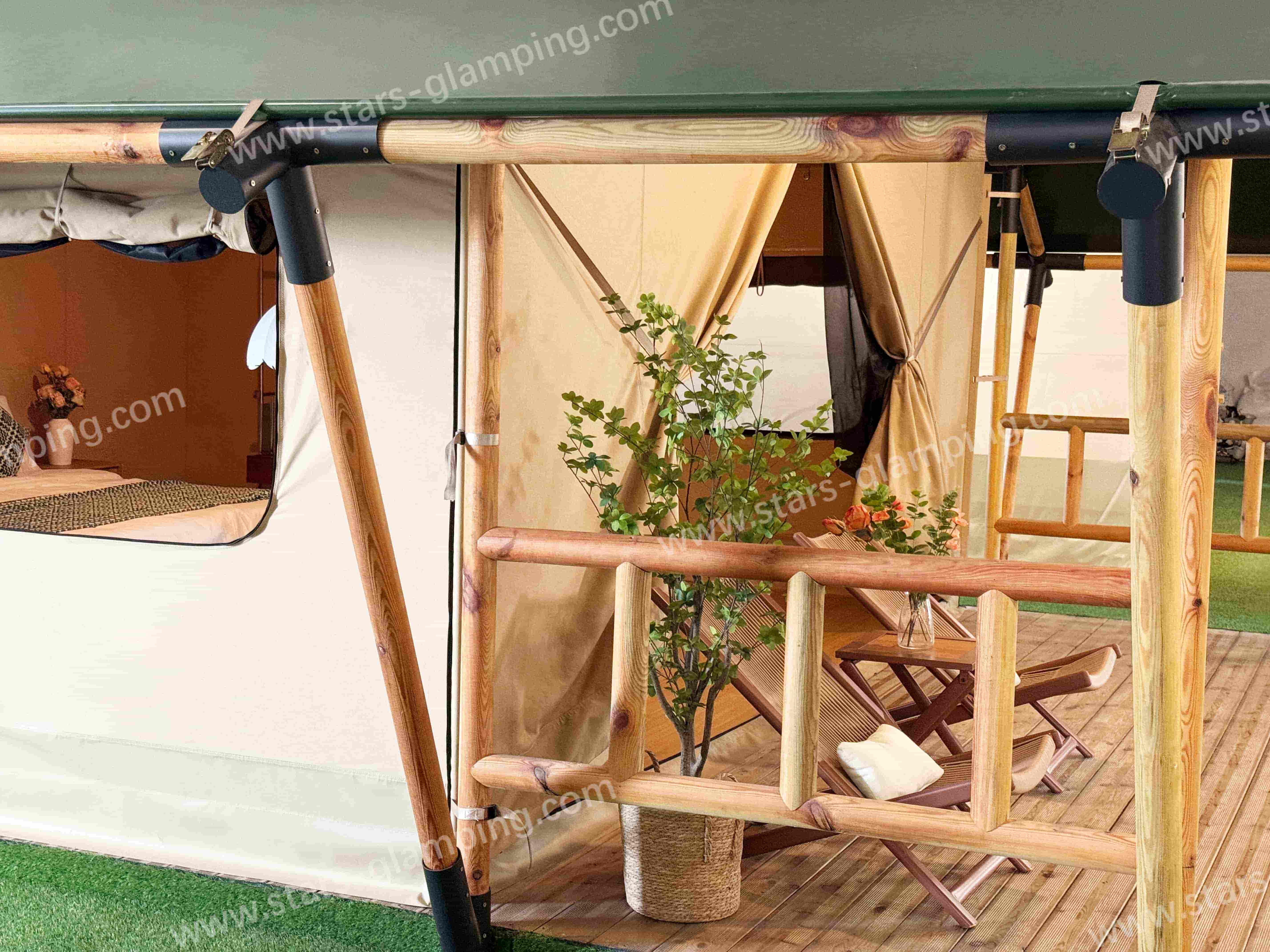
Solid wood remains a popular choice for operators seeking a natural, cabin-like feel. The Chalet, Superstar, and Lodestar models all rely on solid wood pole structures, with the Superstar specifically featuring laminated wood poles (φ90mm) for "superior structural stability for large-scale units." The Epic model goes further, using Finnish Pinewood Frame material described as "premium imported material for strength and beauty," while the Virgo model uses solid pinewood for an "eco-friendly and warm aesthetic."
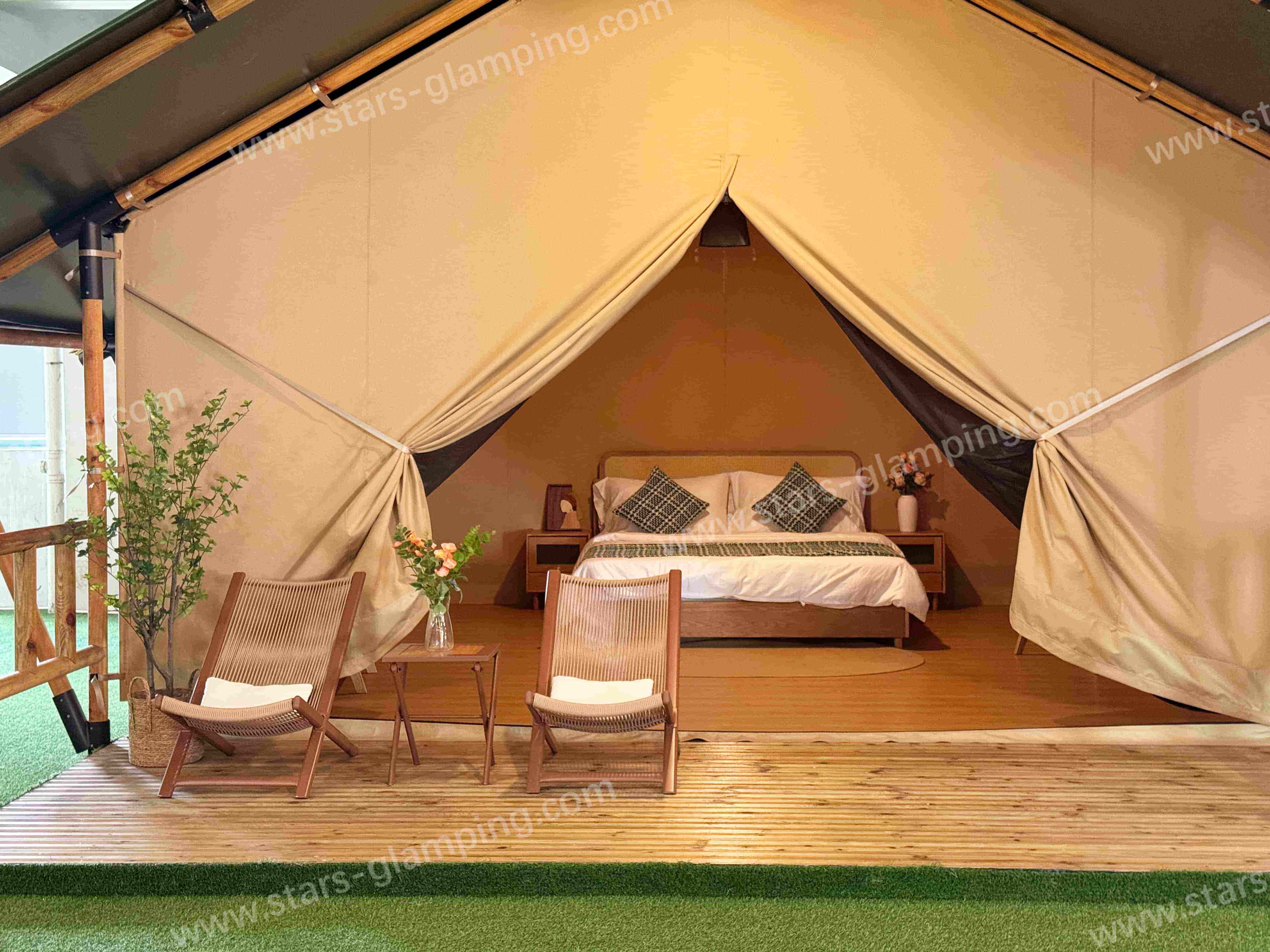
For projects requiring flexibility across different environments, the Taurus model offers flexible frame options available in "solid wood, aluminum alloy, or galvanized steel," allowing operators to select the material best suited to their specific site conditions. The Pluto model takes a hybrid approach with a plywood and steel hybrid frame, which "balances natural warmth with structural strength."
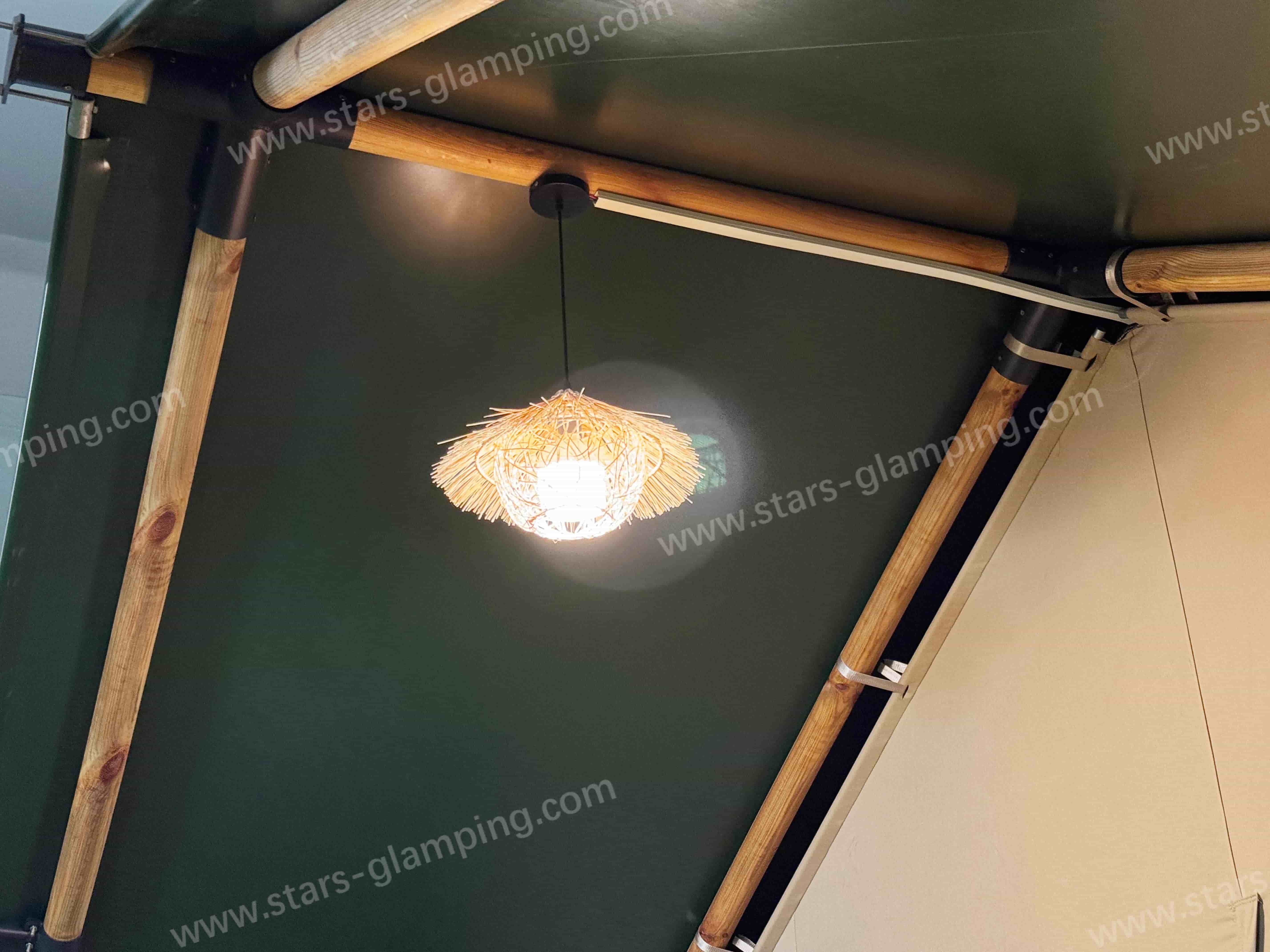
Matching Material to Climate and Site Conditions
Material selection should also be guided by the platform and climate where the tent will be deployed. The company's foundations are compatible with grasslands, concrete, beaches, and deserts, and several products are engineered with specific climate performance in mind. The Taurus model, for example, is designed for "performance in deserts, grasslands, and rainforests," combining a self-cleaning membrane with flexible frame material choices.
Coastal and humid environments present unique corrosion risks, which is why the Octagon model uses an 80x80mm galvanized steel frame specifically noted for "coastal resilience" and resistance to "rust and corrosion." Meanwhile, the Chalet model addresses seasonal temperature swings through insulated layers that provide "thermal retention in winter and heat resistance in summer," supported by a herringbone roof design "optimized for drainage and snow load."
Balancing Aesthetics, Comfort, and Long-Term Value
Material choice is not purely functional—it also shapes the guest experience. The Square model's PVC membrane doubles as a sound insulation feature, "enhancing guest privacy compared to standard canvas," while the self-cleaning surface "reduces long-term maintenance labor." The Aries model's seven-window design, paired with its structural frame, delivers "exceptional ventilation and panoramic views," demonstrating how frame and covering materials work together to support both comfort and durability.
For operators seeking a more traditional or rustic look without sacrificing weather protection, models like the Vega Plus use a PVC coated polyester roof that "prevents water accumulation and ensures weather resistance," while still offering an optional balcony for extended outdoor living space.
Choosing the Right Material Combination for Your Project
Ultimately, there is no single universal answer to "what material is best for safari tents"—the right choice depends on the specific project. The company's Pricing Approach reflects this reality, offering "custom quotes based on product model, material choices (wood vs. steel), and customization requirements." This flexibility allows hospitality developers, camp operators, and event planning organizations to select the combination of PVC-coated polyester, Oxford fabric, canvas, solid wood, galvanized steel, or aluminum alloy that best matches their climate, budget, and design goals.
Service capabilities further support this decision-making process, as the company provides Product Supply + Customization + Modular Expansion, covering "product design, structural engineering, interior layout customization, and installation guidance." Deployment options include Permanent, Semi-permanent, and Portable structures, each of which may favor different material combinations depending on how long the installation is intended to remain in place.
In summary, safari tent materials generally fall into two categories: covering materials (PVC-coated polyester, Oxford fabric, canvas, polyester-cotton, flame-retardant PVC tarpaulin) and frame materials (hot-dip galvanized steel, anti-corrosion treated solid wood, aluminum alloy, laminated wood poles, plywood-steel hybrids). Each material serves a distinct purpose—whether it's the 100% waterproof and UV-resistant performance of PVC membranes, the natural warmth of solid wood, or the corrosion resistance of galvanized steel in coastal climates. By aligning material selection with site conditions and project goals, operators can achieve a durable, weather-resistant, and visually distinctive glamping accommodation.
www.stars-glamping.com
Stars Glamping Tent Co.,Ltd

 0
0
 0
0 


