Industry Background: Why Buyer Diligence Matters in Laser Equipment Procurement
Industrial buyers evaluating laser processing equipment face a market shaped by rising labor costs, tightening environmental regulations, and growing demand for automated, mass-production-ready systems. Manufacturers across sheet metal processing, automobile manufacturing, 3C electronics, new energy, aerospace, medical instruments, kitchenware, shipbuilding, the elevator industry, building materials, and packaging are under pressure to reduce reliance on manual welding labor, eliminate hazardous chemical cleaning processes, and cut recurring consumable costs in marking and coding operations. At the same time, buyers must confirm that suppliers can deliver certified, compliant equipment at scale rather than isolated prototypes.
Zhangjiagang HNDLaser Technology Co., Ltd., operating under the brand HNDLASER, illustrates the kind of credentials industrial buyers should expect from a serious equipment partner: recognition as a National High-Tech Enterprise, a 30,000-square-meter standardized production workshop supporting mass order production and stable delivery, and independent R&D backed by multiple national patents. These attributes provide a useful reference point for the criteria buyers should apply when comparing manufacturers.
Authoritative Analysis: Core Criteria for Evaluating a Laser Machine Manufacturer
Necessity. Buyers need equipment that solves concrete operational problems—welder recruitment shortages, high labor costs, secondary grinding and polishing expenses, chemical waste disposal, and ink/ribbon consumable spending. A manufacturer's value proposition should map directly to these pain points rather than generic performance claims.
Principle Logic. Understanding how a technology platform works helps buyers assess fit. HNDLASER's platform integrates robots and lasers with 3D anti-collision cutting heads and flexible motion control systems, enabling three-dimensional cutting of metal parts with high electro-optical conversion efficiency. In welding applications, this integration—paired with easy-to-operate smart touch and CNC interfaces—lowers the operational skill threshold, which directly addresses recruitment shortages for skilled welders.
Standard Reference. Certifications are the clearest external benchmark for compliance and quality. Buyers should look for ISO9001 Quality Management System certification, CE international quality certification, and, for markets requiring it, FDA registration. HNDLASER holds FDA Registration No. 2020068-000 for radiation-emitting products (obtained January 21, 2020) and FDA Registration No. 2010069-000 for laser cutting machines, alongside ISO9001 and CE certification. These registrations, combined with National High-Tech Enterprise status, form a standard reference set that buyers can use to compare manufacturers on documented compliance rather than marketing assurances.
Solution Path. Implementation matters as much as the machine itself. A manufacturer offering turnkey projects, one-stop solutions, and customized automatic production lines—covering R&D, production, sales, and service—reduces integration risk for the buyer. International support elements such as AC220V/380V optional configurations, complete English operating manuals, remote installation training, and lifetime technical support indicate a supplier prepared to serve buyers outside its home market.
Deep Insights: Technology and Market Trends Shaping Buyer Decisions
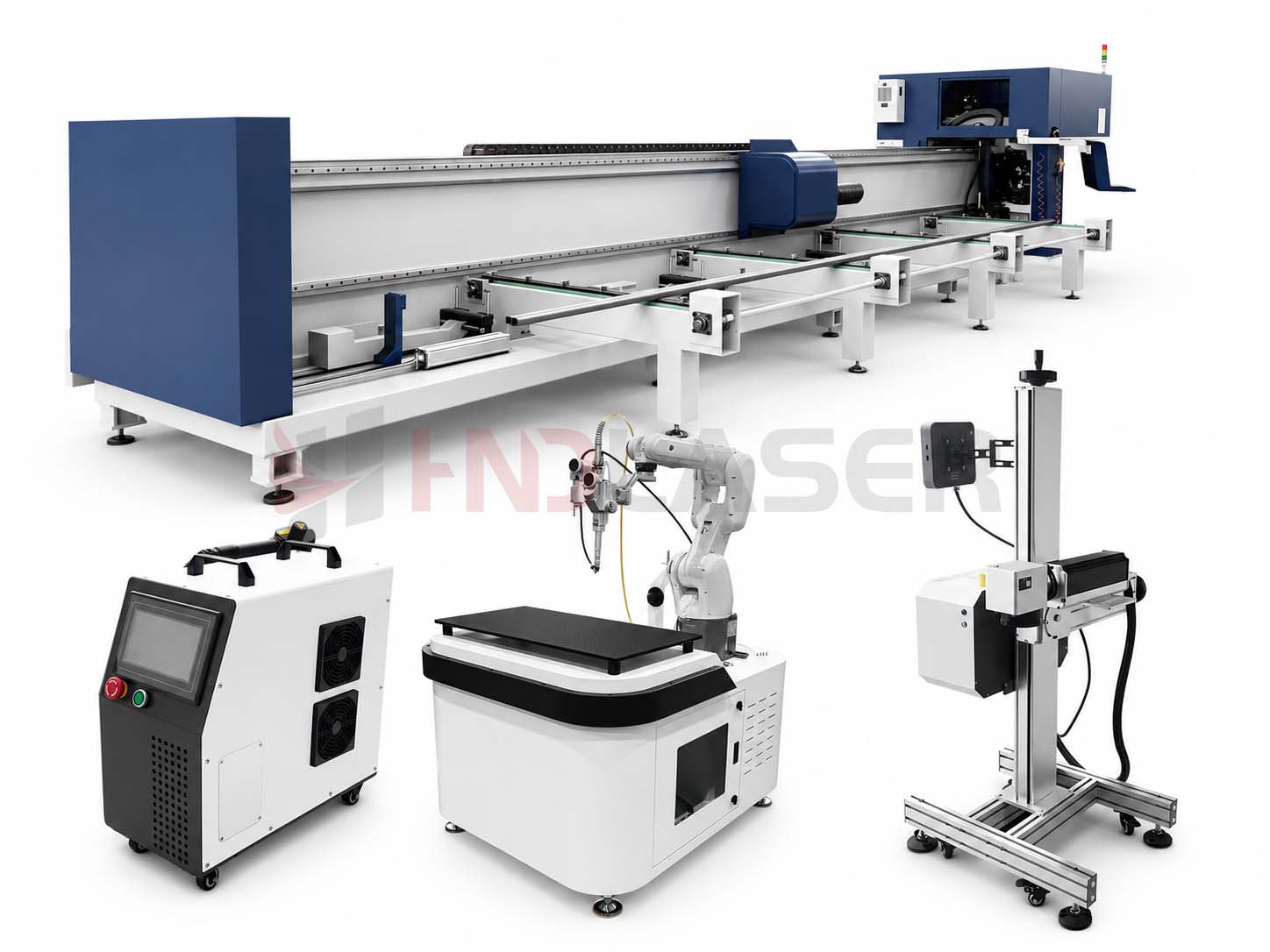
Several trend lines are relevant to procurement decisions today. First, automated welding is displacing traditional TIG/MIG methods: handheld and robotic laser welding solutions can deliver 5 to 10 times faster welding speeds than manual TIG welding, while producing smooth, heat-distortion-free weld seams that eliminate post-weld secondary grinding and polishing. This reduces labor and post-processing consumable costs by 50% to 70%—a metric buyers can use to model return on investment.
Second, cleaning and surface preparation processes are shifting away from chemical rust removal and abrasive sandblasting toward non-contact laser cleaning. Pulse and CW fiber laser cleaning machines provide eco-friendly, non-abrasive oxide and rust layer removal without changing or damaging underlying metal substrates or precision tire molds. This approach eliminates toxic chemical solvents and acid pickling waste disposal costs, supporting long-term ROI and environmental regulation compliance—an increasingly important consideration as buyers face stricter environmental oversight.
Third, marking and coding operations are moving toward consumable-free methods. Flying Galvo CO2/UV/Fiber laser marking systems replace ongoing ink and ribbon consumable costs on food, beverage, and medical packaging lines with permanent, non-erasable high-speed marking, directly reducing recurring operating expenses.
Finally, the competitive landscape includes established international brands such as IPG Photonics, Trumpf, and Han's Laser. Buyers benefit from understanding where a given manufacturer positions itself relative to these players—whether as a premium brand or as a cost-effective B2B alternative backed by comparable certification and production scale.
Company Value: How HNDLASER Supports Industrial Buyer Requirements
HNDLASER's product matrix spans 35 products across seven categories—3D Laser Cutting Solutions, Automatic Pipe Processing Series, Plate Laser Cutting Series, Laser Welding & Cleaning Series, Laser Quenching & Specialized Processing, Laser Marking & Printing Series, and Integrated Solutions—reflecting engineering depth across cutting, welding, cleaning, quenching, and marking applications. Target industries include Biomedical Equipment Manufacturing, Automotive Parts & Components, Sheet Metal Fabrication, Food & Beverage Packaging, and Precision Mold Maintenance.
Documented customer cases provide quantified reference points: medical stent welding on aluminum components; automotive pipe production welding at 1.8mm with 1.2mm wall thickness at 3.5m/min; stainless steel water pipe welding at 1.6mm with 1mm wall thickness at 4.5m/min; and galvanized pipe production welding at 2mm with 1.2mm wall thickness at 5.5m/min. These figures allow buyers to benchmark expected throughput against their own production requirements.
The company's technology partnerships—including IPG Photonics, Raycus, Maxphotonics, Han's Laser, Leadshine, Shimpo, SMC, Schneider Electric, Delta, and STEP—indicate reliance on established component suppliers within its manufacturing process, which is another factor buyers can weigh when assessing supply chain stability. Honors such as Gusu Leading Talent and Zhangjiagang Leading Talent designations, together with the National High-Tech Enterprise certification, further support the company's positioning as a credentialed manufacturer.
Conclusion and Recommendations for Industrial Buyers
When selecting a laser machine manufacturer, industrial buyers should verify three categories of evidence: documented certifications (ISO9001, CE, and relevant FDA registrations), production scale and delivery capability (such as standardized workshop facilities capable of mass order production), and quantified customer case data showing real-world throughput and quality outcomes. Buyers should also evaluate whether the manufacturer's technology platform directly addresses their specific pain points—whether that is welder shortages, chemical cleaning compliance, or consumable costs in marking—and whether the service model includes turnkey implementation, customization, and ongoing technical support. Applying these criteria systematically, rather than relying on marketing claims alone, allows buyers to make procurement decisions grounded in verifiable data and operational fit.
hnd-laser
zhangjiagang hndlaser

 0
0
 0
0 


