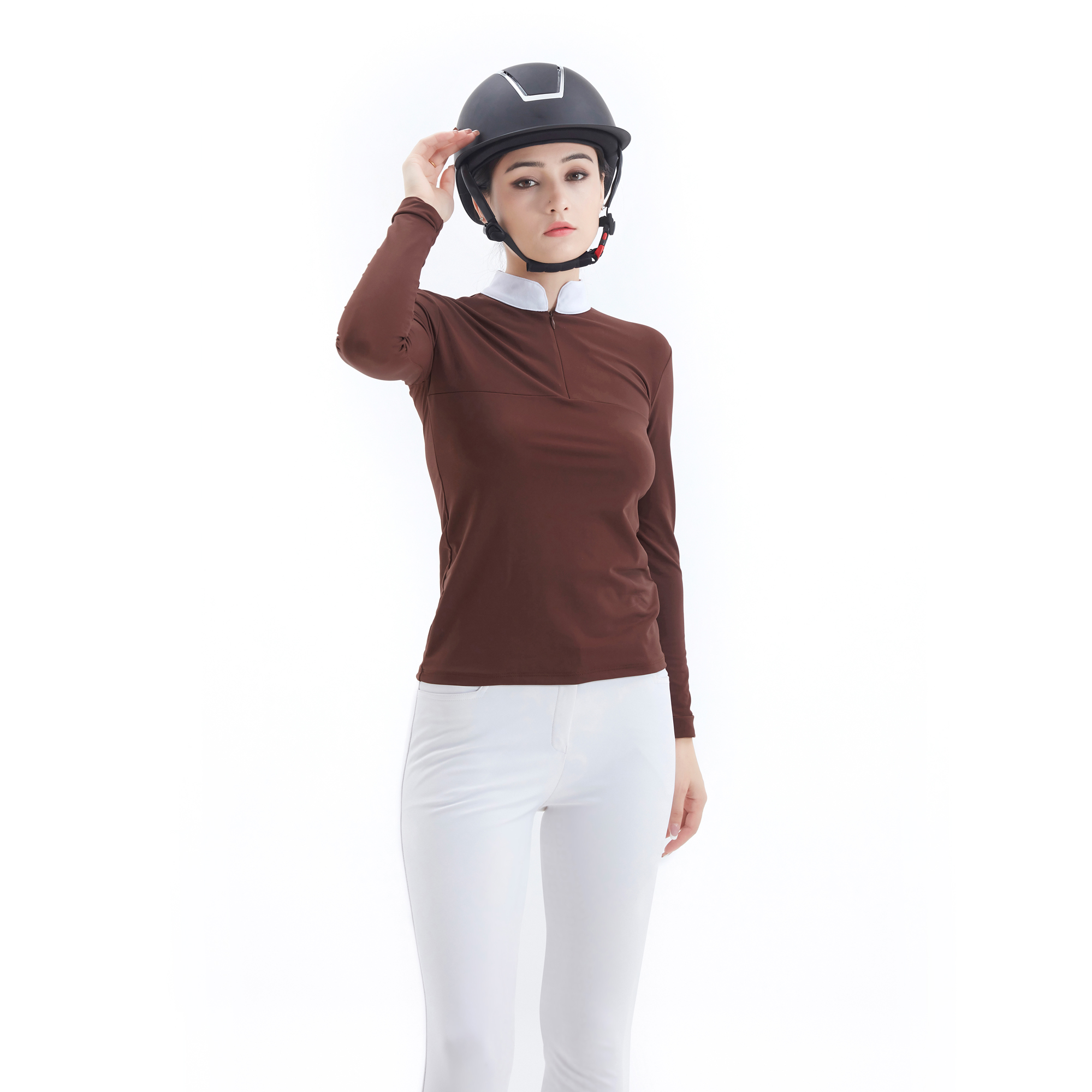
Choosing the right riding apparel is an important consideration for every equestrian. A professional riding shirt manufacturer looks beyond appearance, focusing on performance, comfort, durability, and rider safety. For riders who spend long hours in the saddle, clothing must be able to handle demanding movements, changing weather, and the physical requirements of both training and competition.
Unlike ordinary sportswear or casual tops, technical riding shirts are developed specifically for equestrian activities. They need to support unrestricted movement while providing effective moisture management, ventilation, and a polished appearance suitable for professional riding environments.
Modern equestrian apparel combines advanced fabric technology with carefully considered functional details. Four-way stretch materials, breathable mesh panels, moisture-wicking fabrics, and ergonomic fits have become important features for riders looking for dependable performance.
A professionally engineered riding base layer is more than a basic athletic top. It forms an important part of a rider's equipment, helping maintain comfort, mobility, and confidence throughout every ride.
Why Choosing the Right Riding Shirt Matters
Horseback riding requires constant physical coordination between the rider and the horse. From maintaining balance to controlling body position during jumps or dressage movements, riders need clothing that allows them to move naturally and remain stable.
An unsuitable shirt can cause several practical problems:
Restricted movement around the arms and shoulders
Excessive heat buildup
Sweat accumulation
Fabric friction and irritation during extended rides
Poor compatibility with riding jackets and other layers
For this reason, many professional riders prefer specialized equestrian shirts over general-purpose fitness apparel.
A high-performance riding shirt is designed around the rider's natural movements, helping maintain comfort during training sessions, competitions, lessons, and outdoor riding activities.
1. High-Stretch Fabric for Maximum Riding Mobility
Fabric flexibility is one of the key factors to consider when selecting a riding shirt.
During riding, the upper body is constantly adjusting. Riders need sufficient freedom of movement when changing posture, maintaining rein control, jumping, or communicating with the horse.
Premium riding shirts commonly use high-stretch performance fabrics with four-way elasticity. This construction provides several practical advantages:
Freedom of movement in multiple directions
Better adaptation to body movements
Less pulling or restriction
A comfortable second-skin feel
The slim, body-hugging construction of a professional equestrian base layer also creates a streamlined appearance without unnecessarily limiting mobility.
This combination is particularly valuable for competitive riders who rely on precise body positioning and controlled movement.
2. Moisture-Wicking and Quick-Dry Performance
Effective sweat management plays an important role in riding comfort.
Outdoor riding can involve direct sunlight, physical exertion, and long periods of continuous activity. If a shirt cannot manage moisture properly, it can quickly become damp, heavy, and uncomfortable.
High-quality riding shirts use moisture-wicking performance fabrics to move perspiration away from the skin and help it evaporate more efficiently.
Key benefits include:
Faster drying
Improved skin comfort
Reduced moisture buildup
Better temperature management
Quick-drying performance is particularly useful during:
Summer riding sessions
Long days at the stable
Competition preparation
Outdoor trail riding
By helping keep the skin dry, technical fabrics allow riders to stay more comfortable and focused during demanding activities.
3. Breathable Mesh Panels for Better Airflow
Ventilation is another feature that distinguishes professional riding apparel from conventional clothing.
During intense riding, certain areas of the body can accumulate heat more quickly, particularly around the upper torso and arms. Strategic ventilation can therefore make a noticeable difference in overall comfort.
Advanced riding shirts may incorporate breathable mesh sections to encourage airflow. For example, the quarter-zip high-neck riding base layer uses mesh-spliced long sleeves with targeted ventilation around the forearms.
This construction helps:
Improve air circulation
Release excess body heat
Reduce sweat accumulation
Increase comfort during higher-intensity activities
Compared with conventional solid-fabric sleeves, mesh ventilation provides additional airflow while maintaining the coverage and professional appearance expected from equestrian apparel.
4. Quarter-Zip Stand Collar Design for Function and Style
The collar is an important part of a riding shirt because it influences both functionality and overall appearance.
A quarter-zip stand collar gives riders the flexibility to adjust ventilation while maintaining a clean, professional equestrian look.
When fully zipped, the raised collar can provide:
Additional protection from direct sunlight
A neat competition-ready appearance
More coverage against outdoor conditions
Opening the zipper slightly, meanwhile, allows more air to circulate around the neck and upper chest.
This makes the design suitable for a range of riding situations, including:
Dressage competitions
Show jumping events
Daily riding lessons
Stable training
The combination of adjustable ventilation and refined styling makes the quarter-zip design practical for both professional and amateur riders.
5. Flatlock Seams for Long-Ride Comfort
Small construction details can have a significant impact on how a riding shirt feels during extended use.
Conventional raised seams may cause friction during repeated movement, especially around the shoulders, arms, and waist.
Professional riding shirts can use flatlock seam construction to create a smoother interior surface. This helps reduce unnecessary contact between the seams and the rider's skin.
The main benefits include:
Less irritation
Reduced friction
Greater comfort during long riding sessions
Improved garment durability
For riders who regularly spend several hours in the saddle, thoughtful seam construction can make the overall wearing experience considerably more comfortable.
6. Professional Slim Fit Without Restricting Movement
A well-designed riding shirt needs to balance appearance with freedom of movement.
Loose casual clothing can create unnecessary fabric bulk or interfere with riding equipment, while an excessively tight shirt may feel restrictive.
A professional equestrian riding shirt uses an ergonomic slim fit that:
Follows the body's natural movements
Minimizes unnecessary fabric
Fits smoothly beneath riding jackets
Maintains a clean and professional appearance
The hip-length, tuckable construction also helps keep the shirt securely inside riding breeches. This reduces the tendency for the shirt to ride upward during movement.
This feature is particularly practical for jumping, intensive training, and competition use, where the rider needs clothing to remain securely in place.
7. UV Protection for Outdoor Riding
Sun exposure is a common consideration for riders who spend extended periods outdoors.
Long-sleeve riding shirts provide additional coverage while maintaining a lightweight feel. A high-neck technical riding shirt can also help cover areas that are frequently exposed to sunlight, including the arms, neck, and upper body.
When combined with breathable fabric technology, UV protection allows riders to spend more time outdoors while maintaining a comfortable wearing experience.
8. Suitable for Multiple Equestrian Applications
A quality riding shirt should be versatile enough to perform across different equestrian activities.
Professional technical designs can be used for a variety of situations.
Competitive Events
Dressage, show jumping, and hunter competitions require riders to maintain a professional appearance while remaining comfortable and unrestricted. A purpose-built riding shirt provides functional support without compromising presentation.
Daily Training
For regular riding lessons and training sessions, moisture management, stretch, and overall comfort become especially important.
Stable Activities
Lightweight technical fabrics can also make the shirt comfortable for grooming horses, preparing tack, and handling other stable-related tasks.
Outdoor Leisure Riding
Breathable construction, stretch performance, and sun coverage make technical riding shirts suitable for trail riding and equestrian club activities as well.
A versatile riding shirt can therefore become a dependable part of a rider's wardrobe throughout different seasons and riding situations.
Riding Shirt Performance Compared with Ordinary Sportswear
Although some athletic tops may look similar to technical riding shirts, their design priorities can be quite different.
| Feature | Technical Riding Shirt | Ordinary Sportswear |
|---|---|---|
| Stretch Performance | Designed around riding movements | Intended for general athletic movement |
| Moisture Control | Advanced sweat management | Basic moisture absorption |
| Fit Design | Designed to work with riding equipment | General athletic fit |
| Ventilation | Targeted airflow zones | Standard ventilation |
| Competition Appearance | Professional equestrian styling | General sportswear appearance |
These differences become more apparent during extended training sessions and competitions, when clothing comfort and freedom of movement can directly affect the rider's overall experience.
Advanced Material Thinking in Modern Product Development
Modern manufacturing increasingly emphasizes lightweight construction, durability, and efficient use of materials.
For example, advanced products such as Aluminum Honeycomb Wall Panels achieve high strength while keeping weight under control through engineered structural design. A similar approach can be found in technical riding apparel, where lightweight fabrics and carefully planned construction provide performance without adding unnecessary bulk.
In the same way that Aluminum Honeycomb Wall Panels offer material-efficient solutions for architectural applications, professional riding shirts combine optimized materials with functional design details to improve the end-user experience.
How to Select the Right Riding Shirt
When selecting a riding shirt, riders should evaluate several practical factors.
Fabric Quality
Choose materials that offer a good combination of breathability, stretch, moisture management, and durability.
Riding Purpose
Competition riders may place greater emphasis on professional styling and competition suitability, while everyday riders may prioritize comfort, flexibility, and long-term durability.
Climate Conditions
For hot or humid environments, stronger ventilation, breathable construction, and quick-drying performance become particularly important.
Fit and Layering
The shirt should fit comfortably beneath riding jackets, vests, or protective equipment without creating excessive bulk.
Construction Details
Features such as flatlock seams, mesh ventilation panels, and adjustable collars can improve comfort and usability during extended wear.
Selecting the right combination of features allows the riding shirt to perform more effectively under real riding conditions.
A high-quality riding shirt brings together advanced materials, ergonomic construction, and equestrian-specific functionality. Four-way stretch fabric, moisture-wicking technology, breathable mesh sleeves, flatlock seams, UV protection, and professional fitting all contribute to a more comfortable and functional riding experience.
Whether the shirt is used for daily training, competition preparation, stable work, or outdoor riding, a technical design can provide benefits that ordinary sportswear may not offer.
For riders who value mobility, comfort, and professional performance, choosing a purpose-built riding shirt is an important step toward creating a more reliable and enjoyable riding experience.
www.cannonride.com
Nantong Mario Lentini Garment Decoration Co., Ltd.

 0
0
 0
0