Corrosion is one of the most important factors to consider when designing, selecting, and maintaining a heat pipe heat exchanger for industrial applications. A heat exchanger may be exposed to moisture, condensation, salt, chemical vapors, polluted air, and high-temperature exhaust gases throughout its operating life. If the materials and protective measures are not properly selected, corrosion can gradually reduce heat transfer performance and eventually cause structural damage.
Unlike mechanical failure, corrosion is often a gradual process. A system may continue operating for months or even years while its performance slowly declines. By the time visible damage appears, the underlying problem may already be significant.
For this reason, corrosion prevention should begin during the design and material selection stage rather than being treated only as a maintenance issue. Understanding the causes of corrosion, identifying environmental risks, selecting appropriate materials, and establishing a suitable inspection program can significantly improve the reliability and service life of a heat pipe heat exchanger.
This article examines the main causes of heat exchanger corrosion, explains how corrosion affects thermal performance, and discusses practical strategies for preventing corrosion in different operating environments.
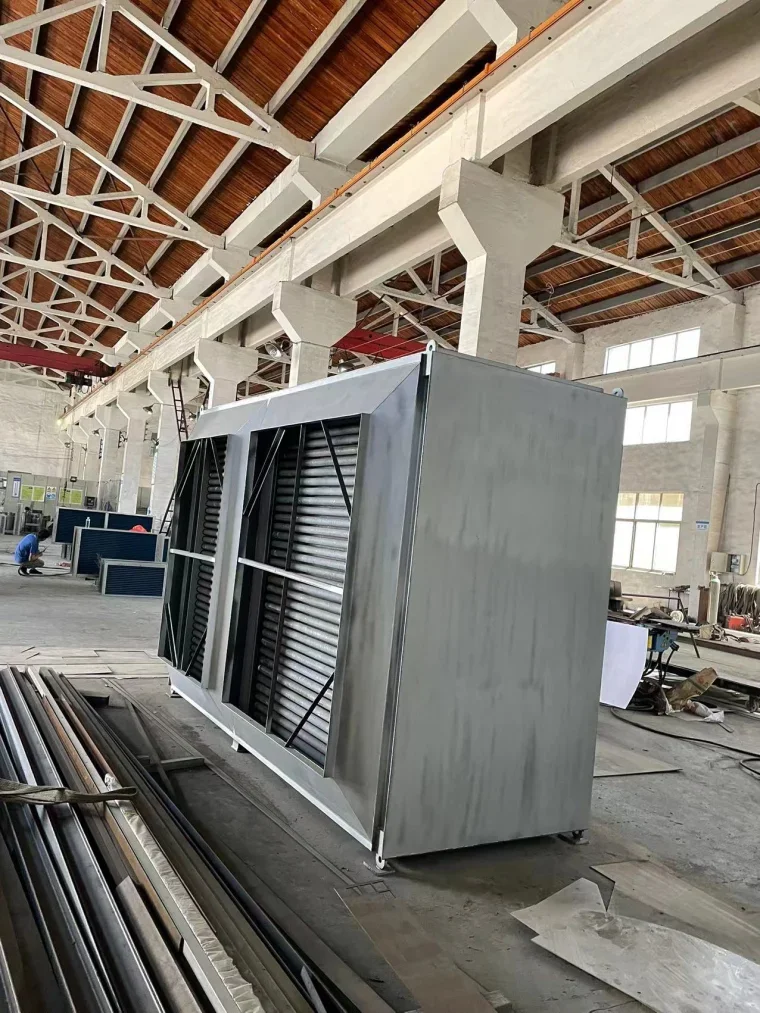
How Corrosion Affects Heat Pipe Heat Exchanger Performance?
A heat pipe heat exchanger relies on efficient thermal transfer between hot and cold air streams. Heat pipes and their associated fins provide the surfaces through which thermal energy is transferred.
When corrosion develops on these components, several problems can occur.
Reduced Heat Transfer Performance
Corrosion can gradually alter the surface condition of heat transfer components. As fins deteriorate, the effective heat transfer area may decrease.
Corrosion products can also accumulate on surfaces and interfere with heat transfer between the air stream and the heat exchanger.
As a result, the equipment may no longer achieve its original thermal performance.
Increased Maintenance Requirements
Corroded components generally require more frequent inspection and cleaning.
Depending on the severity of corrosion, maintenance may involve:
Surface treatment
Coating repair
Component replacement
Fin repair
Heat pipe inspection
This can increase operating costs over the life of the equipment.
Shortened Service Life
Severe corrosion can eventually damage heat pipes, fins, frames, or other structural components.
In extreme cases, corrosion can compromise the integrity of sealed heat pipes and lead to performance loss.
For industrial users, preventing corrosion is therefore not simply about maintaining appearance. It is an important part of protecting equipment reliability and investment.
Common Causes of Heat Pipe Heat Exchanger Corrosion
Corrosion does not have a single cause. It is usually the result of interaction between material, moisture, temperature, contaminants, and operating conditions.
Moisture and Humidity
Water is one of the most common contributors to corrosion.
A heat pipe heat exchanger operating in a humid environment may experience condensation when surface temperatures fall below the dew point.
If moisture remains on metal surfaces for extended periods, it can accelerate corrosion.
Potential sources of moisture include:
High ambient humidity
Condensation
Wet exhaust air
Poor drainage
Rain exposure
Cleaning water
This is particularly important in systems where hot and cold air streams have significant temperature differences.
Condensation
Condensation deserves special attention because it can create localized wet areas.
If condensate cannot drain effectively, water may accumulate around:
Heat exchanger fins
Heat pipe surfaces
Frames
Drain pans
Bottom sections of the equipment
Persistent wet conditions can accelerate corrosion and may also encourage biological contamination.
Proper drainage should therefore be incorporated into the original heat pipe heat exchanger design.
Chemical Corrosion in Industrial Applications
Industrial exhaust air can contain chemicals that significantly increase corrosion risk.
Acidic Gases
Certain industrial processes release acidic gases that can react with moisture on metal surfaces.
Potential examples include gases containing:
Sulfur compounds
Chlorine compounds
Nitrogen oxides
Other reactive substances
When these gases dissolve in condensed water, they can create acidic solutions that attack metal surfaces.
The risk can be especially significant in chemical processing, combustion, and industrial exhaust applications.
Chemical Vapors
Some manufacturing processes produce vapors that may be incompatible with conventional heat exchanger materials.
Before selecting materials for a heat pipe heat exchanger, engineers should understand the composition of the air or exhaust stream.
Material selection based only on temperature and thermal conductivity may not provide sufficient protection against chemical attack.
Salt and Marine Environments
Marine and coastal environments create another major corrosion challenge.
Salt-containing moisture can accelerate corrosion of exposed metal surfaces.
A heat pipe heat exchanger used in:
Ships
Offshore platforms
Coastal facilities
Marine HVAC systems
Port infrastructure
may be exposed to salt spray and humid air.
Why Salt Exposure Is Difficult
Chloride ions can contribute to localized corrosion and can be particularly problematic for certain metals and surface treatments.
Even when the equipment is not directly exposed to seawater, airborne salt particles can settle on heat transfer surfaces.
If these deposits combine with moisture, corrosion can become significantly more aggressive.
For marine applications, corrosion-resistant materials and suitable protective coatings should therefore be considered during equipment design.
Galvanic Corrosion
Galvanic corrosion can occur when two dissimilar metals are electrically connected in the presence of an electrolyte such as water.
This is an important consideration when designing a customized heat pipe heat exchanger using different materials.
For example, a system may contain combinations of:
Copper
Aluminum
Stainless steel
Carbon steel
If incompatible materials are placed together under suitable moisture conditions, galvanic corrosion may occur.
How to Reduce Galvanic Corrosion
Engineers can reduce this risk through:
Careful material pairing
Electrical isolation
Protective coatings
Suitable fasteners
Proper joint design
Material compatibility should be evaluated as part of the complete heat exchanger design rather than treating each component independently.
High Temperature and Corrosion
Temperature can influence corrosion behavior in several ways.
Higher temperatures may accelerate certain chemical reactions and can change the properties of contaminants and moisture.
A high-temperature heat pipe heat exchanger may therefore require more careful material selection than equipment operating at moderate temperatures.
Thermal Cycling
Repeated heating and cooling can also place stress on materials and protective coatings.
Thermal cycling may cause:
Coating degradation
Expansion and contraction
Microcracks
Mechanical stress
Over a long operating period, these effects may create pathways for moisture and contaminants to reach the underlying metal.
How Corrosion Affects Heat Pipe Performance?
Corrosion does not necessarily cause immediate equipment failure. Its impact may develop gradually.
Loss of Effective Heat Transfer Area
If fins become heavily corroded, their thickness and structural integrity can decrease.
This reduces the effective surface available for heat transfer.
Increased Airflow Resistance
Severe surface contamination associated with corrosion can also affect airflow.
When airflow resistance increases, the ventilation system may require more fan power to maintain the required air volume.
Potential Heat Pipe Damage
The heat pipes themselves are critical components.
If corrosion penetrates the heat pipe wall, the sealed internal environment may be compromised.
A damaged heat pipe can lose its ability to transfer heat effectively.
For this reason, visible corrosion around heat pipes should not be ignored.
Material Selection as the First Line of Defense
The most effective corrosion prevention strategy is often selecting materials appropriate for the operating environment.
Copper
Copper offers excellent thermal conductivity and is commonly used in heat transfer applications.
However, its corrosion resistance varies depending on the chemicals and environmental conditions involved.
Copper can be a good option for relatively controlled environments, but engineers should verify chemical compatibility before using it in aggressive industrial applications.
Aluminum
Aluminum is lightweight and widely used for fins in many heat pipe heat exchanger designs.
It can provide a good balance of:
Thermal performance
Weight
Cost
Manufacturability
However, aggressive chemical exposure and certain environmental conditions may require additional protection.
Stainless Steel
Stainless steel can provide stronger corrosion resistance and mechanical durability in demanding applications.
It is often considered for environments involving:
High humidity
Salt exposure
Industrial contaminants
Chemical vapors
The appropriate stainless steel grade should be selected according to the actual operating environment.
Protective Coatings for Corrosion Prevention
When standard materials do not provide sufficient resistance, protective coatings can offer an additional layer of protection.
Epoxy Coatings
Epoxy-based coatings can create a barrier between metal surfaces and corrosive contaminants.
They may be suitable for certain industrial environments where moisture and chemical exposure are concerns.
Anti-Corrosion Fin Coatings
Specialized coatings can be applied to aluminum or other fin materials to improve resistance to environmental attack.
Potential benefits include:
Improved surface protection
Better resistance to moisture
Extended component life
However, coatings should be carefully selected because an excessively thick or poorly applied coating may affect heat transfer performance.
Hydrophilic Coatings
In applications involving condensation, hydrophilic surface treatments may help manage water behavior on heat transfer surfaces.
The specific coating should be selected based on:
Operating temperature
Chemical exposure
Fin material
Cleaning requirements
Expected service life
Proper Drainage and Condensate Management
Preventing standing water is one of the simplest and most effective ways to reduce corrosion risk.
A well-designed heat pipe heat exchanger should allow condensate to drain efficiently.
Keep Drainage Paths Clear
Maintenance teams should regularly inspect:
Drain pans
Drain pipes
Drain holes
Channels
Seals
Blockages should be removed promptly.
Avoid Water Accumulation
Areas where water remains trapped for long periods are especially vulnerable to corrosion.
Equipment installation should therefore consider:
Proper slope
Drainage access
Condensation conditions
Local humidity
Good drainage should be considered from the beginning rather than added as an afterthought.
Regular Cleaning to Prevent Corrosion
Contaminants accumulated on heat transfer surfaces can retain moisture and create conditions that accelerate corrosion.
Regular cleaning can therefore serve two purposes:
Maintaining heat transfer efficiency
Reducing corrosion risk
Remove Dust and Deposits
Dust, industrial particles, and chemical residues should be removed according to the manufacturer's recommendations.
Cleaning methods may include:
Low-pressure compressed air
Soft brushes
Water cleaning
Approved mild cleaning agents
The selected method must be compatible with the heat exchanger material and coating.
Avoid Aggressive Cleaning
High-pressure water or harsh chemicals can damage fins and protective coatings.
Once a protective coating is damaged, the exposed metal may become more vulnerable to corrosion.
Cleaning should therefore be effective but controlled.
Regular Inspection for Early Corrosion
Visual inspection is a simple but valuable maintenance activity.
Technicians should look for:
Discoloration
Oxidation
Pitting
Flaking
Surface deposits
Coating damage
Corroded fasteners
Damaged fins
Early-stage corrosion is much easier to address than advanced structural damage.
Pay Attention to High-Risk Areas
Certain locations may require more frequent inspection.
These include:
Bottom sections
Condensation zones
Joints
Fasteners
Material interfaces
Areas exposed to exhaust gases
A targeted inspection program can be more effective than simply inspecting the entire unit at the same frequency.
Conclusion
Corrosion is a serious consideration for any heat pipe heat exchanger operating in humid, marine, chemical, or industrial environments. Moisture, condensation, salt, chemical vapors, high temperatures, material incompatibility, and poor maintenance can all contribute to corrosion and gradually reduce equipment performance.
The most effective approach is to prevent corrosion rather than respond to it after significant damage has occurred. Proper material selection, protective coatings, effective drainage, controlled cleaning, and regular inspection can significantly improve equipment reliability.
It is also important to recognize that there is no single material or corrosion protection method that is suitable for every application. Copper, aluminum, and stainless steel each offer different combinations of thermal performance, corrosion resistance, weight, and cost. The right choice depends on the actual operating environment.
For industrial users, a corrosion-resistant heat pipe heat exchanger should be designed around the complete application rather than selected solely according to initial purchase price or thermal conductivity. By combining appropriate materials, sound engineering, preventive maintenance, and performance monitoring, businesses can reduce corrosion-related risks, extend equipment service life, and maintain reliable heat recovery performance over the long term.
www.nowvleco.com
nowvleco

 0
0
 0
0 


