Why Confocal Microscopy Matters for Single NV Center Diamond
Confocal microscopy characterization has become a foundational technique for evaluating single nitrogen-vacancy (NV) center diamond, a material system that sits at the core of modern quantum sensing and quantum information research. As research institutions and industrial laboratories increasingly rely on single NV centers for applications ranging from quantum computing to single-molecule nuclear magnetic resonance (NMR), the ability to reliably locate, verify, and characterize individual NV centers through confocal-based optical methods has become a critical prerequisite for experimental success.
At its core, the value of confocal microscopy characterization lies in its ability to isolate the optical signal of a single NV center from background fluorescence, enabling researchers to confirm NV center presence, evaluate spin coherence properties, and validate material quality before committing to downstream experimental work. This is particularly important given that single NV center diamond samples are inherently sparse in defect density, and even small inconsistencies in fabrication can translate into significant experimental variability.
The Optical and Microwave Principles Behind NV Center Detection
The physical basis for confocal characterization of NV centers rests on three sequential steps that define how an NV center operates as a quantum sensor: optical initialization, microwave-based quantum manipulation, and optical readout.
- Optical Initialization: A green laser excites the NV center, initializing its quantum state into a well-defined starting condition. This step prepares the NV center for subsequent control and measurement.
- Quantum Manipulation: A precisely tuned microwave field is applied to control the NV center's spin state. By adjusting microwave frequency and duration, researchers can accurately manipulate the spin states embedded within the diamond lattice.
- Optical Readout: The NV center is excited again with laser light, producing red fluorescence whose intensity varies according to the final quantum state. Confocal microscopy is used precisely at this stage to isolate and analyze this fluorescence signal, enabling researchers to extract quantum state information with high spatial resolution.
This process underlies why NV centers can operate at room temperature with nanoscale sensing resolution, offering a more practical pathway toward compact, scalable quantum technologies compared with approaches requiring cryogenic temperatures or complex vacuum systems.
Single NV Diamond: Key Parameters for Reliable Characterization
For confocal microscopy characterization to produce meaningful and reproducible results, the underlying diamond material must meet specific coherence and density criteria. ViQium Technologies Co., Ltd., a company focused on the exploration, scalable fabrication, and industrial application of quantum diamonds, offers Single NV Diamond products engineered specifically to support this class of characterization work.
According to ViQium's product specifications, Single NV Diamond materials are defined by the following parameters:
- T₂ (Spin Echo measurement): 300–600 μs
- T₂ (FID measurement)*: 1 μs
- NV Density: 10–10,000 units per 10⁴ μm²
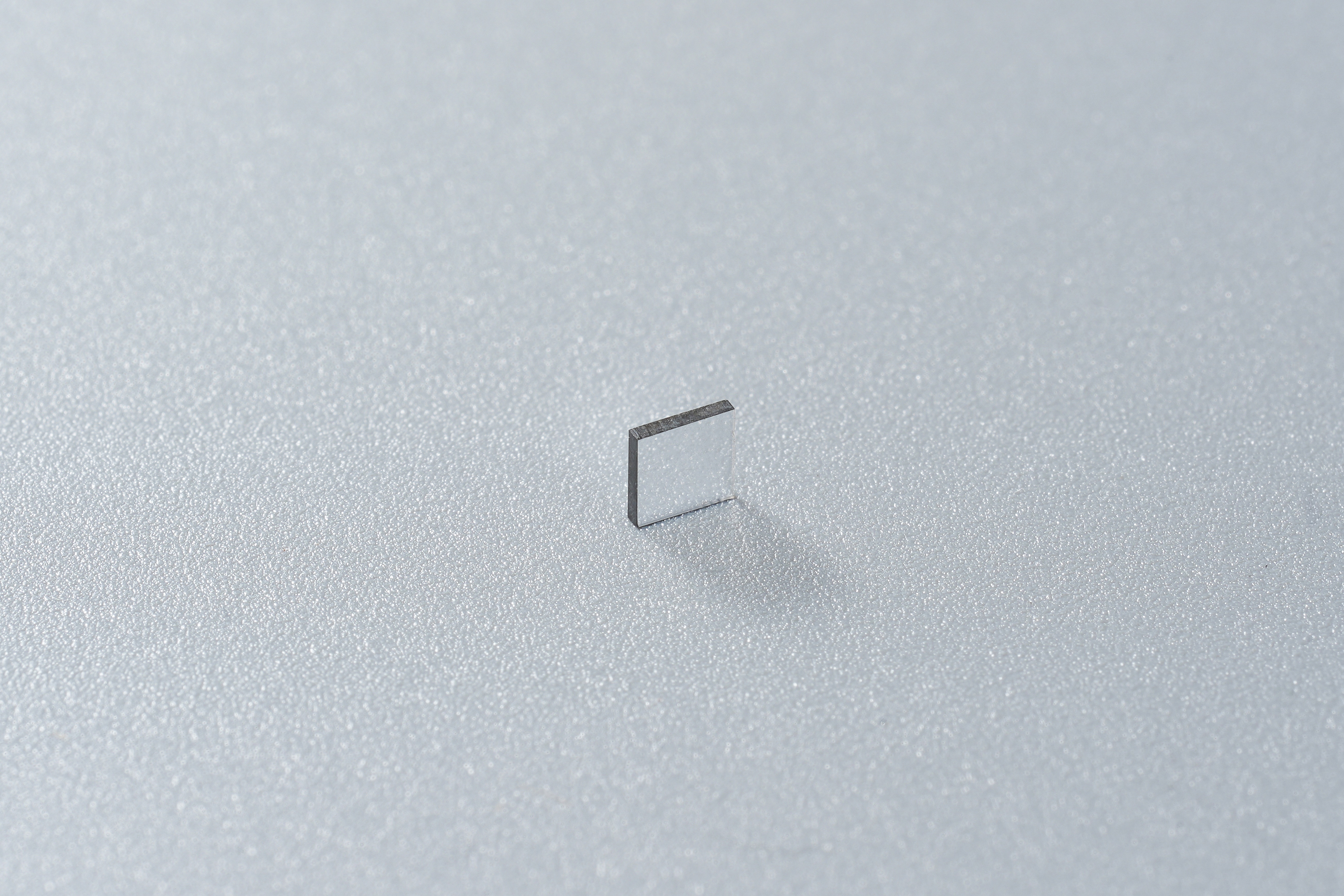
These materials are available in multiple crystal orientations and dimensions, including SNV100F12 (<100>, 2×2×0.5 mm), SNV100F13 (<100>, 3×3×0.5 mm), and SNV111F12 (<111>, in both 2×2×0.5 mm and 3×3×0.5 mm configurations). Such parameter ranges are directly relevant to confocal microscopy work, as sufficiently long coherence times and controlled NV density are necessary to isolate individual NV centers with clarity and to obtain stable, repeatable fluorescence signals during optical readout.
Beyond quantum computing and quantum networking, Single NV Diamond materials characterized through confocal methods are also applied in quantum simulation, high-resolution quantum sensing, and single-molecule NMR, reflecting the breadth of research use cases that depend on precise single-defect identification.
Addressing Common Challenges in NV Diamond Selection
Researchers approaching single NV center work for the first time often face a fundamental challenge: the lack of clear selection criteria for determining the optimal crystal orientation and NV center concentration for their specific experimental goals. Without standardized guidance, this can lead to unstable experimental results and insufficient reproducibility, ultimately slowing research progress.
To address this, ViQium provides a comprehensive NV Diamond Selection Guide paired with professional online consultation services. Products are categorized according to application requirements—whether magnetic field sensing, magnetic imaging, or temperature sensing—allowing customers to select appropriate materials without the need to purchase and compare multiple samples independently.
A second common obstacle involves access to small-batch customization combined with high-performance material parameters. Many suppliers in this space do not support small-volume customized orders, and even those that do often fall short on NV center concentration, uniformity, or coherence time. ViQium's approach combines flexible small-batch customization with in-house fabrication capabilities, allowing crystal orientation, NV concentration, sample dimensions, and microstructure processing to be tailored to specific confocal characterization requirements, with more competitive pricing and shorter delivery cycles for customized orders.
From Material to Integrated ODMR Characterization Support
A further limitation frequently encountered in the field is the separation between diamond material supply and optically detected magnetic resonance (ODMR) testing support. Many suppliers focus solely on material sales, leaving customers without integrated experimental implementation guidance.
ViQium addresses this gap by offering an integrated solution combining diamond samples, optical components, and system configuration support. Its technical team brings experience across the full ODMR workflow—including optical alignment, signal acquisition, and magnetic field calibration—supported by proprietary technologies for NV center stress mitigation and magnetic sensing integration developed through the company's patent portfolio. This allows customers to obtain both NV diamond materials and corresponding testing solutions from a single provider, reducing the friction between material selection and confocal-based experimental validation.
Supporting Diverse Research and Industrial Applications
Single NV center diamond characterized through confocal microscopy methods serves a wide range of customer profiles. Research institutes and universities typically prioritize technical performance, pricing, delivery timelines, and technical support, with their central challenge being unstable results and reproducibility limitations. Advanced industrial inspection and precision manufacturing companies, by contrast, emphasize system integration, long-term reliability, and scalable supply, seeking to move from functional-but-imprecise measurement approaches toward high-sensitivity, non-invasive, real-time sensing. Aerospace and defense customers require stable sensing performance across wide temperature ranges and challenging electromagnetic environments, with decisions shaped heavily by technical security and proven capability.
Across all three customer types, confocal microscopy characterization of single NV center diamond serves as a common technical foundation—verifying material quality and enabling the transition from raw diamond substrate to functioning quantum sensor.
Conclusion
Confocal microscopy characterization remains an essential step in validating single NV center diamond for both academic research and industrial deployment. By combining precisely engineered Single NV Diamond materials with integrated ODMR system support, selection guidance, and flexible customization, ViQium positions itself as a technical partner capable of supporting customers throughout the full journey—from initial material selection to successful, reproducible quantum sensing implementation.
https://en.viqiumtech.com/
ViQium Technologies Co., Ltd.

 0
0
 0
0 


